Iran’s strategic objective behind nuclear ambitions is to grab international recognition for its regional influence, and a free hand in the region for the mullahs of the regime.
Many think that the underlying tensions in Iranian – Arab relations represent a manifestation of Shiite – Sunni conflict, but this analysis does not reflect the reality of the situation on both sides. From geo-strategic and geo-political perspectives, the doctrinal differences do not play an influential role in relations between the two shores of the Arabian Gulf.
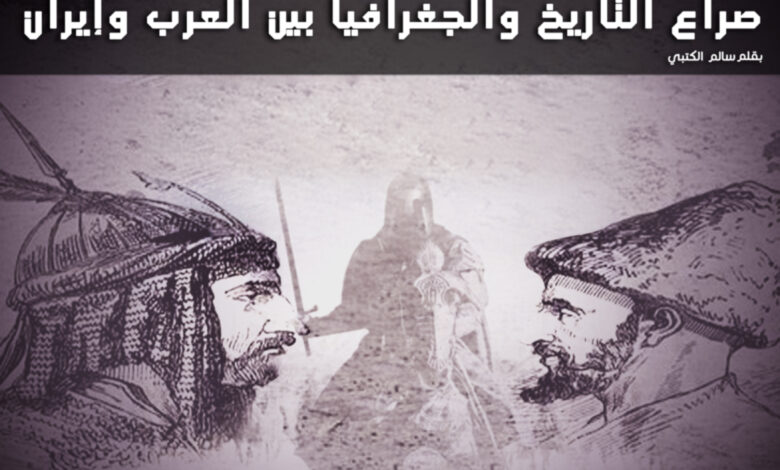
The history between Iran and Arabs is replete with conflict since the pre-Islamic period, which represents an important turning point in the course of this relationship. The battle of Qadisiyah still represents an open wound for many Iranian nationalists, who view it from a racist nationalistic perspective, away from its motives and from the fact it represented the fusion of Arab and Persian cultures within the flourishing Islamic civilization at the time.
Geographically, Iranians are in a state of constant craving to restore imperial glory, and feel a loss of identity, like Turkey. So they are trying in every way to take control of the neighbouring countries, and try to form a new political map in line with Tehran’s interests and strategic objectives in the region, starting from using groups like Hezbollah, the Houthi group in Yemen, the Shiite militias in Iraq, and sectarian elements and streams in many other Arab countries.
Iran’s strategic objective behind nuclear ambitions was not to compete with world powers and change the world order, as it was not aimed at threatening Israel or the attainment of a state of mutual nuclear deterrence with it, or even exploit this capacity to put pressure on Israel to give the Palestinians some of their rights. Iran’s strategic objective behind nuclear ambitions is to grab international recognition for its regional influence, and a free hand in the region for the mullahs of the regime.
Iranian officials announced their control of four Arab capitals—Baghdad, Damascus, Beirut and Sanaa not only to brag but also to send a message to the West about the reality Iran wants to establish. Later, the Iraqi Shiite militias commanded by the Iranian Revolutionary Guard generals, led by Qassem Soleimani, who presents himself as the first enemy of the Great Satan, collaborated with the US troops in fighting Daesh in brotherly Iraq.
Iranian nationalism did not change completely after Khomeini’s Islamic revolution in 1979 which did not adopt a rapprochement policy with the rest of the Islamic countries. Khomeinite Iran showed Arabs an ugly face and mullahs invented the idea of “exporting the revolution”, which served as an alarm bell about the real intentions of Persian Iran to expand using religion as a cover. Even Pahlavi Iran which played the role of “the regional policeman” was in far better terms with Arabs.
The mullahs regime was supposed to respect the sovereignty of Arab states, but instead, it tried to turn many Shiite Arabs into proxies against their countries and leaders. This has happened in several Arab countries including Iraq, Yemen, and Lebanon .Tehran had succeeded in making the sectarianist Nuri al-Maliki a Prime Minister in Iraq. Nuri or Jawad al-Maliki, as he called himself during the reign of Saddam Hussein, is just a fanatic sectarianist leader who went to Iran when the revolution was declared, lived there for 8 years in which he was the military arm of the leadership of the Iraqi Party Dawa, who was loyal to Iran during the period of the Iraqi – Iranian war. Al-Maliki is responsible for the implementation in Iraq of some military operations directly commissioned by Tehran, according to written documented testimonies. Is it possible to have such a man responsible for leading a country of the size and weight and position of Iraq? Are Iran’s intentions toward Iraq not clear so far?
How Khomeini’s Iran treats Arabs in the Ahwaz region is a clear proof of the sectarian and racist system that treats religious minorities with respect, except for Sunni Arabs. Arabs suffered repression and oppression and persecution by the hands of the mullahs, who through false theocratic slogans, try to deceive Muslims and Arabs and Iranians alike.