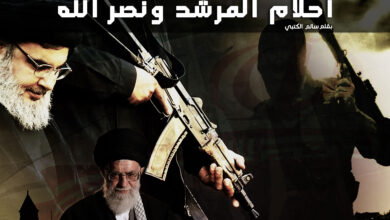
All the evidence at the regional level indicates a decline and even collapse of the expansionist dreams of Iran in several countries of the region. In Syria, Gen. Qassem Soleimani nearly took the lead by himself in the ongoing war on critical cities to keep the Syrian regime in control and ensure its survival. He tried to boost the morale of his elements but failed. Contrary to what was preached by Soleimani, who portrayed himself as an extraordinary military man, the news reported the contrary of Solimani’s claims, as events proved that he is only good at showing off verbally and rhetorically. In Yemen, Iran has not made any achievements after its followers of the Houthi group and former President Ali Abdullah Saleh’s lost their chances of controlling the Yemeni state and suffered heavy casualties at the human and physical levels under constant strikes of the Alliance supporting the constitutional legitimacy in Yemen. We also should not forget that the Lebanese Hezbollah has put itself as a party directly involved in the conflict in Syria, and it underwent heavy casualties, and now it only aims to protect its interests and avoid any new strikes. The media and propaganda aura it painted about itself fell down since it stood in the face of Israeli air strikes in Lebanon, while the party militias failed miserably in a war of the same style, consisting of facing similar combat elements in an unconventional war.
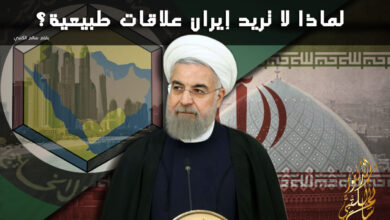
At the level of the nuclear file negotiations, differences exacerbated between Iran and the “5 +1” group as it appears that the gap widens between the two sides, particularly after the rejection by Iranian President Hassan Rouhani of the inspection of military sites as a condition for the signing of an agreement with the West over his country’s nuclear program, believing that this would leak Iran’s military secrets abroad. Rouhani spoke about the existence of other differences on the details of the nuclear deal, opening the door to the possibility of extending the date of the signing of the prospective agreement on the thirtieth of June. Rouhani said, “We are not prisoners of time … We are not in a hurry, but we are trying to exploit the opportunity to reach a good agreement”.
The general mood in Iran tends to extending the negotiations not only to reject the terms of the international community, but because the regional reality turned against Iran, which has no longer a strong strategic position allowing it negotiation gains. This trend can be noticed in the statements of several Iranian officials, including the statements of Abbas Araghchi, Assistant of Iran’s Foreign Minister, member of the nuclear negotiating team, who said that negotiations on his country’s nuclear program could be extended until after the deadline for its completion. Rouhani, who refuses to allow inspections of Iran’s military installations and the fall of the “state secrets” in the hands of the International Atomic Energy Agency, was no less stringent than the Iranian Supreme Leader Ali Khamenei, who sounded more hawkish, when he pointed out that his country would not accept what he called unreasonable demands on the part of the international powers, rejecting the existence of any unusual control on nuclear activities.
This is the strategic reality that surrounds the Iranian nation and characterizes it with significant panic, emotionality and impulsiveness, which feeds expectations that Iran may commit strategic follies under the pressure of the collapse of its plans and regional expansionist ambitions. The most dangerous aspect of the matter is that the Shiites, whom Tehran relies on traditionally, are now not able to resolve conflicts for the benefit of Iran, which made the latter expand the circle of internationalization in these conflicts and bring Afghan and Pakistani Shiites to fight in Syria.
The fact is that Tehran had drained a tremendous amount of its financial resources in support of its agents and followers and loyalists in Yemen, Syria, Iraq and elsewhere, and is no longer able to retreat or abandon its ambitions, which opens the door to the continuation of conflict and bloodshed in those countries and regions.
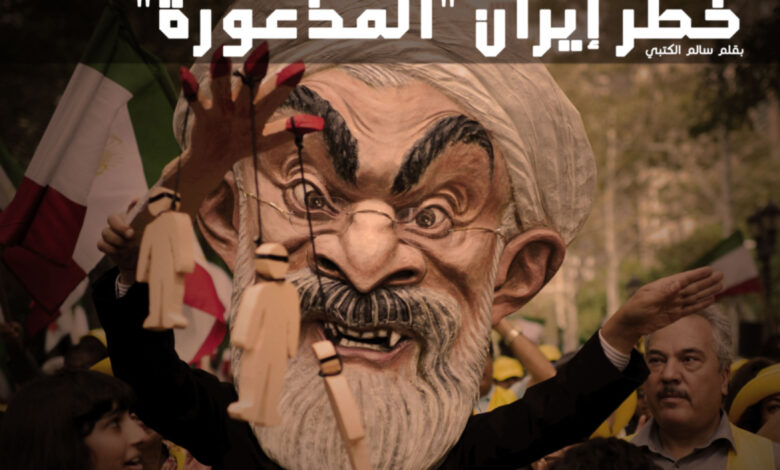
Iran’s panic from feeling the strategic losses could fuel Tehran’s tendency to venture to expand the existing military conflicts, or to open new hotbeds of conflict with its neighbors. The more likely is that Iraq would be the biggest victim of Iran, for nothing except that the Iranian influence in Iraq is the most present and most scalable, and thus Iran could seek to compensate for its strategic losses in Syria and Yemen by strengthening its influence in Iraq. But this does not necessarily mean that Tehran would accept the waning of its influence in Yemen and Syria. Tehran will stick firmly to playing the role of the naughty in these two countries, to confuse the calculations of the competing forces and to deprive them from making order in the internal situation in these two countries.
All the evidence confirms that Iran will not give in easily to the idea of curbing its role and its regional influence for the simple reason that the regime since the 1979 revolution, feeds on the idea of foreign intervention and exporting crises and engaging in wars and conflicts and promoting a climate of fear and anxiety in the regional environment. Therefore, the coexistence of Iran as a natural state is an untried idea after three decades or more, and thus it is considered as a ghost for the current regime in Tehran, and is difficult for it to accept such an idea. The Iranian regime is fully aware that any internal and external calm is necessarily accompanied with consequences, including facing internal duties such as development plans and the employment of Iranian state resources for the benefit of the people. This issue is not within the ideological and political thought of this regime based on sectarianism and on the dissemination of Shiite ideology and on exporting the revolution and other concepts that do not coexist with the natural environment of states.
The declining Iranian influence also means the collapse of the stereotype that the regime has been promoting for decades, and thus the loss of its supporters and followers in several countries, an issue linked to the ideological and spiritual prestige and influence of the regime that promotes itself as the Shiites protector in the world, and acquires from that claim a stature in the hearts of millions of Shiites, hence, its failure to achieve its plans by extension means the fall of its prestige and the collapse of its stereotypical image, which are mostly vital factors that feed the likeliness of the recklessness of the Iranian regime due to its sense of panic and growing concern in the coming period.