For a while now, I have been trying to deconstruct aspects of the US strategy in Iraq. US newspapers criticized the Obama administration for failing in the face of Daesh. The White House insists that his strategy is successful and achieves the objectives. Revealing key points in this topic can help an understanding of the overall complex strategic scene in the Arab region.
Walter Pincus wrote in the Washington Post an outside-the-box article titled ‘In Iraq, lessons of Vietnam still resonate’ about the Obama administration in Iraq and other conflict areas in the Arab region based on the bitter experience of the US Army in Vietnam. Pincus said that the United States was forced to support the Government of South Vietnam, of weak popularity at the time, in the face of armed rebels, a position similar to the position of the Abadi Government against Daesh, without the full support of Sunnis, Kurds and secular Iraqi groups. For a while now, I have been trying to deconstruct aspects of the US strategy in Iraq. US newspapers criticized the Obama administration for failing in the face of Daesh. The White House insists that its strategy is successful and achieves the objectives. Revealing key points in this topic can help an understanding of the overall complex strategic scene in the Arab region..The Vietnamese rebels received weapons and supplies and even fighters from the north of the country through Laos and Cambodia just like Daesh gets military and human supplies through the neighboring countries, he notes. The army of South Vietnam suffered from corruption and a lack of training, the same problems that plague the Iraqi security forces. He indicates that the Iraqi army collapsed in the face of the elements of Daesh several times in recent months, opening the door to new comparisons with Vietnam.
US strategist Anthony Cordesman believes that one of the main lessons learned from Vietnam suitable for application in Iraq is strengthening the American military intervention, through the deployment of US ground troops to work alongside the Iraqi army and to increase training and assistance, the same opinions adopted by many American experts including Senator Lindsey Graham and Senator John McCain.
Walter Pincus says that the Vietnam situation began in the era of President John F. Kennedy, who sent in May 1961 around 400 US special troops to South Vietnam to train the army to fight rebels. Five months later, Kennedy received recommendations to increase the number to 8000 and use combat troops. 5 years later, the United States failed to achieve victory and defeat the communist government in North Vietnam, despite sending over 500 000 soldiers fighting there, 85 000 of which died. Pincus says the lesson from Vietnam is not strengthening the US forces as Senator Graham and McCain say, but allowing foreign governments to search for solutions to the threats they face. I think that this is a key point in Obama’s ‘driving-from-the-back’ strategy in the Middle East.
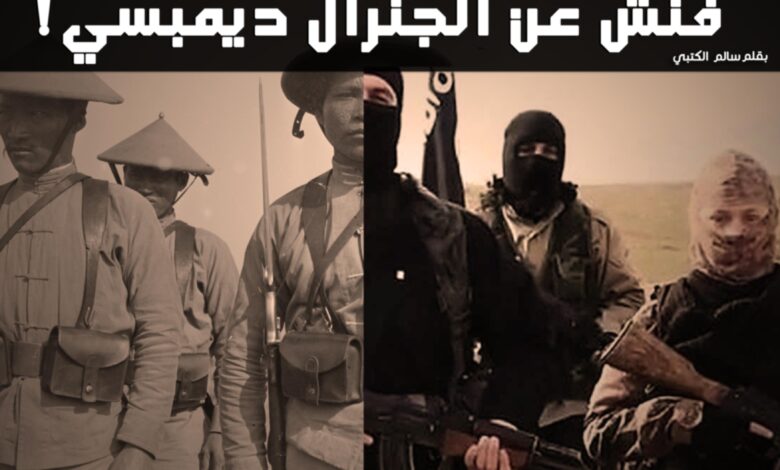
The vision of the Obama administration in this area was inspired by veteran Gen. Martin Dempsey ideas, chief military adviser to President Obama, who is preparing to leave his current position as United States Army General. Dempsey prefers using air power without ensuring specific political consequences of military operations over responding with direct offensives to the threats posed by Daesh and other terrorist organizations in Iraq. He believes that there are limits to the American military force in dealing with the deep sectarian and political conflicts in the Middle East.
His view was appreciated by President Obama, who wants to end his second term without linking his name to a new war, or an increase of US troops on the ground in military conflicts. Obama wanted ending costly wars of his country over the past decade and the use of military force in moderation.
Dempsey’s view has strategic and political merit. He believes that the problem will remain unless the Iraqis search for durable solutions to their crisis and also believes that defeating Daesh militarily and quickly is possible, but dealing with the threat of the organization on the ground over time requires strong state institutions capable of uprooting the intellectual roots and organizational structures. The battle in Iraq is mainly an Iraqi battle. Any help from abroad will continue to be temporary. The only way out is for Iraqi politicians to understand reality and reject sectarianism and move towards building a genuine State where sects and ethnic groups coexist.
Thomas Friedman said the Arab world is a region that lacks pluralism. To reflect the enormous deterioration of the situation in the region, Friedman refers to a video of Sunni Egyptian cleric Ahmed al-Naqib, a university lecturer, criticizing Daesh and then saying that there is no doubt that Daesh is much better than the Shiite criminals who kill Sunnis because of their identity. Such a comparison between dark and darker is like oxygen to Daesh and other terrorist organizations.
Friedman indicates two dangerous scenarios for the crisis in the region, one based on the intervention of an external force to occupy the countries that suffer the chaos aimed at ending sectarian conflicts and extremism. This intervention may need, in his opinion, nearly five decades to convince these people to coexist and share power as equal citizens. The second scenario is to wait until the sectarian wars devour themselves, as happened in Lebanon, where the civil war ended after the Lebanese got tired of fighting for about 14 years, leading to a stalemate.
Compatibility between the opinion of Dempsey and Friedman is that there are not external solutions for internal sectarian conflicts, as evidenced by the failure of the United States at this level. It seems clear there is no imported cure or ready solutions to the issues of the region and the difficulties faced in the Interior.
Dempsey, Friedman and similar views have merit but do not reflect a deep understanding of the regional scene. The West always excludes the impact of the contribution of Iran in inside conflict that inflames sectarianism in several Arab countries, making any solutions impractical. The Iranian role is a factor to be neutralized for any applicable solutions to be implemented in the Arab region.