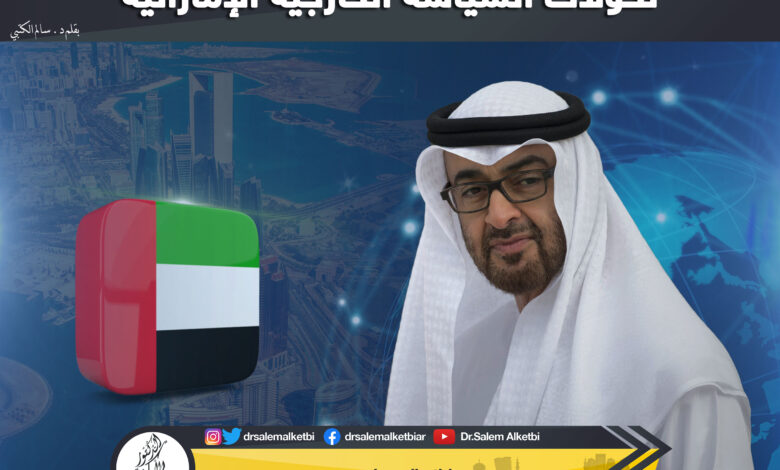
I have been following what has been written in the Arab and foreign press about UAE foreign policy since HH Sheikh Mohammed bin Zayed Al Nahyan took office, succeeding the late Sheikh Khalifa bin Zayed Al Nahyan. Opinions are divided about possible changes in this policy.
What caught my attention was that some expectations of changes in this policy are based on the change in leadership as an engine that directs expectations and speculation without taking into account the international and regional environment and the characteristics that distinguish the UAE from other countries.
First of all, it is necessary to recognize the profound fundamental transformation in international relations that has taken place in recent years. These policies must change in proportion to the strategic interests of states, because the only constant in life (especially in politics) is change, as the Greek philosopher Heraclitus said 500 years BC.
Therefore, as specialists, we should not be surprised by changes in the foreign policy approach of states, especially an ambitious young state like the UAE, which has competitive development goals that require a dynamic and flexible vision of international relations, and a network of international relations that does not exclude any party whose cooperation could support the possibility of achieving these goals.
Of course, the UAE does not take a new pragmatic utilitarian approach to international relations. As they say, there is no need to reinvent the wheel. But it is on the paths expected by those who know how to read the UAE’s foreign policy drivers, namely development.
The UAE, which celebrated its first fiftieth anniversary a few months ago, is moving within a clear strategic vision for the future. This vision is outlined in the Document of 50, which contains 10 principles guiding the UAE’s next steps.
It promises a roadmap that can explain many of the foreign policy steps of the state that will focus “entirely” on “building the best and most dynamic economy in the world” in the coming years.
“The UAE’s economic development is of the highest national interest.” “The UAE’s foreign policy is a tool to achieve the highest national goals, primarily the UAE’s economic interests, the purpose of the policy is to serve the economy, and the purpose of the economy is to provide the best life for the people of the UAE.”
Simply put, this means that the goal is global development and competitiveness. It has been said in the past that the UAE’s foreign policy has been, and will continue to be, moving along the lines of carefully crafted goals.
This is no coincidence, especially when you add to the above the rapid changes in the international landscape, characterized by shifts in the balance of power and relations between strategic competitors on the world stage.
This requires taking initiative, taking matters into one’s own hands, dealing with crises, their aftermath, tensions and their outcomes, and thinking proactively in all these circumstances to achieve UAE interests and ensure proactive steps in current developments.
The main driving force behind the UAE’s foreign policy is to create an atmosphere and opportunities to continue the development process that the UAE has begun since its founding and to avoid falling into a climate of polarization, frustration, conflict and crisis that the Middle East is experiencing, while continuing to build balanced international partnerships with all regional and global powers.
The strategy of building bridges with everyone at the regional level carries on.
The UAE has become a regional strategic player and a center that can contribute greatly to creating a new geopolitical reality based on security, stability, peace and coexistence of all in our region. Moving at a rapid pace based on its capabilities and reality, the UAE relies on high self-confidence, respect and recognition of the state and its sensible leadership to navigate all problems and crises in order to avoid any possible negative consequences of regional and international tensions.