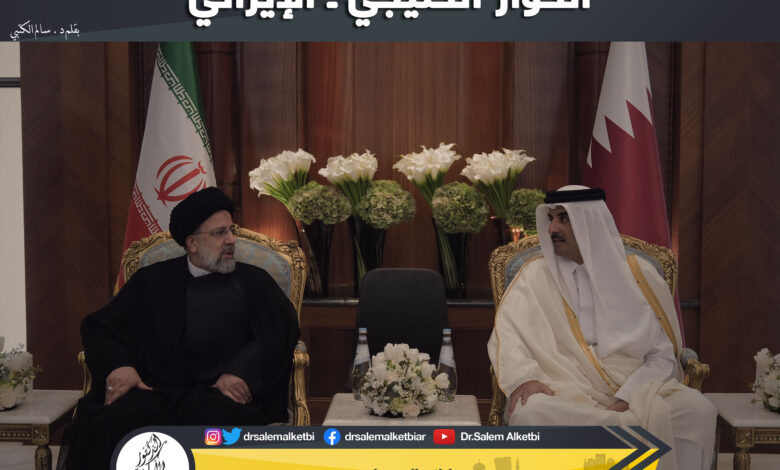
The Emir of Qatar, Sheikh Tamim bin Hamad Al Thani, recently visited Tehran, in what may be difficult to understand in isolation from what can be described as a difficult dialogue directly or indirectly between Iran and the Gulf capitals.
While reports and analyses covering the visit focus on the revival of the nuclear agreement and the role Doha can play in this regard, already crucial and Qatar expects to provide important support, especially as it is an important part of its efforts to ensure regional security and stability for the foreseeable future, there are issues on the visit’s agenda that are hard to ignore, especially the relationship between the Gulf and Iran.
Qatar’s strategic interests are mainly focused on preparing the regional atmosphere for the 2022 World Cup later this year.
The success of the tournament and maximizing the benefits that Qatar derives from its huge investments in infrastructure, organization and other areas requires a climate of security, stability and regional cooperation that complements the elements of success and achieves Qatar’s goals, especially at the level of economic return and improvement of its image, reputation and status-all driving forces and objectives close to the hearts of decision makers in Doha.
The Emir’s visit to Iran, which coincided with another visit by EU nuclear negotiator Enrique Mora, led analysts to focus on Doha’s efforts to successfully conduct the European envoy’s mission, which could be the last chance to salvage negotiations to revive the nuclear agreement. The issue is certainly already one of the most important items on the negotiating agenda between Iran and Qatar.
But this is not the only purpose of the visit that was announced some time ago, similar to the surprise visit of the European envoy to Tehran. There are important issues on the ground that put a damper on all negotiations between the main energy suppliers at the moment.
First of all, these are events related to the Russian military operation in Ukraine, which have triggered a rise in oil and gas prices and could lead to a redistribution of market shares, especially among gas-producing countries, as European countries seek to break away from Russian gas imports. Iranian President Ibrahim Raisi visited Doha in February and attended a summit of gas exporters.
Overall, in such diplomatic moves, it is hard to disentangle matters. You cannot consider the Iranian nuclear deal separately from energy security in Europe, nor Qatar’s important goal of success in organizing the World Cup, nor the dialogue between Iran and the Gulf countries, nor the Syria issue, with President Bashar Al Assad visiting Tehran a few days ago.
They are all largely cross-cutting issues, as reflected in preparations for the Emir of Qatar’s visit to Iran, the start of a trip that also includes Germany, Britain and other European countries. Although this visit represents nothing new in terms of strong Iranian-Qatari relations, the atmosphere of dialogue and recent regional breakthroughs remains.
All neighboring countries seek to build bridges, overcome tensions and lay new foundations for regional security and stability.
Saudi Arabia is now open to dialogue with its Iranian neighbor, and there is an Emirati-Iranian dialogue that takes place from time to time within the new political realism adopted by Gulf diplomacy to open up to Iran and try to find formulas of understanding that serve the interests of all and reduce the Iranian interventions and expansionist attempts, which negatively affect the atmosphere of regional security.
This new realism, which permeates the Middle East, ties in well with the dialogue between the Gulf states and Iran. Iran is one of the biggest threats to regional security and stability. Any effort in this sense cannot succeed on its own, although it is recognized that dialogue with them is neither easy nor simple.
It is the most difficult link in all these efforts. Tehran seeks to consolidate its current regional clout and further strengthen its position in future negotiations on the division of regional roles and spheres of influence among regional and international powers.
Iranian influence, expanding at the expense of Arab national security and the sovereignty of Arab states such as Syria, Iraq, Yemen and Lebanon, cannot be accepted as such. The search for stability now begins with finding solutions to ensure that the national sovereignty of these countries is restored and that Iranian interference there is reduced.
Moreover, dialogue with Iran becomes more difficult at this stage because Russia is busy with Ukraine and Tehran is likely to want to fill the resulting strategic vacuum and consolidate its influence in Syria.
Far from the agenda of Qatari diplomacy and its importance to the atmosphere of dialogue and regional breakthrough, the focus or key to the success of any Gulf-Iran dialogue or Arab-Iranian dialogue lies in the second party’s view of the Gulf and the Arab neighborhood. In other words, respect for international law and norms is the only guarantee for building a stable, healthy relationship.
It now seems necessary for Tehran to take steps to reduce its regional influence and the perception of its desire to exercise all forms of regional hegemony, including verbal hegemony.
Any dialogue must be conducted with genuine conviction, wasting no time and making no concessions, and matching political statements about the conviction that dialogue is the only way to solve regional problems with action.