No Gulf specialist doubts that all the hype about the Iran-U.S. crisis would inevitably end one day with a new understanding and agreement. The war of words, frequent clashes and intense statements are nothing but boosts to each party’s bargaining position.
It wouldn’t surprise me to wake up one day to media leaks of secret Iranian-American negotiations that have been going on for months. I would not be surprised either that the parties are close to reaching a final agreement. That’s how past experiences have taught us.
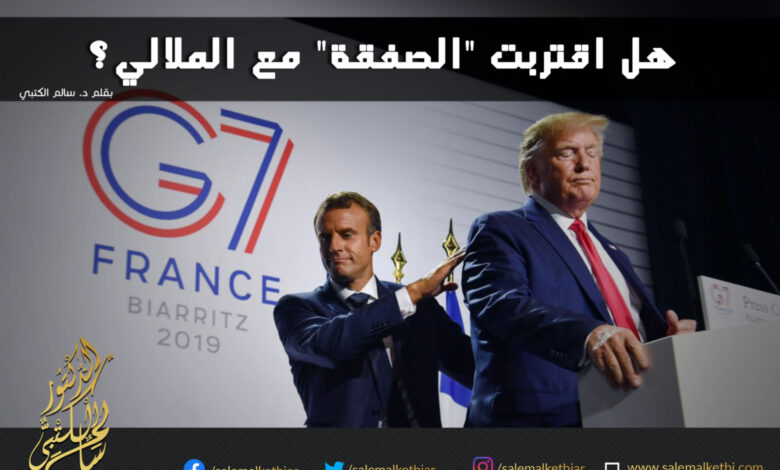
Yesterday, a French presidential official said that President Emmanuel Macron met with his President Donald Trump at the G7 summit. There were convergences on several issues, including Iran’s nuclear program.
President Macron had said he would do his utmost to get the major industrialized nations to agree on a unified strategy. He added that with regard to the escalating tensions between Washington and Tehran, for example, Trump has confirmed that he sees no conflict, and that he wants a deal with Iran. US President Donald Trump once again confirmed that he sees no chance of a military conflict with Iran. He does not hide his express desire to make a deal.
What is happening now is the start of the phase of discussing proposals or looking for exits to the crisis. It is a phase where the Iranian and American sides will try to meet halfway, after the hardline statements or the declaration of absolute rejection by the mullahs regime for dialogue with the United States and specifically the Trump administration.
French diplomats are now pushing the idea of U.S. waiver of sanctions affecting Iranian oil exports to India and China, or introducing a new credit line for Tehran. The French president has publicly offered to ease sanctions on Iran or provide a compensation mechanism “to enable the Iranian people to live better” in exchange for full compliance with the agreement.
Such ideas weren’t pulled out of a hat. The Iranian Foreign Minister was on a recent visit to France. He stated that Tehran was ready to work on French proposals to salvage the international nuclear deal it signed with world powers in 2015 but would not tolerate U.S. intervention in the Gulf. Zarif said in Paris that “there are proposals on the table from the French and Iranian sides, and we will work on these proposals.”
It is clear – so far – that the mullahs are racing against the deployment of the U.S. security mission force to guard cargo ships in the Strait of Hormuz, which has so far been joined by countries including Britain, Australia and Bahrain. The mullahs realize that the presence of a multinational force in Gulf waters will weaken Iranian plans there. Iran will put itself in the face of an international coalition if it targets this force.
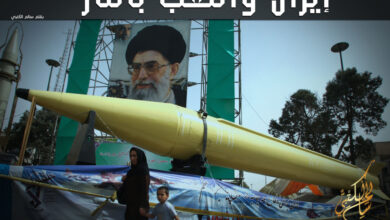
The mullahs’ regime is rapidly further its negotiating position and occasionally announcing new weapons and military equipment. Most recently, President Hassan Rouhani was present at the unveiling ceremony of the Bavar 373 Missile Defense System, a homemade mobile surface-to-air system. Iran’s Defense Minister Amir Hatemi said it could monitor targets or aircraft more than 300 kilometers away, shoot missiles about 250 kilometers and destroy them at a distance of 200 kilometers.
These are clear Iranian attempts to psychologically influence the other side and limit the state participation in the U.S. maritime protection force. However, President Trump is a negotiator who knows how to deal with the Iranian brinkmanship mentality. Iran thinks it would be difficult, especially for superpowers, to back down. That might be the case, but it applies to former American administrations.
Trump has a surprising ability to maneuver. He does not mind reviewing his positions and returning from where he came from without any political or diplomatic embarrassment. And every time, he manages to justify his positions and reversals.
Trump himself seemed contented after news emerged of an agreement with the G7 leaders, which came after a series of combative tweets that suggested he was in no mood to compromise with this G7 peers. President Trump in July criticized his French counterpart’s “foolishness” and the “mixed signals” that Macron sent to the Iranian regime regarding the U.S. position, and then came back to listen and approve of President Macron’s proposals in Paris. “We actually have a lot in common, Emmanuel and I. We have been friends for a long time. Every once in a while we go at it a little bit, not very much. We get along very well, we have a very good relationship. I think I can say a special relationship,” he said.
Is there still doubt that the deal with Iran’s mullahs is just around the corner?