Many researchers keep repeating that there is a distinction between the Muslim Brotherhood in Egypt and their counterparts in Tunisia. According to them, most of the leaders of the Ennahda movement in Tunisia who lived in the West, including the British capital, have developed a taste for democratic and pluralist values. What is more, they had reservations about the notion of the monopoly of power and the politicisation of religion.
But the differences, earlier than expected, turned out to be not true. The tactical retreat of the Tunisian movement was only a kind of political piety after their counterparts had failed in Egypt. They had no interest in the political partnership or the diversity of the political spectrum and parties in Tunisia. Researchers and specialists agree that the post-President Caid Essebsi phase, who recently passed away, stands as a difficult test of political pluralism. The Financial Times called it a test for a “fragile democracy.”
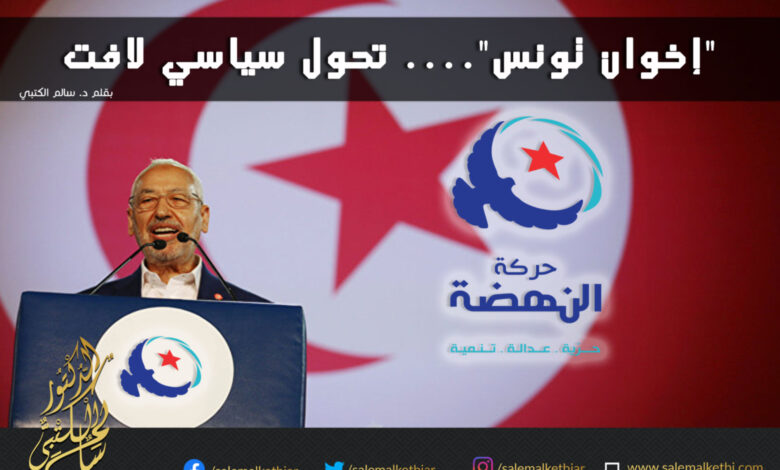
But the answer to the question “What’s next?” came quick, revealing Ennahda’s real intentions. The party unanimously nominated Abdel Fattah Mourou to run in the upcoming presidential elections. This decision will push many analysts to reconsider their expectations for the future of political stability in this Arab country. Everyone understands that the Brotherhood’s entry into the competition for the presidency confuses the balance between political forces, parties and currents.
Essebsi has undoubtedly been an important guarantee for maintaining political balance. His political guidance ensured the promotion of national values and principles. His wisdom and extensive experience have also helped him greatly to get a grip on the political game and maintain stability in the country. Through the Nidaa Tounes party, created in 2012, he played a major role in building the balance between competing political currents.
But the aspirations of the Brotherhood of Tunisia to take over the presidency after his passing raise serious doubts about the future. Uncertainty has grown due to Abdelfattah Mourou’s candidacy for president and the appointment of Rachid Ghannouchi as the movement’s leading candidate for the upcoming parliamentary elections.
The question here is, why did the Tunisian Brotherhood change its position and suddenly turn to the presidential elections? Does it intend to repeat the experience of the Brotherhood of Egypt, who took part in the presidential elections in a similar scenario?
We should pay attention to something. Mourou’s candidacy was announced soon after former Prime Minister and former Ennahda leader Hamadi Jebali presented his candidacy for the presidential election. Likewise, the Egyptian Brothers announced the nomination of Khairat al-Shater, then Mohamed Morsi, after the dissident party leader Abdel Moneim Abul Fotouh did the same.
Is the decision of the Tunisian Brothers linked to the pressure exerted by the regional supporters of the Muslim Brotherhood, such as Turkey and Qatar, after their failed bets on the other Brother organizations in Egypt, Libya, Yemen and lastly in Sudan? Will the movement move forward with Mourou’s appointment procedures, or will the announcement of the candidacy prove to be a political manoeuvre to pressure for a “deal” with one of the current candidates, and then rescind Mourou’s candidature after having obtained the movement’s political agreements and guarantees at the Palais de Carthage?
Ghannouchi criticized the Egyptian Brotherhood for their poor interpretation of the internal situation, the balance of political power and their lack of recognition of the roles of other parties. But the days have come to show that their ideas are not so different.
The desire to govern is stronger than any influence on the democratic ideas that some believe the Tunisian Brothers have embraced. The decision of the Tunisian Brotherhood to run in the presidential elections debunks the myth of the movement’s specificity in political consciousness compared to other Brotherhood organizations in Arab countries. It questions the influence of the Western experience on the Brothers’ ideas, their political orientations and their acceptance of the rules of the democratic game.
Since 2011, the eyes of the Brotherhood of Tunisia have not turned away from the presidency. The movement had been listening, hoping and planning for years. But the decline in popularity and the forced acceptance of de facto formulas in government formations temporarily diverted the movement’s attention from the presidency. But it came back with a new tactic of pushing Mourou instead of Ghannouchi, who aspired to be president.
Mourou’s candidacy is therefore a radical change in the tactics of the Tunisian Brotherhood, which supported an outside candidate in the 2014 elections and helped to bring Moncef Marzouki to the presidency in the indirect elections to the Constituent Assembly in 2011.
The coming days will bring many surprises. But given the current situation, a difficult period is shaping up for the Tunisian political experience. We hope, however, that the will of the Tunisian people, who have shown a deep national consciousness under the leadership of the late President Caid Essebsi in recent years, will win the day.
The important thing to note is that this step by the Brotherhood is the straw that broke the camel’s back, because it reveals its intentions and desire to monopolize power. Presidential elections will be held in mid-September, just before the October parliamentary elections. That is when the movement will see both its bets fail.
The Brotherhood, as always, does not draw on the lessons of the past and misreads its political context. The movement rushes when it is better to be cautious and patient, unmasking its true intentions along the way. Ennahda’s presidential bid came at a time of weakness and decline in its popularity, both in the eyes of Tunisians and Arabs.
As a matter of fact, following the announcement of Mourou’s candidacy, an Ennahda leader stated that “choosing a candidate from within the Ennahda party is a bad choice. It does not meet the requirements of the phase.” He described the party’s consensus on the candidacy as “a façade unit.” Perhaps, it is one of the works of fate that brings security and stability to the Arab people and spares them from conflicts and conspiracies.