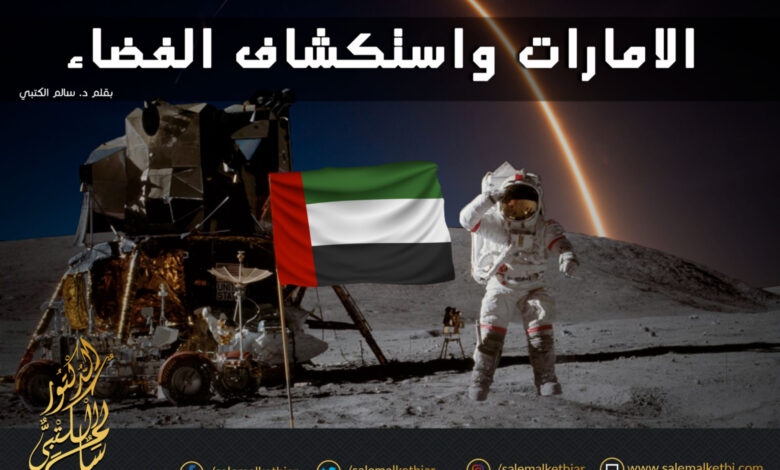
Space exploration has been and continues to be one of the most important manifestations of the progress and development of nations since the early second half of the twentieth century. Space science has developed enormously, especially during the climax of the Cold War-era competition between the United States and the Soviet Union. In the early 1960s, in response to the Soviet space program, the United States launched the Apollo program. The former Soviet Union successfully sent the first spacecraft boarded by Laika the dog. Even though the craft did not make it back to Earth, it made history. On board of the first manned mission was Soviet cosmonaut Yuri Gagarin, who returned to Earth. The United States sent astronaut Neil Armstrong and fellow Edwin “Buzz” Aldrin to set foot on the surface of the Moon.
The idea of space exploration was then universally recognized as a symbol of technological development. Countries seeking global competitiveness started launching space programs.
Now, the UAE has established a space agency in 2014, a federal agency responsible for regulating the UAE’s space sector. The UAE has invested more than $ 20 billion in this field, accounting for about 7% of the world’s total investments in space estimated at about $ 300 billion. The UAE has an important share in the investments on this promising sector.
But the emirati space program is not just another space program. It is another step toward sustainable development through knowledge economy, science and innovation as aerospace industry becomes a component of national economy.
The country’s wise leadership was aware of the economic importance of the space industry, especially in the post-oil era. Crown Prince of Abu Dhabi, His Highness Sheikh Mohammed bin Zayed Al Nahyan, said that the UAE, in fifty years, will celebrate the exporting of the last barrel of oil. About three years have passed since the UAE officially announced the first two national astronauts to go to space on a Russian mission to the International Space Station next year.
Astronauts Hazza Al Mansouri and Sultan Al Nayadi will represent the UAE and Arabs in this field and put the name of the Emirates on the list of pioneering space exploration initiatives. With a world-class institutional infrastructure that includes Emirates Space Agency, institutions, research centers and satellites, this sector will promote the image of the country as a development and progress hub able to compete in the global scene. The space program has a place in Vision 2021 and Vision 2071, two very ambitious yet realistic and well studied national strategies.
But what’s really at the core of all this is the human element. The main theme of the UAE’s Centenary is for the next generations to be able to compete on the global market, making their country an internationally reputed economic player.
The aspirations of the UAE have no limits, stated His Highness Sheikh Mohammed bin Zayed Al Nahyan, Crown Prince of Abu Dhabi and Deputy Supreme Commander of the UAE Armed Forces.
It is also the dream of Gulf and Arab nations, especially the younger generations. They want to build a new reality through science and knowledge, erase bad stereotypes around Arabs and show a different face to the world. We are all waiting to see our astronauts in space next year.