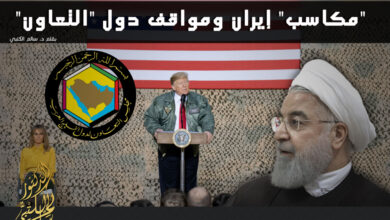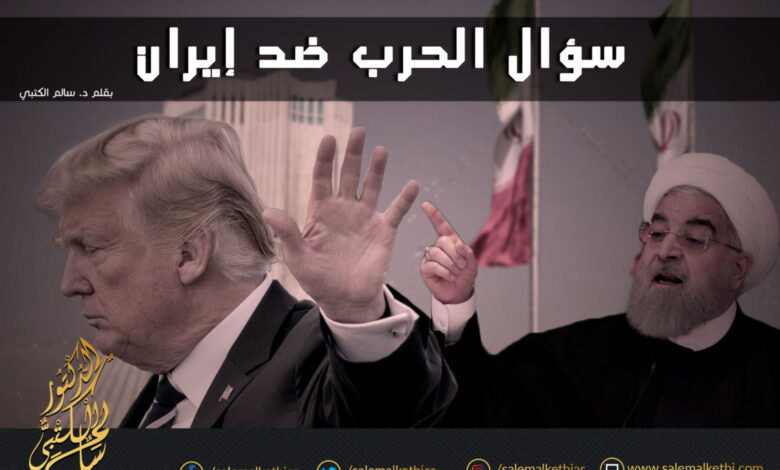
While November 4th is approaching, the date of applying US’ sanctions against Iran, tensions are escalating between the two sides. Researchers and experts in the Middle East are curious about this crisis. Some assume a possible US-Iranian military conflict. Others assert that war is inevitable and it is only about the zero hour – the timing of its outbreak.
Between the war and the settlement, there are two points of view. The first is based on simulating the North Korean scenario. This view focuses on the war of words and accusations, including insults and bragging the nuclear button. The war of words between the US and North Korea ended at the Trump-Kim Singapore summit. President Kim was praised for his wisdom.
The White House wrote a tweet thanking the North Korean president for his promise to hand over the remains of US soldiers killed in the Korean war at the turn of the last century. “Thank you to Kim Jong Un,” wrote Trump. Holders of this view compare the North Korean scenario to the Iranian one. They think the current tension will end with a summit between Trump and Rouhani. They cite Trump’s hints on his tweets about welcoming any negotiations with Iran aimed at reaching a different deal than the one he pulled out of. They also believe that Trump focuses on concluding a lot of deals with the US’s rivals. According to them, he brags being the leader of deals that are in the US strategic interests, in a way better than his predecessor Obama.
They also believe that the military balance between the US and Iran will not make the mullahs resort to escalation as a realistic option. There are enormous disparities in conventional armament capabilities between the air and naval forces and missile capabilities of the US and Iranian armies.
Others see that war is coming. They believe that the mullahs will not accept any new negotiations with the US after its withdrawal from the nuclear agreement. This is due to a complete lack of confidence in the Trump administration. Holders of this view are also based on much evidence, including the worsening economic and living conditions in Iran. The war will be a lifeline for the mullah’s regime, which is always betting on the export of crises. The Iranian regime will seize the opportunity to save its future and mobilize the majority of the Iranian people around slogans such as countering the American aggression. The mullahs are aware that their influence in Syria, Yemen, Iraq and Lebanon is blocked. They invested Iranian people’s wealth over the past years in these countries. Igniting a war would be a suitable idea to cover the crimes of the mullahs. A war is an excuse to circulate the idea that it led to the collapse of the economy and the deterioration of the country’s situation.
Supporters of this view say that military differences have no effect on the calculations of the Iranian decision-maker. Tehran is characterized by adventure, political insanity and strategic recklessness. The mullahs do not bet on a conventional war but on luring the US to a war of Iran’s regional and sectarian agents. The RGCC has trained sectarian groups for many years to act aggressively if the Iranian regime is in danger. There are also dozens of secret plans to use Iranian cells in several regions and countries to spread chaos and destruction. These plans are a great pressure on the planners of the war in the US to stop them, perhaps before achieving their goals.
Others believe that the war is inevitable. They think that the real question is not of war and settlement but a question of the timing when the American and Israeli missiles will be directed at Iran.
Indeed, the question of war is one of the most difficult questions of the time, circumstances and current data. Perhaps the answer is at Trump’s hands. He is well aware of how he will deal with Iran and where he intends to push the path of verbal escalation. He knows whether to turn escalation into the ground or just put the historic sanctions on Tehran as a bet to have the Iranian people overthrow the regime.
A political analyst may not find sufficient data to foresee the future in such ambiguous and complex circumstances. The experiences of the recent past and the corresponding situations do not seem to be fully consistent with the current crisis. The behavior of the two parties is unpredictable, especially the reckless mullahs. Iran’s regime is in a trauma that may lead him to ignite a war. There is a high probability of mutual misunderstandings between the two sides. These factors remain balanced probabilities for all scenarios and are open at almost equal weights. The deal scenario is perhaps the most likely to take place.