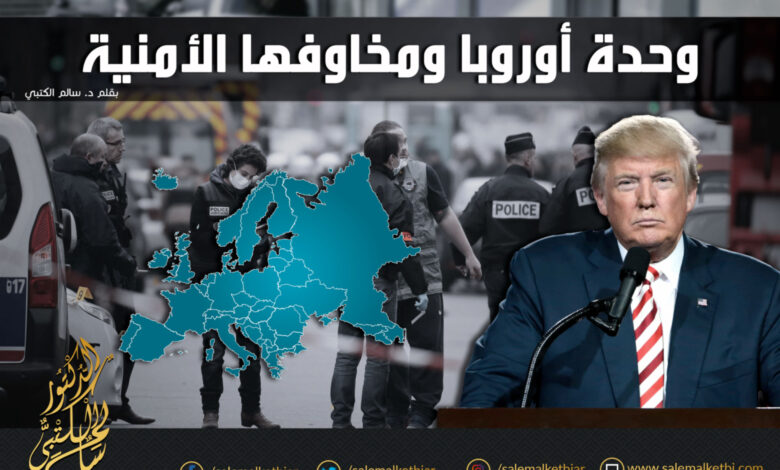
Western observers described Trump’s policy against his allies as a trade war. The UScharged its allies in the EU of about 15-25 percent applied on iron, aluminum products and cars. The European countries have so far filed a complaint to the World Trade Organization as a response to the US decision. The EU has also disclosed a list of US goods that they intend to impose taxes on.
The US president is holding the approach of America First, leading to deep divisions in relations with their traditional allies in the EU. Some analysts went to believe that the decisionwas a strong pressure on the EU countries in response to the European tripartite stance, in dealing with the subject of the nuclear agreement on Iran.
Trump believes that alliances cannot survive for a long time regardless of shared interests. It is therefore remarkable that this harsh punitive decision came shortly after the US, the UK and France launched a military strike against al-Assad’s regime.
The EU is worried about the collapse of its historic alliance with the US. Many European leaders are already talking about a close end to this alliance. They assumed that the Trump administration is practically abandoning Europe, despite its positive statements.
The outcomes of the recent Munich Security Conference reflected concerns. The annual report of the conference called for the establishment of a European security system completely independent of the US. European fears of strategic exposure have also surfaced in the statements of some European officials. They warned the Trump administration of reducing US involvement in NATO. They considered the move could lead to disaster, giving Putin the greatest gift. Trump has not been comfortable with the NATO. He declared during his election campaign that the NATO was an outdated alliance. In May 2017, he embarrassed NATO leaders during the opening ceremony of the new NATO headquarters in Brussels, asking partners to fulfill their obligations. “23 of the 28 member nations are still not paying what they should be paying and what they’re supposed to be paying for their defense,” he said. He added that this is not fair to the American people who pay taxes (to the NATO). He continued that “if all NATO members had spent just 2 percent of their GDP on defense last year, we would have had another $119 billion for our collective defense and for the financing of additional NATO reserves”.
Germany is refusing to increase its contribution to NATO funding. Only five NATO member states spend 2 percent of their GDP on defense budgets (the United States, Britain, Poland, Greece and Estonia). Experts believe that the issue of GDP is relative. The GDP in Greece is not the same in Germany. Many European leaders fear that, during the next NATO Summit in July, Trump may reduce the US commitment to the alliance or launch new warnings about US involvement in defending Europe.
Putin took advantage of EU’s concerns. He offered to provide a Russian protection system to Europe saying that his country will do everything to prevent the emergence of new threats in the world. He also expressed Russia’s readiness to help Europe in the field of security.French President Emmanuel Macron, Japanese Prime Minister Shinzo Abe, Chinese Vice President Wang Qishan, were among those attending the St. Petersburg International Economic Forum. In response to Macron’s comment that Europe heavily relies on the US concerning its security, Putin said: “At any rate, we will do everything we can to prevent any new threats”
The US has been deploying its troops in various European countries. Germany hosts the largest number of these forces on its territory. Previously and under the pretext of confronting the so-called Russian threat to Europe, The US aimed to expand militarily in the EU and strengthen its presence. But developments have taken place. The Trump administration is paving the way to extract concessions from the EU by threatening to withdraw its protection.
The European crises are not limited to security. But the fate of the EU itself is at stake because of the crisis in Italy. After the last Italian elections, winning parties have failed to form a new government. There are high expectations of the collapse of the EU. Can Europe deal with its crises and save the NATO?