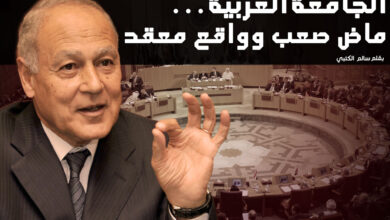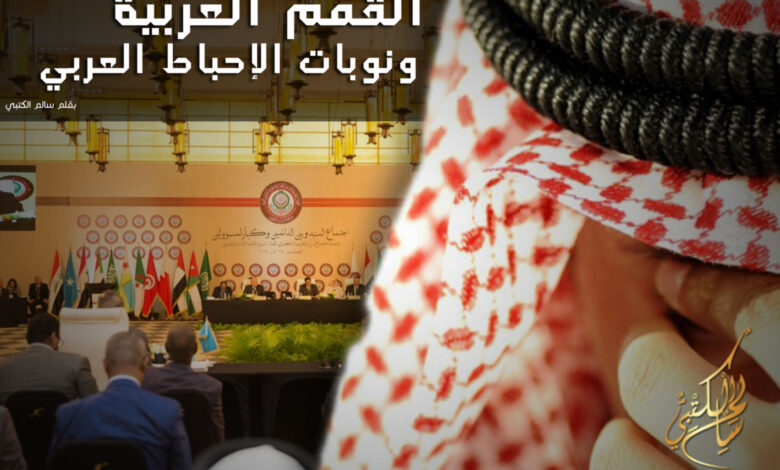
Arab summits always bring up the subject of the Arab League into many discussions, but no genuine changes happened so far. The Arab League established by the Arab leaders who signed its founding charter in March 1945 was once a symbol of hope, unity and cooperation, now of misery, division, and panic.
If you follow social media outlets these days, you will find that many are criticizing the Arab League before Amman’s summit. Some say that the frequent Arab summits are like funerals that remind us of the lost Arab nationalism. Others found that the League performs an important goal, providing an opportunity to ‘honor’ some Arab diplomats, or that the League is just a formality.
The point is that the Arab League is in a bad place. However, the institution has no hand in what is happening regionally. Despite the present conditions of institutional and political weakness and decline, the League remains a pan-Arab entity. Furthermore, it is difficult to give up on the oldest Post-WWII international organization.
The League needs a radical and urgent structural reform, as it can no longer sustain this miserable level of action. The failures of the League to solve several problems are an embarrassment to Arabs and their league.
One of the problems the Arab League experiences is that the world in general is undergoing a downgrade of international institutions. For instance, the United Nations itself is no longer an international entity of impact. Many countries have turned to concentrate on their internal affairs.
Certainly, the crises in the region have become more complex for the Arab League’s ability to solve them, after the League itself became a subject of controversy and a subject of contention between Arabs. During the previous years, as the summit nears, some were optimistic enough to anticipate something different, but the summits in recent years were not exceptional except at the level of attendance and in terms of the political discourse used.
It is difficult now to expect a substantial breakthrough in Arab issues in light of the degrading role of official bodies in the Arab region. This fact is due to the absence of pillars such as Damascus, the decline of the role of others such as Baghdad, and the deep crisis between Riyadh and Cairo. Perhaps now we pay the bill for the long marginalization of the role of the Maghreb in the structure of the collective Arab system. Rabat and Algeria are important pillars for Arab national security, but their pivotal role in safeguarding the Arab national security has been marginalized since decades.
I think it is time for all of us to recognize that Morocco and Algeria can have a vital role in guiding the Arab regional system. Other countries have also an influential role by virtue of the latest developments and the balance of the global powers. The GCC countries have actually become a regional leader so it is time for it to take the lead of the Arab League. In fact, these six states have been successful in achieving development on top of their capabilities in negotiation, political, and security. They can join the traditional powers such as Egypt, Jordan and the Arab Maghreb countries to take the lead.
In an unprecedented failure on the developmental, educational and economic levels, tens of millions of children and young Arabs were made homeless, either as refugees or internally displaced, after the destruction of thousands of schools in Syria, Iraq, Libya and Yemen. Statistics confirm that the Houthis have caused the displacement of about 5.2 million children in Yemen, depriving them of education after the destruction of about 1,700 schools. Now hear this: 1700 schools were destroyed in Yemen by the Houthi and the pro-Saleh militias. Such terrorism-sponsoring groups have to be stopped.
In the UAE, we hope for a better future and look up to the opportunities the country can offer, and we are positively assessing things around us. So, I personally think that it is not too late for the Arab world to step out of the quagmire of frustration and failure.
The crucial task now is to open a new page and work hard in order to save the future of millions of our children and youth. The Arab League has a vital role in this task, provided that it starts with reform at once. The League must as well abandon the traditional methods of work that caused the decline of its role for decades.
Arabs and the Arab League need to think outside the box and work differently. We must recognize that the League has become a source of anger and resentment for the Arab people, but we cannot keep mourning forever. His Highness Sheikh Mohammed bin Rashid Al Maktoum, UAE Vice President and Prime Minister and Ruler of Dubai, said that we have to start and try to resume our building of our civilization.
In my view, reform will start when the Arab League is transformed. The Arab youth are the hope for a better future. But how do we start and what strategies to follow? This is the dilemma that might cause further conflicts and fragmentation in the Arab world.