As a result of increasing terrorism, militancy and extremism, racial and religious hatred is spreading across Western countries. The extreme right calls on expulsion or ban on Muslims or prohibiting the construction of mosques.
This cannot be simply dealt with through Muslim internal monologues or claiming terrorist groups and tolerant Islam are two separate things, because this talk will not reach the West or may not be convincing enough.
Dialogue is the perfect tool for building bridges and searching for common grounds and cultural communication, not catastrophic conflict.
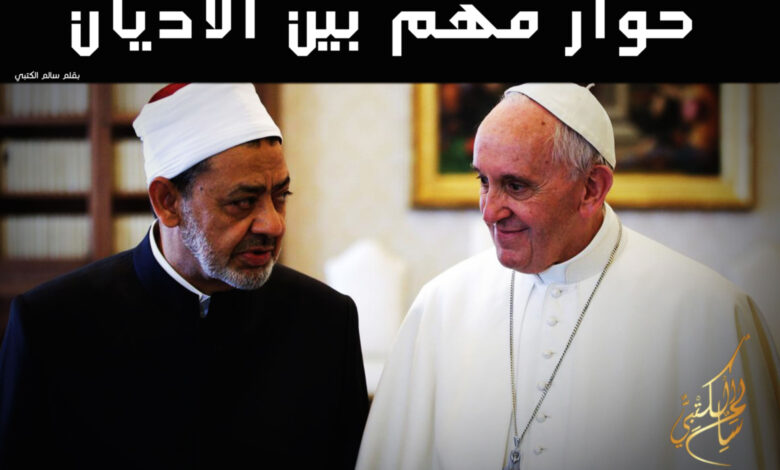
The meeting held recently in Al-Azhar headquarters in Cairo between the joint committee for dialogue and the Pontifical Council for Inter-religious Dialogue of the Vatican was the first of its kind since 2010.
The meeting addressed the role of the two institutions in confronting the phenomenon of intolerance, extremism and violence in the name of religion.
The importance of this meeting is that it was not ordinary but included high-level figures. It was attended by the Undersecretary of Al-Azhar, president of the Pontifical Council for Dialogue in the Vatican and other dignitaries from both sides.
There is no doubt that Al-Azhar has a historical legacy of moderation and is able to manage this kind of dialogue. Religious conflict can take humanity back to the dark ages. Today, Al-Azhar is headed by Dr. Ahmed Al-Tayeb, with his wide knowledge, enlightened vision and awareness of the role of religion in the development of human civilization.
The fight against terrorism requires work on multiple pathways, including opening channels of dialogue with the other to persuade of the difference between Islam and terrorism. This separation has become very necessary in light of the spread of Islamophobia spurred by some self-seeking political forces. The whole world would pay a heavy price if anti-Islamic discourse persists, because increasing hostility in Western countries harms the social fabric and terrorist organizations use hate speech to spread their propaganda.
Hence, major religious institutions like Al-Azhar and the Vatican have a huge responsibility in this historic phase to defuse tensions, address anti-religious speech, promote coexistence and acceptance of others, and violence by extremist and anti-Muslim groups alike.
Spreading moderation and coexistence deserves great and continuous efforts of safeguarding communities from extremism, militancy and violence.