In a previous article, I talked about the possibility of conflicts of interest between Russia and Iran in Syria and that Russia could sacrifice relations with Iran for the rapprochement with the Trump administration in the aftermath of the tension with the outgoing Obama administration.
Russia wants to retain sea and air bases in Syria. Iran has rushed to sign agreements with Bashar al-Assad’s regime, notably regarding the establishment of an oil port in Syria for which five thousand hectares were allocated, and which is expected to be on the Mediterranean coast near the Banias city in Tartous governorate, near the recently developed permanent Russian military base.
The agreements were signed during a visit by the head of the Syrian regime, government, Imad Khamis, to Tehran recently, where he called on the Iranian side to participate in the reconstruction of Syria, as if Iran, which strongly participated in the destruction of Syria, along with terrorism organizations and militias and other international forces, is now to win its share of the Syrian pie under the pretext of reconstruction.
There is a conflict of interest between Iran and Russia in Syria. The Russian political discourse changed. Recently, Sergey Lavrov, Russian Foreign Minister, sent a clear message to the Iranians. He said that the Russian intervention prevented the fall of Damascus in the hands of armed groups, and that the presence of Iranian advisers and thousands of elements associated with militia in Tehran was not of value without the decisive intervention of Russian troops.
The statements of Lavrov came in the context of an implicit response to the reports about the efforts of Iranian to disrupt the Astana negotiations through pushing the Syrian armed opposition to boycott the negotiations, especially that the Russian Turkish roles in the settlement marginalize the role of Iran. The understanding would impose a cease-fire on all parties, including the Syrian forces, as well as the militia of Hezbollah and the pro-Iran Shiite Forces.
Observers consider Lavrov’s statement a reminder to the leaders of the Iranian Revolutionary Guards in Syria about what is going on on the ground; if it were not for the Russian aerial intervention, the Iranian militia would have been crushed, so they have to answer to Moscow and stop playing with fire in Syria.
Under the Russian-Turkish understanding, the Iranian role is undermined. Russia put pressure on Assad and Turkey on the armed opposition. Iran was unable to oppose the deal so as not to risk angering the Russian ally, but sought to undermine it through pushing its allies to violate the ceasefire agreement, as a Turkish Foreign Ministry official said Iran was “disturbed” by the Russian Turkish rapprochement.
Iran’s concern from this convergence does not change reality. Iran has few cards to play, and cannot anger the Russians while it prepares to deal with the new US administration. If this agreement came before six months, Iran would have opposed it because the Obama administration would have been quiet about such an adventure or even supportive of it in order to give more trouble to Russia in Syria.
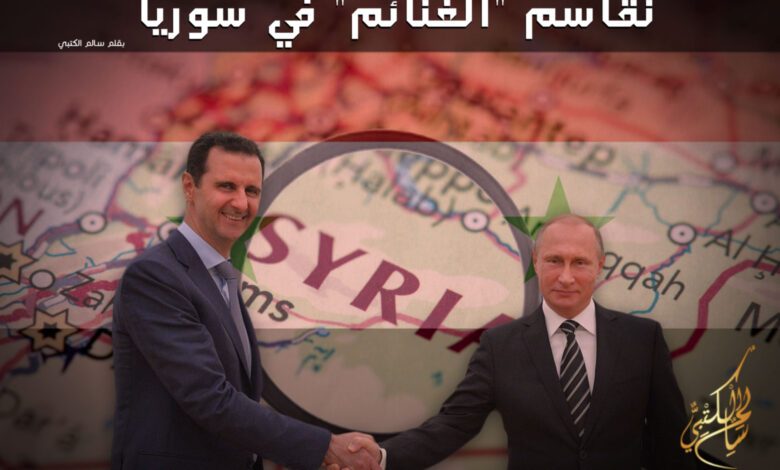
The Russian diplomacy deals with the Syrian file now as a bargaining tool with all relevant parties, unlike the Iranians, who consider Syria a gate to sectarian expansion.
Russia may be keen not to compete with the Trump administration, but President Putin may have some ambitions in Syria to help his “friend” Trump win his first foreign policy victory, and has not forgotten to send a positive message to Saudi Arabia by inviting someone relevant to the negotiations in Astana.
Iran’s proxies such as Hezbollah in Lebanon are likely to come out of Syria upon Russian request to implement the ceasefire agreement. Media sources indicate that Assad is satisfied with Russia’s plans to migrate all militia from the Syrian territory, including pro-Iranian Shiite militias so that Iran would not use them as a future pressure card, which angered the Iranian as Assad did not consult with them in this regard.
The moment of the sharing of power and interests between regional and international powers in Syria is near. Unfortunately, this is happening amid a total absence of the Arab role at the individual and collective level. The Arabs simply stand by to watch the card being dealt in Astana and possibly later negotiations.