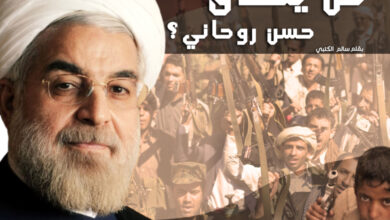
After about almost six months of the visit of Iranian President Hassan Rouhani to Paris, and receiving what the media described as “a stream of business deals” with a total value of about $ 45 billion, the French capital recently hosted a mass conference of the Iranian opposition, in the presence of dignitaries from several countries including Aligo Vidal Kadras, former deputy head of the European Union, Philip Crowley, assistant secretary of the former Minister of Foreign Affairs, and Marc Ginsberg, former US ambassador to Morocco, and former adviser to US President for Middle East policy, Frances Townsend, the former chancellor of US President for national Security Affairs, and Howard Dean former presidential candidate for the Democratic party.
The annual conference of the Iranian opposition is organized by the National Council of the Iranian opposition, which is based in France, and it is a usual and traditional conference, but its last session received an unprecedented global media attention, and the news agencies picked up the remarks of the Iranian opposition leader Maryam Rajavi’s and her demanding the departure of the mullahs’ regime in a bitter irony to the system, whose founder Khomeini also began from Paris in the seventies of the twentieth century, calling for the overthrow of the Shah, and the world at the time considered his call just as a fruitless act.
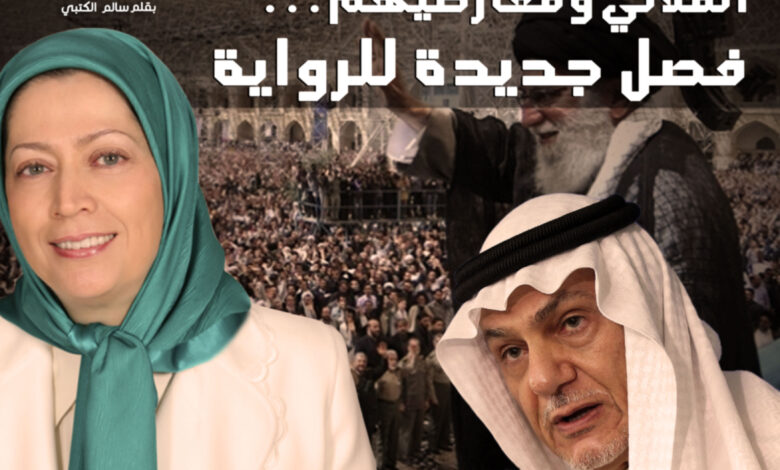
The conference aroused a clear interest on the part of the Iranian regime, which followed the specific words and statements of Prince Turki al-Faisal, the former head of Saudi intelligence, which was drafted very intelligently, and in which he was keen to make a distinction between the Iranian regime and the Iranian people, and said that Arabs harbor great respect for Iranian culture and Persian contributions, but Iran insists on interfering in the affairs of neighboring countries and on the establishment of sectarian organizations. Al-Faisal stressed that “the Khomeini regime brought nothing but destruction and sectarian bloodshed, not only in Iran, but in all the Middle East countries”, and pointed out that “Iran is violating states under the pretext of supporting the vulnerable in Iraq, Lebanon, Syria, and Yemen, and is supporting armed sectarian groups, and that support aims to create chaos,” and the situation reached its peak when al-Faisal replied to the attendance cheers at the conference “the people want to overthrow the regime,” saying, “and I want to overthrow the regime.”
The emergence of Maryam Rajavi, leader of the “MKO” at the front of the Iranian opposition conference in Paris represented a strong message to the Iranian regime from all over the world. The huge crowds numbering about one hundred thousand participants came from various parts of Europe and the United States and Canada, and the National Council of the Iranian opposition has reached the political maturity and adulthood that enable it to lead a broad stream of Iranians who reject the continuation of the mullahs’ rule.
Personally, I do not agree with those who are alarmed nor with those who take it easy among the Iranian opposition movements abroad, but I am confident in the experiences of history, and I realize that the when the spark kicks off in such cases, the flames will inevitably reach the rest of the forest, which means that the fact that the conference takes place this year in this manner is a clear message to Iran’s regime. It is not necessarily a final warning or a “red card” the West raises in the face of the mullahs, but it is certainly a strong warning and pressure message, and this warning also does not mean that the West is demanding from Iran what we are demanding from it as nations and peoples of the neighboring GCC.
We have to read the scene well, accurately and cautiously, and we should not exaggerate in wishful analysis. France or the rest of the EU and the United States are not deeply involved with the boasting of Iran and its usurping of the territory of countries such as Iraq and Syria unless there is a direct harm to their strategic interests, and therefore we have to stop exaggerating and building illogical expectations on this issue specifically.
We also have to realize that one of the specific goals of the French pressure is to grab a greater share of the “cake” of the economic interests expected with Tehran in the coming period, so Paris raised the sword of the Iranian opposition and gave Rajavi and her companions the green light to bellow and demand to drop the mullahs’ regime so as for the latter to give in and accept to offer the trade and economic deals required during the next phase.
What is certain is that the participation of Prince Turki al-Faisal at the conference represented an unprecedented event and a tremendous qualitative shift in the management style of relations between the two shores of the Arabian Gulf. Iran was not expecting that the military initiative and firmness could continue to move to the political and diplomatic sphere. The GCC has been fed up with the excesses of the Iranian neighbor, which no longer takes into account any rules or international norms governing the countries relations with each other, and continues its crude interventions in the affairs of the GCC countries, and its leaders do not stop from intimidating and threatening neighboring countries. So Prince Turki al-Faisal words came to warn Iran that the GCC countries have staggering instruments of pressure capable of tipping the balance of power and shuffling papers inside Iran.
Iran should realize that it has opened the gates of hell on itself when it decided to continue to intervene in the affairs of the GCC, it has been used years ago to ignoring the calls to observe the principles of good neighborliness and the commitment to the rules of international law in this regard.
Despite all the above, the pathways and scenarios for the next phase in the relationship between the mullahs and the opposition and the Iranian people will be drawn by Iranians themselves. They are the ones that paid the bill for the mullahs’ regime errors, and suffered and endured so much because of its reckless mistakes and policies that drained the Iranian people’s money for the benefit of supporting terrorist organizations and spending to gain a false influence in several countries and regions, all of these acts being motivated by the desire to achieve the reckless dreams and aspirations of the servants of the Iranian regime.