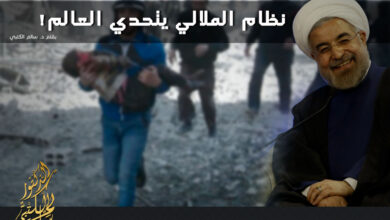
“A torrent” of European trade deals with Iran … This is how some Western media summarized the overall visit of Iranian President Hassan Rouhani to France and Italy recently. Europe had been waiting a long time in order to reap the fruits of the nuclear negotiations marathon with Tehran, so the first and primary concern was the signing of agreements and the winning of the biggest part of the cake consisting in projected investments in the Iranian economy. And Tehran was aware of this European alacrity and used it to its advantage, which explains the signature by President Rouhani of agreements worth around $ 45 billion with the French side, which included the purchase of about 120 “Airbus” aircrafts, and the return of the famous French cars company “Peugeot” to manufacturing in its factory near Tehran. And in his business trip to Italy before the Paris visit, Rouhani signed contracts worth 17 billion euros.
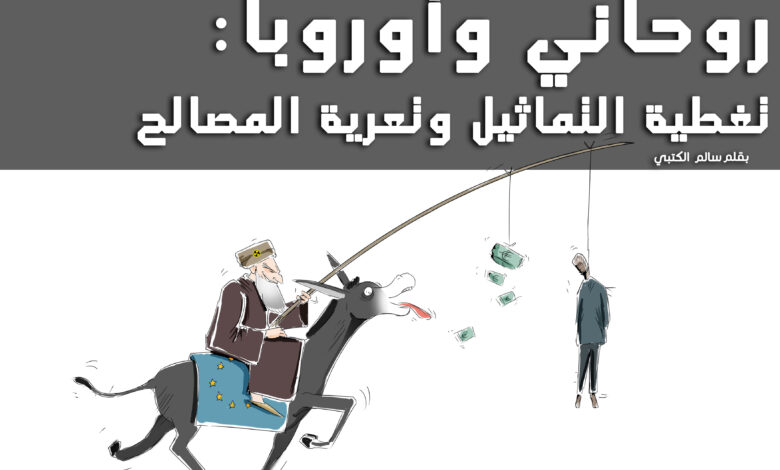
Many titles are suitable for expressing this visit, but the most important of all in my opinion, is covering statues and uncovering interests. During this visit, Europe has completely forgotten its values and principles. Everyone kept silent about the reports that preceded the visit, which talked about the fact that Iran is ranked in the second position in the world regarding the implementation of the death penalty, and ignored slogans that read “Hello freedom torturer,” And both the French and Iranian parties implicitly agreed on giving interests absolute priority in spite of the rules of protocol, which would almost have spoiled the visit about two months before now, i.e. in its previous date, which was postponed on the background of the terrorist Paris attacks.
France, for its part, jumped on the divergence of views on the official luncheon without alcohol, according to what the Iranian side asked for, and had canceled the official luncheon, while Rouhani’s visit to Italy was full of more concessions embodied in the provision of halal food and, most importantly, in covering famous Italian naked statues in response to a direct order from the Italian Prime Minister Matteo Renzi, as Italian media reported during the President Rouhani’s visit to Rome Museum, so that His Excellency does not feel any embarrassment while visiting the museum!!.
The difference in the size of the protocol “concessions” may seem equal to the size of the suffering of the French and Italian economies from the financial and economic crises experienced by the euro zone countries. Thus, in the same way also seems the impact of interests and numbers in its best form, and everyone has to know the lesson well. Although the time difference between the basic timing of Rouhani’s visit during the month of November last year and the recent visit a few days ago seems small regarding time calculations, it is a huge difference in terms of policy calculations and in terms of the language of figures and interests. Indeed, Rouhani came to Europe this time, with many commercial contracts and a few policy files with him. The economic sanctions have been lifted on his country, and he came with his pens and checks that everyone was awaiting, while the previous visit in November was not at the same degree of economic and commercial importance, as numbers at the time were not ranked high in the debates!!
During the recent visit, no controversy was raised about the protocols of serving “wine” during the banquets which are held in honor of the guests at the Elysee Palace, a protocol problem that caused the postponement of former Iranian President Mohammad Khatami’s visit to France from April 1999 until October of the same year. Then, the same controversy emerged on the sidelines of Rouhani’s visit to France last November. Finally, Rouhani came to Paris, and the two sides settled on a change in the welcoming ceremony, the official luncheon was cancelled, so as not to serve wine in honor of the guests among presidents.
Such protocol dilemmas may seem superficial with no implications, but they actually fall within the core of politics, and are not devoid of meanings. Politics cannot be absent from the details of any political event, and there is enough in the diary of former US Secretary of State, Madeleine Albright, (1997 2001) to show that some small details do have a big significance. Those who have worked with her said that the “pin” she put on her “jacket”, revealed “her work agenda” and her psychological and political positions about any subject before she tackled it. It was said she was the Foreign Minister who used her jewelry the most in order to send political and diplomatic messages, which was later known as “jewelry” diplomacy, to the extent that it was said that the other Foreign Ministers were waiting to see the jewelry and brooches she wore on her chest to get to know her thoughts and attitudes and general mood. Albright herself has addressed the whole matter in her famous book entitled Read my Pins: The Madeleine Albright Collection. In this exciting book, she recounted many stories and anecdotes and attitudes about the use of pins to send political messages during negotiations and dialogues, and that she wore a brooch in the form of a “horse” when she met with Saudi Foreign Minister, late Saud al-Faisal, to emphasize her recognizing of Arabs and their love for the equestrian and horse culture, in a highly intelligent symbolism of the Foreign Minister of the world superpower, and there are numerous diplomatic signals in the way of shaking hands, and hugging and much more.
What I mean is that there are small signals, but they are located in the heart of politics as long as they were found in it or came out of it, and the protocol debate is part of the literature of the French-Iranian relations on the background of the serving of alcoholic beverages and the availability of “halal meal”. States in such cases treasure historical Protocols regarding the reception of presidents and VIPs, especially in a country like France, where French wine selections occupy a special position in the protocol of lunches intended for presidents and leaders who visit the Elysee Palace.
The basic lesson in ending the controversy over French wine or over covering the statues of Italy, is that on the surface, the matter may be linked to the Protocol but essentially suggests a conflict of interests, values and cultures and a desire on both sides to prove presence and strong impact in the first external political test for Tehran after coming out from its international isolation and the lifting of international sanctions against it.
And talking about upholding the language of figures and interests is not a casual matter in international relations, it is the basis for them, and it is the only reason why the French President Hollande, known for his love for wine and his pride in inviting guests to taste the best types of wine during official visits by world leaders to his country, has abandoned his habits and consented to change the protocol to please Rouhani.
The matter was not also devoid of politics. The President of Iran was not only looking for deals in the trip to Italy and France, but also sought to reinforce his internal position and multiply the impact of political points, which he harvested in the wake of the lifting of sanctions on Iran. And here came the role of “halal” souvenir pictures and the winning of some symbols of the tour, such as avoiding any embarrassment in the presence of alcohol, as well as the symbolic meaning of Rouhani’s presence in Paris, the opening to the Western world it suggests, and the cultural and political implications of the visit to Paris specifically for Iranian politicians, not to mention the special importance of the visit, being the first of its kind for an Iranian president to France since 1999.
France for its part, did not want to miss the chance to reap the rewards of its negotiation efforts with the “5 +1” group even though it was the most stringent international party in this marathon nuclear negotiations with Tehran, and Italy, was clearer, as I mentioned, when it covered its statues!!
Perhaps, for the Gulf Cooperation Council, Rouhani’s tour was a suitable opportunity to know the limits and scope of European rapprochement with Iran, as France is Iran’s preferred gateway to the Western world. Therefore, what was put on the table of dialogue may involve important indicators about the nature of Iran’s openness to the West during the next stage.