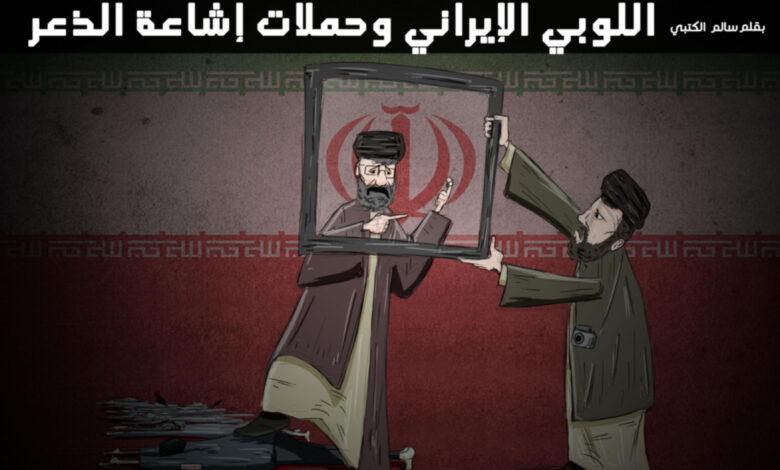
With the spread of pro-Iranian TV channels encouraging sectarianism, the Iranian influence recently shifted from a phase of narrow elitism to a phase of expansion and proliferation.
It is no secret to say that Iran’s political capital has succeeded in building a loyal media machine that is a defender of Iranian interests in many countries of the region and the world over the past years. The gears of this giant machine are not as difficult to identify as some might imagine. Anyone working in the field of media and political and strategic Studies can understand the dimensions of the Iranian influence. With the spread of pro-Iranian TV channels encouraging sectarianism, the Iranian influence recently shifted from a phase of narrow elitism to the phase of expansion and proliferation.
This Iranian lobby, which includes a spectrum of media workers in the Arab world, is no longer limited to specific figures the Iranian regime uses, directly or indirectly, to promote its interests. Recently, the lobby vehemently engaged in the hostile campaign aimed at distorting the reputation of Saudi Arabia, throwing accusations concerning the events that took place during the pilgrimage season.
The political exploitation of the stampede incident was clear from the first moment. The moment the incident was reported, the Iranian and pro-Iranian media accused Saudi officials of negligence and failure and other usual accusations. Back then, I wrote in an article that the Iranian tendentious campaign has political dimensions, including pressuring Saudi Arabia to halt its military campaign in Yemen.
Some might have considered that this analysis was based on conjectures or a conspiracy theory or intended to promote a particular point of view, but the Iranian policy regarding the GCC has not changed much and is not far from being unpredictable. Iran always seeks to keep opponents busy with side battles, proxy wars and internal conspiracies, exploiting their crises to achieve its interests and objectives.
The anti-Saudi media campaign and the political exploitation of the tragic Hajj events were not quite successful, so the Iranian media thought of making a different kind of pressure. Casting doubts about the future of the Saudi economy, headlines like “near collapse of the Saudi economy,” and “Saudi Arabia’s economy on the brink of the abyss” appeared, along with statements of personalities loyal to radical organizations and groups and others known for their anti-Saudi sentiments.
The main point of concern here is the pro-Iran Arabic-speaking media. Iran is fueling some of the inter-Arab disagreements and trying to revive historical inter-Arab disputes. It is also inflating stereotypes people in the Arab worlds have about the Gulf Arab countries specifically, in an attempt to isolate the GCC from the rest of the Arab region. Then, after distorting their image and generating apathy towards them, cutting them from their natural strategic context, Iran would target the Gulf countries.
The media attack peaked during the Syrian refugee crisis. Hostile campaigns against the GCC countries spread through social networking sites and Arab media outlets, accusing them of not accepting refugees. In fact, these countries do not receive refugees from any country, but they received hundreds of thousands of workers and families, of the Syrian, Iraqi and other nationalities, before and after the last crisis, not to mention their humanitarian efforts and relief assistance they provide to Syrian refugees on the borders of neighboring countries.
Perhaps the humanitarian efforts of the GCC do not receive much media coverage to respond to these malicious campaigns, which should be done to spread the truth, ward off the conspiracies and tendentious media campaigns. In the near future, we may witness more anti-GCC propaganda campaigns supported by Iran and well-known terrorist organizations. The arms of the Iranian media lobby and its dormant cells should be observed with care. Today, we follow suspicious reports about the future of the Saudi economy, with the objective of causing panic and inciting the public opinion to put pressure on political leaders to withdraw from Yemen; tomorrow, we may read frightening media reports about other Gulf economies, and so on. In any way, the purpose is clear.