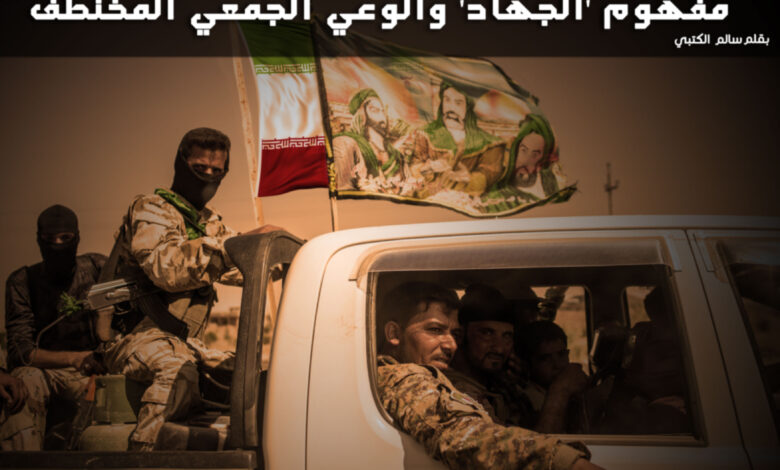
In the midst of the ongoing attacks and terrorist crimes committed by Daesh in several countries, the group is promoting the central tenet of Islamists. Through the concept of jihad, the organization is trying to justify crimes against Shiite mosques in Kuwait and Saudi Arabia. The Sunnis, however, are the main victims of the heinous practices of the organization.
On the other side, an Iranian discourse is trying to link extremism to Sunni religious ideology, specifically the prevailing doctrine in certain Arab countries, but Iran is behind the spirit of hatred and sectarian animosity that has spread in the region in recent years as a direct result of the policy of proxy war pursued by Tehran in several Arab countries such as Iraq, Syria, Lebanon and Yemen. Money flows to Shiite politicized groups and organizations loyal to Iran and that are working to the advantage and adopting the goals of Iran without the slightest regard for national loyalties, social cohesion and stability in those countries.
This atmosphere that Iran created eventually produced Daesh. A climate of sectarianism is the main incubator for any Sunni or Shiite extremist thought.
Efforts promoting values of moderation, tolerance and acceptance of others are essential but remain of limited impact unless parallel efforts are made to countervail Sunni/Shiite sectarian or terrorist discourse. The deep threat of this discourse is disseminated by certain satellite channels affiliated or funded by some states, organizations and groups. They diffuse sectarianism-charged messages that deepen religious crises that have became worse than the Europe’s fierce religious wars that lasted for nearly three decades in what has become to be known as the Dark Ages.
The religious discourse may need years or decades of reconstruction, and sensitive ideological concepts such as jihad (diligence) and hakimiyya (rule of God) may be employed to incite. Nonetheless, these sensitivities should be addressed, and extremist rhetoric countered whether they are coming from individuals, Shiite channels, or Sunni extremist groups.
Jihad is a concept that did not get the attention it deserve from researchers and scholars of the Islamic religion. This concept was exploited by extremists and terrorists who interpreted it according to their whims.
They all raise the flag of jihad, adopt a jihadist discourse and a jihadist ideology, some researchers even, mistakenly or unintentionally, call terrorist organizations jihadist organizations, linking the construct of jihad to the religious concept, and even give the practices of these organizations a kind of religious legitimacy. Terrorists had jihad misrepresented. The Islamic concept is in dire need of urgent redefinition so as to disambiguate jihad as a divine duty from the destruction (fasad) these organizations wreak.
Enlightening is the role of knowledgeable clerics who have to make more efforts to expose the extremist ideology. They must produce inputs of rationality that are as influential as the emotive interpretations terrorists use to attract young individuals.
The terrorist conception of jihad is not based on the jurisprudence of reality (fiqh al-waqi’) but on responsa (fatwas) by leaders (imams) of Islam in different historical stages and conditions that may not fit today. In the absence of any credible clarification of how the concept is to be applied on the ground, the scene remains open to the leaders of evil and advocates of strife who use the concept to achieve their political and material goals and interests.
In addition, the Internet and social networking help terrorists circumvent strong security measures and recruit new sympathizers to turn them into sleeper cells or “suicide projects”. Lone-wolf terrorists move without direct coordination with the central leadership to achieve the objectives promoted by the group.
Finally, developing the religious discourse does not mean westernizing or abandoning religion. Strong, sincere and continuous efforts should be made through cross-cutting cleavages in Arab and Muslim societies. Clarifying the concept of jihad and other key words of religious discourse is imperative today.