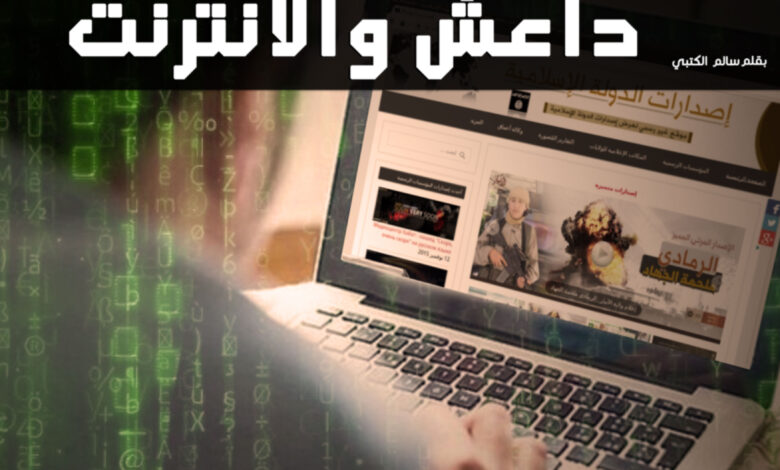
It is clear that Daesh terrorists exploit technological advances and development in the field of media beyond what most people imagine. This fact was confirmed by a recent study by a team of Saudi researchers in digital media from King Saud University. The study said that Daesh targets Saudi youth via the Internet, taking advantage of the fact that they spend most of their time on the Web to try to recruit them, just as it does with large numbers of young Arabs and holders of Western or East Asian nationalities.
More seriously, specialized studies revealed the presence of members of Daesh in a large number of websites and forums that constitute large libraries of ideology, discourse and mechanisms of recruiting, financing, training on tactics of combat and on the making of explosives—anything terrorists need.
Since Daesh emerged and unlike Al Qaida, they relied on the electronic media. Al Qaida could not ideologically attract and recruit young people because they used outdated media material. Daesh resorted to technologically advanced mechanisms and even translated their ideas in world languages like English, French, German, Russian and Urdu.
Arab and Muslim countries can monitor the online activities of Daesh activities in one language or two, but no one can say for sure that there is effective oversight of the activities of Daesh in languages such as Urdu and other languages spoken by hundreds of thousands of expatriates and labor workers.
Online and social media is one of the strengths of Daesh. There are efforts to counter the activities of this organization, but monitoring the media wings of terrorism is not easy. The online generation can be easily involved in terrorism activities, after the older generation of the eighties that relied on recording and audios left the scene. The new generation of terrorists addresses their young peers through intellectual persuasion or the exploitation of the intellectual vacuum and mental confusion many young people experience in some Arab and Islamic countries as a result of the lack of hope for the future due to economic or educational or social conditions.
This particular point means that the solution or alternative to counter terrorism and extremism can only come through holistic strategies. The approach should go in parallel tracks so as to make the process viable in the long term.
We cannot wait for a cure for terrorism without working on specific pathways such as the renewal of religious discourse and education reform. Creativity and thinking should be adopted rather than conservativeness and indoctrination. Economic reform to provide jobs and housing and tackling corruption, poverty and unemployment are also necessary. This would help reviving hope in the future for new generations of young people.
In fact, the parallel tracks (cultural, intellectual and socio-economic) should be the responsibility of governments. The Results of the work should be measured with precision and without favoritism or compliments. Western strategists estimate Daesh will further expand in 2015. This means anti-extremist efforts will continue, regardless of the debate on whether the organization is backed by Western powers. No debates are more important than protecting our communities and nations against terrorism and extremism and providing intellectual immunity for millions of our young people and adolescents who are exposed to terrorism and opportunities to join and carry out attacks for the group.