The growing strategic weight held by the Kingdom of Saudi Arabia in international relations is hard to overstate. It goes beyond the Kingdom’s influential and active role within the Organization of Petroleum Exporting Countries (OPEC) and the OPEC+ bloc, which are just the tip of the iceberg.
Enabling it to play a significant role within the framework of the G20, the largest economic bloc in the world comprising the most globally influential countries and economies representing approximately 90% of the global GDP, in addition to about 75% of world trade and two-thirds of the world’s population, is the economic power of the Kingdom. As the Saudi economy ranks 16th among the economies of the group in terms of GDP, according to statistics from 2021, the Kingdom plays a vital role in the group.
Moreover, the Kingdom has joined the Shanghai Cooperation Organization, led by China, as a dialogue partner. This step reflects the Kingdom’s new diplomatic calculations in the post-Ukraine world.
The Kingdom not only owes its regional and international role to being an economic and investment powerhouse, but also translates its capabilities, potential and resources into diplomatic action projecting a new brand image of the country worthy of international admiration and respect.
Turning into a focal point of global attention, economically, commercially, politically, diplomatically, culturally, and in sports, the Kingdom has recently garnered increased media discourse. Within this context, there are discussions of efforts made by the United States to reach a Saudi-Israeli peace agreement.
The matter here does not concern the subject itself or the speculative media speculations surrounding it, which are difficult to confirm or deny, given the characteristics of Saudi diplomacy. Operating in all aspects of its international relations with calmness and privacy, Saudi diplomacy ensures the achievement of the Kingdom’s interests and strategic objectives in its actions, away from rumors, speculations, and media hype.
During the negotiations that took place through various time and procedural stages between Saudi and Iranian diplomacy, we have witnessed this reality. It all began with Iraqi mediation and culminated in Chinese mediation, a step that garnered wide international attention.
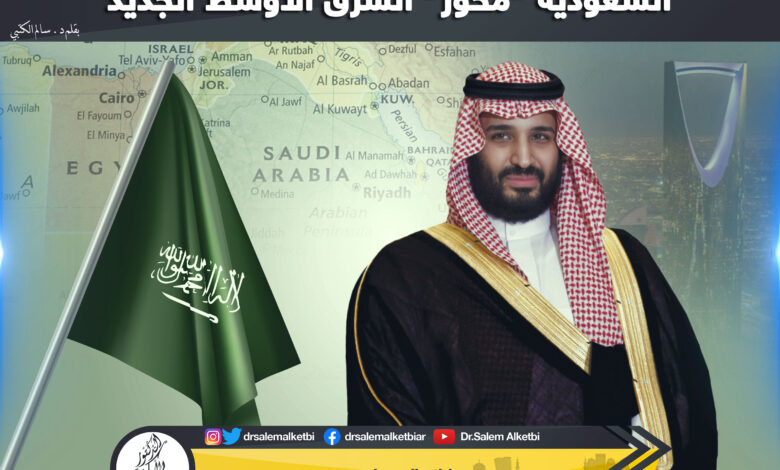
Knowing well what it wants from its regional and international relations, the Kingdom of Saudi Arabia certainly understands its objectives. As Crown Prince Mohammed bin Salman leads his country towards a historic qualitative transformation on all levels and fronts, he is increasingly gaining international respect and appreciation. In light of this impressive openness witnessed by the Kingdom, it becomes a subject of interest for all countries in the world, including Israel.
Strategic interests and mutual cooperation, beyond slogans and whims, are what matters here. The realism and precise strategic calculations that govern Saudi diplomacy over the past two years towards Iran, Turkey, Syria, Yemen, and other fronts directly or indirectly related to the Kingdom’s foreign policy are the same ones that we, as observers, expect Saudi decision-makers to consider. Whether it concerns establishing relations with Israel or others, these factors should guide their approach.
Becoming a central force that is indispensable in building security and stability, both regionally in the Middle East and internationally, the Kingdom of Saudi Arabia recognizes the significance of its position towards other regional parties. It is well aware that its stance is a highly influential factor in geopolitical equations and calculations.
By adding to that the Kingdom’s strategic position on both the spiritual/religious and Arab levels, we come to realize that the matter goes beyond a mere normalization agreement or any other specific issue. It is, in fact, about the overall regional situation. Currently, there is a process of reengineering alliances, connections, and relations taking place regionally and internationally, all within the framework of the Kingdom’s pursuit of achieving the ambitious goals of Vision 2030.
Requiring a favorable regional environment and new dynamics for regional relations, this necessitates ensuring the achievement of Saudi strategic interests while steering clear of conflicts and tensions with any party. Navigating through a vast array of sensitivities, complexities, and contradictions is essential in these matters, all while ensuring the avoidance of any negative impact and accumulating qualitative strategic returns for Saudi diplomacy.
Reflecting the policies of the Kingdom as a regional heavyweight with an influential role in the global economy, Saudi diplomacy builds its international strategic partnerships with its allies based on principles that consider diversity and pluralism. It steers clear of getting involved as a party in any international conflict for dominance and influence, both globally and regionally.
Consequently, discussing its relations with all regional parties is, in my belief, subject to pragmatic calculations related to the Kingdom’s strategic interests and its leadership role in the Arab and Islamic worlds. Building bridges with any regional party will only be pursued if there are sufficient criteria in place to ensure the fulfillment of these interests.
In my observation, in the current stage, under the leadership of Crown Prince Mohammed bin Salman, Saudi diplomacy, with its activity, maturity, and ability to maneuver and deal with complex issues, demonstrates the capability to build consensus. This applies to both its international alliances and its approach in ensuring the fulfillment of the interests of all regional parties.
To provide the necessary strategic environment for security and stability and the construction of a new Middle East free from conflicts and tensions, it is essential that the other regional parties recognize that the rules of the regional and international game have changed.
They must act based on what is required to achieve stability in a crisis-ridden region that demands immense diplomatic efforts. This calls for creative solutions and new thinking that steer everyone away from conflicts and guarantee coexistence and peace.