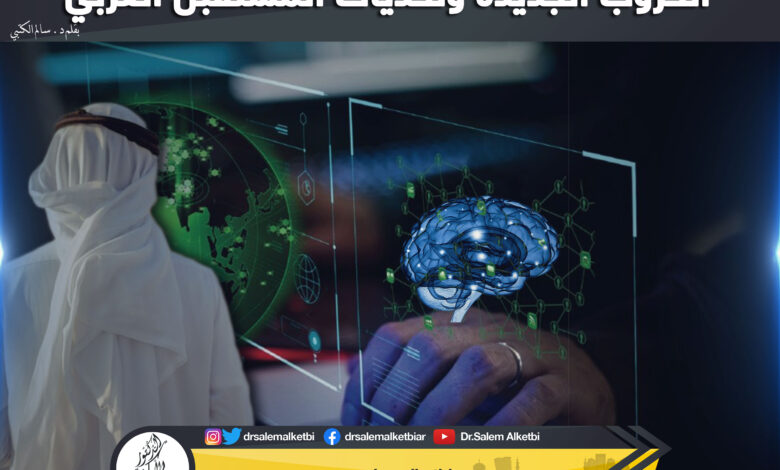
Amidst global conflicts and tensions, the concept of cognitive warfare has become a frequent feature of media reports. Some parties accuse other countries of waging a cognitive war against them by conducting maneuvers, demonstrations of force, and other manifestations of such war. Related terms, such as cyberpsychology, are also heard repeatedly.
It is one of the products of the development and interaction of psychology and modern communication technology. It studies the behavioral psychological phenomena associated with this technology. Cognitive warfare makes use of both traditional and modern theories of psychology.
It has undergone an accelerated evolution that has taken it from generation warfare (fourth, fifth, etc.) to comprehensive cognitive warfare, not significantly different from generation warfare but is more sophisticated and profound in its application of theories of psychology and cyberpsychology to control societies and change people’s beliefs and behavior.
The conclusion from all this and what is going on in the war development laboratories and their theories in major countries is that the human mind is at the center, which has now become a real field of conflict between states.
While conventional wars remain a real threat to international security and stability, as is still the case in many parts of the world today, cognitive wars parallel them and pose a more persistent threat than conventional wars. Future wars and their areas of conflict are most disruptive to the human mind.
The wars of the past and many wars of the present have been against infrastructures and facilities. But the greatest danger lies in the disruption of the minds that have become the target of cognitive wars.
They are not comparable to fourth-generation wars in terms of changing beliefs, distraction, manipulation of thoughts and ideas, including rhetoric, psychological warfare, and other familiar means. They go deeper and entail more risk.
They use artificial intelligence to manipulate the perceptions of societies, to the point of altering human behavior using techniques built on understanding human actions based on vast databases of people. These data are analyzed and the motives understood and controlled, as in the case of large marketing companies that use psychoanalytical techniques to understand people’s buying behavior based on personal data collected through various means of communication. They have become one of the most expensive assets required by algorithmic systems and artificial intelligence techniques to understand and control human behavior.
Recent scientific research speaks of data as one of the strategic assets of nations. AI is rapidly evolving, producing new concepts and patterns at a rapid pace, particularly in the area of human-technology relationships. What concerns me most here is the place of the Arab world in this great scientific development.
Many Arab countries still suffer from an underdeveloped educational system that is ill-equipped to produce generations capable of understanding and solving modern problems. Arab countries, or at least some of them, are actively involved in the global development of AI technologies and their civil and military applications.
However, the pace of development in this field is still limited to a very small part of Arab countries. Some aspects of development in this field are also still completely absent. This is true not only for the Arab region, but also for many regions of the world.
Some developed countries have almost monopolized this knowledge as a new source of power in the 21st century. We see around us how technology has driven striking changes, for example in the defense industry.
We see how Russia, one of the biggest powers in the defense and military industry, is going to Iran to buy drones to be used against the Turkish drones bedeviling the Russian military in Ukraine.
This is inarguably a remarkable shift in the defense industry after drones have spearheaded many battles in recent years, reducing the relevance of the conventional equipment that armies rely on in their wars. The larger issue is that cognitive and other wars will not be the last stop in this bitter race.
Rather, we can expect further, more momentous breakthroughs, particularly regarding the relationship between humans and technology and the limits of mutual influence in this context. IHard to tell what will happen on this front. This calls for a real focus on education and research, and an increase in funding for this area commensurate with its importance to the future of nations.