Experts widely agree that the Covid-19 pandemic will mark a historic watershed that will draw a line between the pre- and post-coronavirus eras. Some rush to make the case for this view and its implications.
Analyses have also mapped out conceptions of what the post-coronavirus world order will look like, its structures and modes of sovereignty and influence. There is ample evidence and premise to indicate that we are in the early stages of the transition to a new world order.
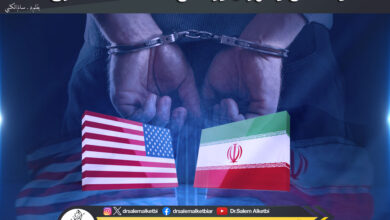
Some of these have to do with the growing uncertainties and shortfalls of what is known as the US model of domination, both because of the events of the recent presidential election and the inability to control the new coronavirus outbreak.
Others are related to nascent competitors, most notably China. The country has been pushing its way up to the top of the world rankings at record speed, primarily in economic performance. According to recently published European reports, the Chinese economy is moving fast towards world leadership, with a record growth rate of 6%.
China has undertaken to create strong regional and international blocs, the most recent of which is the new regional economic partnership agreement, which includes the ASEAN countries as well as Australia, New Zealand, Japan and South Korea. The bloc accounts for about one-third of the world’s population and global economic output.
Add to this the Belt & Road initiative, expected to chart a new map for world trade, and we have a superpower that can lead the world economy. The Times recently pointed this out, recognizing that China’s leadership in the global security system is now a matter of time. This recognition came in the context of misgivings about the popularity of the Chinese global model. It also reflects a Western apprehension of China’s fast-track climb to the top of the world order.
Many other things point to interactions that precede the next wave of structural changes in the world order. Some of these are about China’s political behaviour. Its attitude has somewhat changed, signalling the Chinese leadership’s willingness to avoid a collision with the United States. But it also expresses a strong desire to uphold China’s strategic interests.
Other changes relate to Western positions on the current world order. Criticizing the UN Security Council, French President Emmanuel Macron spoke to a Paris-based magazine. “I am obliged to note that the UN Security Council is no longer producing useful solutions today,” he said. “The United States will only respect us as allies if we are serious about ourselves, and if we are sovereign with our own defense. ”
To these salient statements are added President Macron’s earlier positions that NATO is “brain dead,” in which he calls for a rethinking of the alliance. A similar tone has been heard in the well-known positions of major powers such as Russia and China on the practices of international bodies.
All in all, dissatisfaction with the world order keeps growing. The pace of change can only pick up in such a state of affairs.
In Arab countries, amid such international interactions, there is a concern to ensure that even modest influence is exerted on future equations. To tell the truth, this may be elusive given the unprecedented vulnerability of collective action institutions in the Arab world.
But it must be obvious that the rules of a new world order will not be drawn up in a few years’ time. It may take a decade or two for the strategy and leadership of the next era to crystallize. So the ball is still in the Arab camp to get out of the maze of problems that threaten many countries’ present and future. They have to catch up and seize opportunities to influence the future world order.