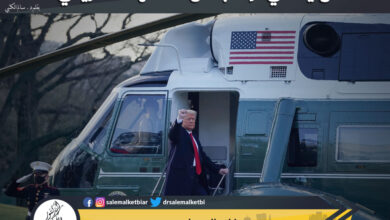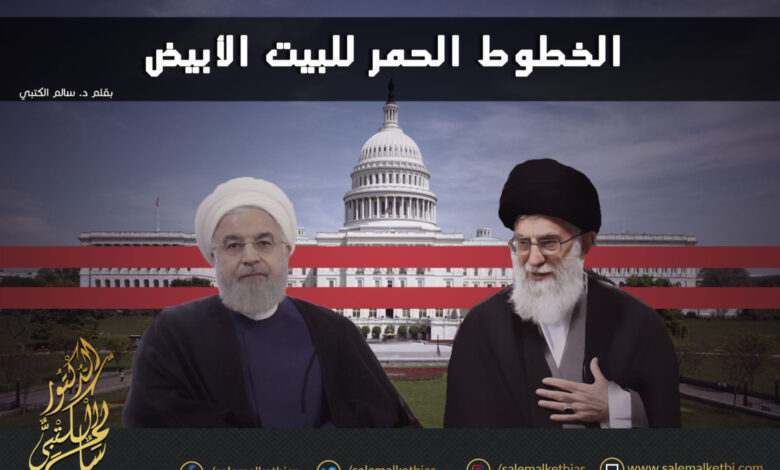
In the last days of the rapidly evolving crisis between the Iranian mullahs and the United States, US President Donald Trump clarified the red lines that, if crossed, would lead to a war between the two countries.
The first is the case where American troops and civilians are in danger of death. The American drone crash, as such, did not make a strong case for the White House to order a strike against Iran.
In the US President’s mind, strategic calculations of gains and losses did not favour a strike. President Trump is aware that Congress, where Dems control the House, will not agree to finance a war against Iran unless US troops are targeted or Iranian threats against Israel increase to the point of becoming difficult to ignore. The White House needs strong backing to convince Congress to support the war. This explains the first red line that Trump has set for himself.
After meeting with his advisers at the White House, he made it clear that his administration’s red line on Iran was the targeting of American citizens. He pointed out that there was no man or woman on board the drone that someone “loose and stupid” from the Iranian officials had ordered to attack.
Moreover, President Trump’s approval of the limited air strike would have completely blocked his decision to sell weapons to Saudi Arabia soon and without referring the matter to Congress. A military confrontation could complicate the situation, while there is still a window of opportunity to implement the decision as Iran’s growing threats to US allies in the Gulf continue.
President Trump remains very cautious about the wars he criticized for a long time before he took office. Maybe he thinks it cost the United States too much. But at the same time, he wants to preserve the prestige and dignity of the United States using other strategic instruments.
President Trump, who was previously described as the most impulsive president in American history, has grown more prudent and closer to the Democrats’ positions on the war. Last Thursday, he told reporters: “Look, I said I want to get out of these endless wars, I campaigned on that, I want to get out.”
In my opinion, President Trump’s strategy of nail-biting cliffhangers does not work effectively with such an adventurous regime as Iran. The regime has seen how President Trump has gone from threatening North Korea to welcoming the friendship of the North Korean leader he used to call “little rocket man.”
The mullahs are well aware of President Trump’s statements, in which he reiterates his unwillingness to go to war.
“I actually temper John, which is pretty amazing,” he said, referring to National Security Advisor John Bolton’s hawkish attitude towards Iran.
A second red line, rather an old new one revealed by President Trump, is that of Iran’s possession of nuclear weapons. But President Trump wants to link nuclear capabilities to Iran’s missile capabilities, which is totally absent from the nuclear agreement that Iran signed with the P5+1 group in 2015.
There are certainly other red lines drawn by President Trump’s entourage. One of them was defined by Republican Senator Lindsey Graham, one of President Trump’s closest associates. Graham has already said that the United States should bombard the Iranian navy and oil refineries if further shipping disruptions occur in the Strait of Hormuz.
There are also red lines for US strategic allies in the Gulf region. But these remain linked to the White House’s interests and strategic vision, particularly President Trump’s calculations on being re-elected for a second term.
Election is an important ingredient in his current political decision-making calculations. Trump does not want to venture with all his wins and cards such as fulfilling all his campaign promises. He does not want to wage a war in these critical months that could affect his chances of getting re-elected.
Of course, the mullahs of Iran studied all those factors that could shape decision-making in the White House. But they did so in order to exert pressure.
Doomed to failure from the start, their pressure will only serve as a propaganda tool for Iran’s leadership. After all, propaganda is what suits the nature of this regime. This is a regime that cannot survive and coexist under normal circumstances because it has a destabilizing ideology premised on an irrational and narrow worldview.