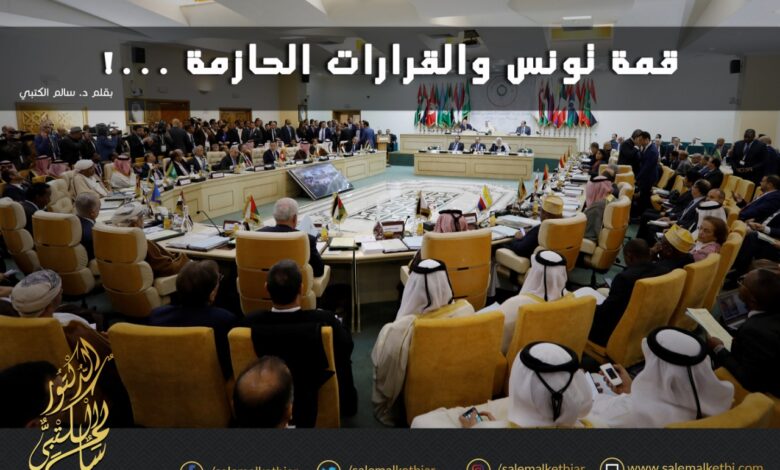
Opportunists wait for joint Arab summits and meetings to launch political and media sloganeering campaigns and to sow frustration and hopelessness in the minds of millions of young Arabs. They see these meetings as a valuable opportunity to attack those they consider opponents.
Arab summits come and go, positions change or stay the same. But these people remain the same. They are always equipped with ready-made stereotypes, trained to ignite emotions and warm up nationalist sentiments. They cry for a “deceased nation,” “countries that have lost their influence” and “leaders who are unable to face America and Israel.”
Every time an Arab summit is held, the channels of misery compete with each other to analyze the political context of the summit. They always say that the summit takes place in “very dangerous circumstances” and that it “differs from other summits,” and deliberately prime the public to receive their oppositional messages.
But deep down, the guests of these channels of political opportunism are well aware of the facts, the power balance, the President Donald Trump’s unprecedented support for Israel.
Every time an Arab summit is held, some say that it faces unprecedented challenges. The truth is that Arabs have always faced unprecedented challenges.
Since the first Arab summit in Anshas, Egypt, in 1946, Arab countries have been facing crises. And every time, it seems all we do is compare the present challenge to the one before.
The reality exploited by opportunists is that there is little room for manoeuvre before joint Arab decision-makers. They can not only make statements and take positions. But opportunists demand that they come up with bold decisions.
The pressure cards available to the Joint Arab Action Group are, however, limited. As for opportunists, they do not have realistic and viable suggestions about the bold decisions they are talking about.
Frankly, the idea of Arab states with formal peace agreements with Israel severing ties with it is not a collective Arab belief but individual options. It is unfair that one or two countries with official relations with Israel should bear the burden of the collective Arab position.
Would it make sense to ask the Arab summit to agree to break off its relations with the United States? Wouldn’t that be a political joke? There are enormous disagreements between Russia and China with the USA, but neither of these countries has considered breaking off relations with it. Will severing relations lead to a different US position or a lack of American commitment to its Arab allies and increased support for Israel?
The balance of regional and international powers, both military and economic, is clear, as are the expansionist plots of regional powers that almost besiege Arab states. The regional powers have concocted all their historical projects and now see a historic opportunity to control the Arab region.
However, Arab opportunists forget the danger of Iran’s and Turkey’s ambitions in the Arab territories and see only the Israeli threat. It is true that Israel is a state of occupation and will remain so until a settlement guaranteeing the legitimate rights of Arabs in the Palestinian territories and in the occupied Golan is reached.
But Iran is also an expansionist country. It occupies an Arab territory that consists of the three UAE islands of Greater Tunb, Lesser Tunb and Abu Musa. Iran also takes pride in occupying four Arab capitals, political and strategic influence through its militias.
Turkey, too, has a strong desire to steal another part of Syrian territory.
We must admit that the fault lies neither with Arab states nor with Arab leaders.
There is an imbalance in the international balance of power.
Otherwise, US President Donald Trump would not have dared to go to economic war with China, to roast his European allies all the time or even to force the building of a wall with his Mexican neighbors.
For those who had been through the chaos of the “Arab Spring” since 2011, the mere convening of the Arab summit under the current circumstances was like a dream. Everyone thought then that the Arab world had fallen into a state of chronic chaos.
But relaunching the institution of the Arab Summit and the role of the Arab is an achievement in itself. As for everything else, it is nothing but opportunism and wishful thinking.