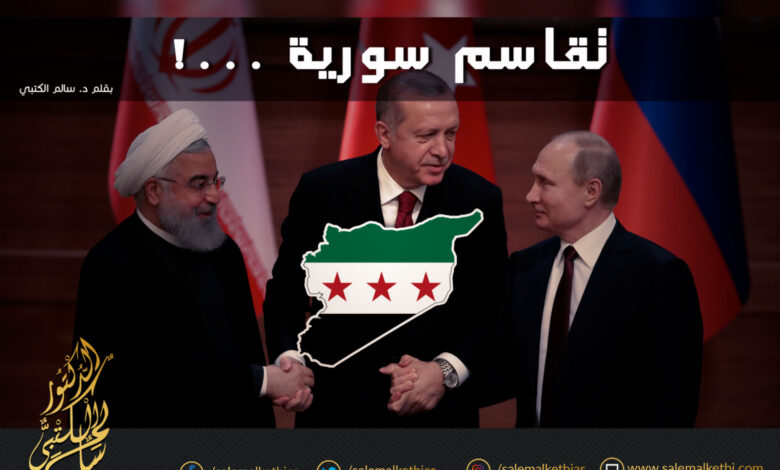
The recent tripartite summit, among Russia, Turkey and Iran, came out with several results. Observers considered it a new step towards strengthening the strategic alliance among the three countries. The alliance was previously inaugurated at the Sochi summit in November 2017. Russia backs Turkey against Kurds. The alliance rejected the presence of any other troops, except those of the three countries, on the Syrian territory.
Russia bets that Turkey will soon leave the NATO. Putin announced that Moscow will supply Ankara with S-400 air defence missiles in July 2019. The move came either because Turkey felt the threat and required a fixed time or because Putin wants to make his alliance with Ankara clear. Turkey is the fifth military powerful member in the NATO, after the US, UK, Germany and France. It has the second largest NATO army after the US. The Russian move made it clear to the NATO that Turkey strategically repositioned itself. Ankara’s relationship with the alliance is only formal. The announcement of the date coincided with a high-level US military delegation in Ankara to discuss a deal of Patriot missiles as an alternative to the Russian deal.
The US response to the Russian-Turkish message came quickly. Trump refrained from withdrawing US troops from northern Syria. Postponing this step means that the US no longer cares about Turkey’s anger but will use Kurds to provoke Ankara and Tehran.
Istanbul Summit Communiqué deliberately ignored stating secret resolutions on the Syrian file and the Turkish intervention in Afrin. Previously, the Sochi secret accords were implemented on the ground shortly in January 2018. Turkey invaded the Syrian territory and occupied Afrin with a Russian green light and Iranian silence. Observers believe that the aftermath of the Istanbul summit and its secret resolutions will successively take place in Tell Rifaat. The town separates the areas of Turkish control in Syria and the Menagh military air base. The two sites will be Ankara’s next goal after having its grip over Afrin. Probably, there was a deal to exchange influence on some areas between Russia and Turkey. This will be clear in the coming period.
In the summit, Tehran succeeded to achieve the goals of its ally, al-Assad. The three countries pledged to preserve Syria’s territorial integrity, a move that is in line with Ankara’s desire to blow up any plans to have a Kurdish State in northern Syria. The tripartite summit agreed that Syria’s future should be determined by the will of its people, meaning al-Assad’s survival. President Erdogan seems to have given up his position on al-Assad in exchange for eliminating the strategic threat of establishing a Kurdish State.
The Arab world is angry and frustrated at the Absence of Arab countries from international and regional conferences held to discuss Syria’s future. Frankly, these meetings discuss the sharing of interests in Syria.
Some observers think that Arab countries will join these conferences and discussions, likely Syria, Iraq and Qatar.
Serious strategic changes are taking place in the region. Turkey is directing its policy towards the Middle East, betting on its alliance with Russia and Iran. If the Arab countries stand idly by the situation, there will be a big strategic loss.
What are the strategic alternatives Arab countries can adopt to deal with this complex regional scene?
Arab capitals do not have many options to deal with regional violations. But it does not mean the matter is done. It is not too late for Arab countries to take the right decision and address expansionist plots. The Saudi-led coalition in Yemen has been able to block the Iranian expansion. Preserving Yemen made Arab countries able to maintain Arab national security.
The Arab world has begun to be stronger and influential once again. Egypt has regained its strength and ability to act. SA has been effectively acting on the regional and international scene, preventing more plots against Arab and Gulf States. This reality will hopefully deter expansionist projects and stop splitting Arab countries’ interests.