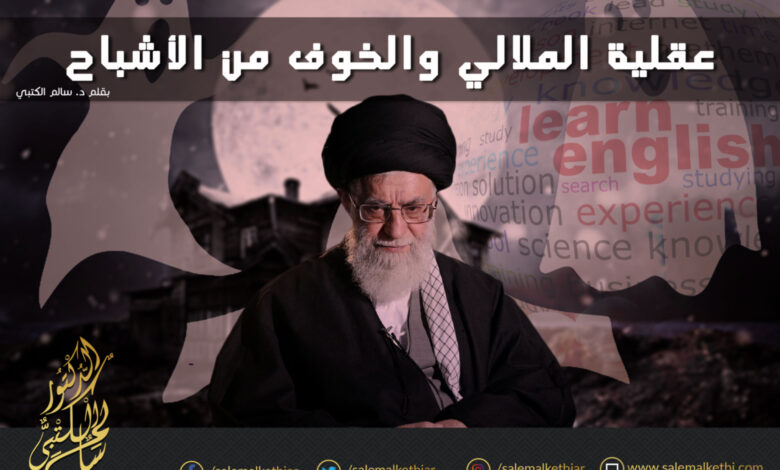
Amid recent weeks of demonstrations and protests, the Iranian authorities decided to ban English language teaching in primary schools, describing it as a “cultural invasion.” The Iranian Minister of Education justified this strange move saying that it is a step to “enhance Persian language skills and Iranian Islamic culture for pupils in primary school”.
The concern over the teaching of English has been gripping Iran’s mullahs for years. The Iranian Supreme Leader Ali Khamenei has expressed concern over the teaching of English. This has been a reflection on the remarkable proliferation of English language instruction among the Iranian people. English is seen as a means to engage in globalization, to be open to the cultures of the world and also to gain employment in transnational corporations that are now providing millions of jobs by outsourcing. Outsourcing has become one of the pillars of the new global economy. The mullahs spend the Iranian people’s wealth on terrorism and terrorists and in financing the implementation of their expansionist dreams. Not only that, they are closing doors of hope completely in the face of young Iranians.
Instead of fighting the corruption of the Revolutionary Guard, which controls the Iranian economy and trade in Iran, the mullahs are fighting education. This fact is due to a fear that openness to the world would lead to more awareness, which may lead to revolutionary anger against their miserable regime.
Khamenei also said that teaching English is “only part of an idea to instill Western culture among the younger generations in other countries”. “These statements do not mean the end of English teaching in schools, but the main issue is to understand our enemy and how our adversary has carefully planned to influence future generations in our country,” he added. Certainly, the recent protests reflected the enormous capacity of Iranian youth to break the tough censorship on the Internet. Khamenei has blamed what he called “external enemies” in demonstrations. He did not refer to the manifestations of corruption and development failure, which he has already mentioned on previous occasions.
The mullahs are particularly concerned about English and do not feel the same fear about other languages. If it is true that the mullahs want to preserve their culture and identity, then they are supposed to ban all foreign languages, but this is not the case. The goal is to ban the world’s most popular language used on the Internet.
The Internet in Iran and other dictatorships is a serious inconvenience. Such regimes have blocked the Internet, especially social networking sites. Iran has gone on to build its own national network. Tehran has announced the completion of the first phase of its plan to operate the “National Internet “. Their aim is to increase censorship of online content and avoid the vast freedom spaces offered by global websites, which are censored by Iran. However, thousands of Iranian youth are breaking through official websites and networks to access the websites they want.
International organizations concerned with freedom considered that the Iranian attempts pave the way towards further isolation, control, and information suppression. This is what happened during recent demonstrations, where the world failed to identify what was going on inside Iran. The world has seen only scenes and isolated video clips that are leaked over Internet sites.
The mullahs’ fear of openness to the world prompted them to block online games, considering them to be part of the “cultural invasion.” Iran was the only country to officially ban some Internet games.
The mullahs do not fear the language, which is the vessel of ideas, but the transmission of these ideas through the Internet. Surprisingly, the Iranian ban applies only to public schools. Private schools teach English independently of the system and they include children of wealthy classes in Iranian society, often sons of the regime leaders and administrators. The targets of this ban are the sons of the poor and middle classes whom the mullahs don’t want to have a high-quality education that will qualify them to interact with the world.
The mullahs cannot realize that distances are no longer measured by geography but by engaging in globalization and interacting with the information revolution, its applications, successive waves, and its changing effects on the economy, trade, education, and culture. Isolating millions of Iranians from the world around them is only a fear of ghosts under the excuse of preserving the Iranian Islamic culture.