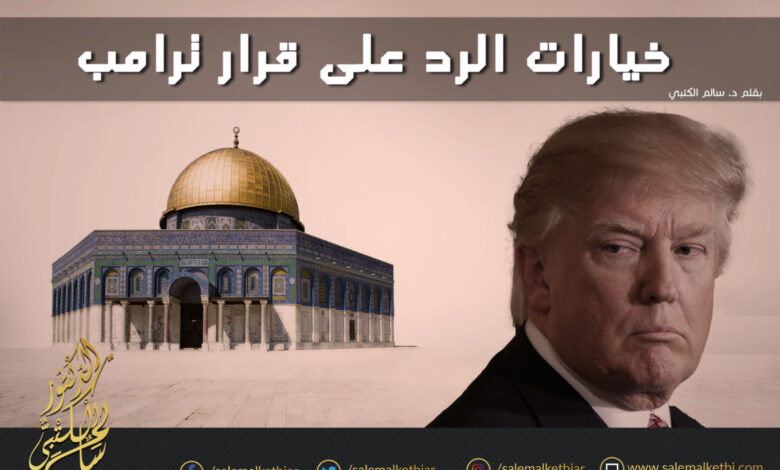
Summits and conferences that took place over Trump’s move have been marked by rejection and condemnation of his decision.Some Arab political actors went to refuse the USA as being a mediator in the peace negotiation, while others tried to find other parties to replace the USA in the process.
The Arab people are living security pressures, which have indirectly affected their reaction against Trump’s move. Security conditions and the fear of being penetrated by terrorist elements prevent protests from taking place in the streets. The reality of security measures confirms that there is a lack of Arab strategic alternatives to deal with the crisis of Jerusalem. What to do then? This strategic crisis of alternatives is not new and is the most difficult ever.
Iran criticizes Arab countries because of what the mullahs call “shaky” position towards Jerusalem. But the Quds [Jerusalem] Force of the Iranian Revolutionary Guard Corps (IRGC), didn’t show any intention to defend Jerusalem. Recep Tayyip Erdogan raises tensions with criticism and accusations of Israel, while making no single action against Tel Aviv.
The crisis of dealing with Trump’s move reflects the Arab and Muslim reality. A reality that was caused by certain parties that sought to weaken the Islamic nation through their expansionist plans that aim to take control over Arab capitals and wealth.
Egypt, in a brave move in the UN Security Council, introduced a draft resolution that stressed that “any unilateral decisions concerning the status of Jerusalem have no legal effect and must be cancelled.” This is a positive political move that preserves Jerusalem’s identity and reconfirms Egypt’s position to the international community. Some argue that the draft resolution did not mention the USA or Trump by name. However, the core goal of the resolution is to stress the identity of Jerusalem. Generalization in this case makes it clear that future violation of legal and historical situation of Jerusalem will not be accepted.
This draft places Trump administration in a difficult situation. Washington is more likely to use the Veto if the UN Security Council members will vote on the resolution. It would be difficult for the USA to approve the resolution or even to abstain from voting after Trump’s unjust decision.
Israeli representative in the UN Danny Danon said that “the vote or the debate will not change the clear reality that Jerusalem has always been and will always be the capital of Israel”. “With our allies we will continue to fight for historical truth,” he said. This talk is nothing but an expression of concern over the passage of the draft resolution.
International legitimacy that the resolution may get will undermine Trump’s decision and prevent Israel from convincing other countries to recognize Jerusalem as the capital of Israel. The draft resolution calls on all countries “not to recognize any actions or measures contrary to the relevant resolutions [of the UN Security Council].” “All States must refrain from opening diplomatic missions in the city of Al Quds Al Sharif in accordance with Resolution 478, ” according to the draft resolution.
If Trump uses the Veto against the new resolution, he will be really ending US’ mediating role in the peace process. We must be waiting to see NY’s next move.