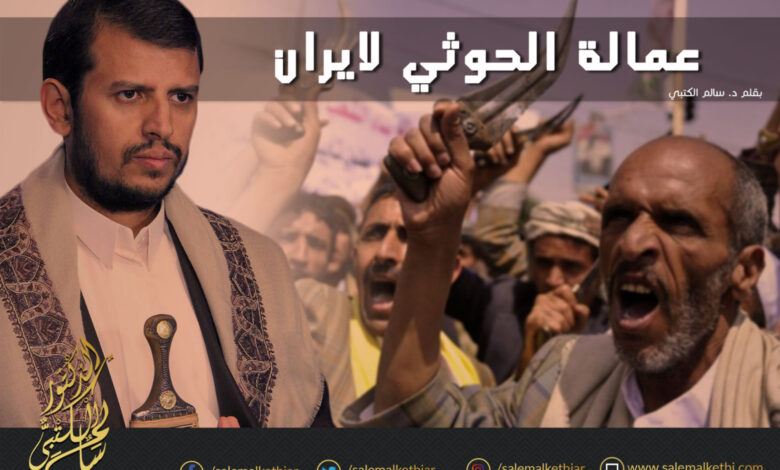
There are pro-Iranian proxies in Yemen. But how would one have thought that they are so blindly obeying Iranian commands despite those not being in their interests?
If al-Houthi thought twice before blindly following the instructions of the Iranian Revolutionary Guards’ generals to assassinate former President Ali Abdullah Saleh, he would know better than making such a grievous strategic mistake.
Killing Saleh under the given circumstances made it clear to the whole world that this terrorist group does not represent the Yemeni people, but are just a band of criminals. They didn’t hesitate to kill the leader who got back to reason and tried to fix the situation and open dialogue to end the humanitarian catastrophe suffered by millions of Yemenis. A partner of the Houthis in their crimes for the past three years, Saleh, nonetheless, had returned to his senses, but it didn’t take more than two days before he was stabbed in the back. The Iranian-backed killers don’t want to resolve the crisis, nor do they want the end of the sufferings of the Yemeni people.
The political stupidity of the al-Houthi has showed the whole truth to the Yemeni people, eliminating the opportunity to end the crisis and restore to many the hope that this dark page could be turned.
Al-Houthi did not think about the interests of his group or the interests of the Yemeni people. Unhesitatingly, he did what he was ordered through the phone from Tehran. The Iranians felt that their efforts, money would be lost and plans fail should Former President Saleh and the Arab Coalition reach an agreement. They realized that their Houthis are not that popular in Yemen; Saleh granted them popular support throughout his three-year alliance with them.
It is almost impossible that al-Houthi would be reserved a seat around the negotiating table with the Saudi-led Arab alliance. His only card was through the former President or his representatives. With Saleh out of the picture, the al-Houthi lost all opportunities to cooperate with the General People’s Congress or negotiate with foreign powers.
Saleh’s position on “opening a new page” through dialogue with the Arab coalition countries has highlighted the chances of a settlement and achieved an important breakthrough in this regard. The successor of Saleh will not find it difficult to pursue opportunities to end the crisis through negotiations yet he will inevitably be more careful from the al-Houthi and less inclined to give him any negotiation concessions in order to end the Yemeni agony.
Al-Houthi killed the charismatic figure that was Saleh—who raised his concerns and those of a distrusting Iran—but in doing this, he gave Yemen’s GPC a golden opportunity to find a new leader, one that will certainly receive great domestic and foreign support, especially if the replacement picks up where Saleh left off in terms of negotiating to resolve the conflict.
Al-Houthi is no longer a trusted ally in Yemen, especially now that he put all the tribes against him. The plot narrative he told to justify the assassination was a cover for the fact that the entire Iranian project there was going to fail.
Al-Houthi’s stupidity could push most, if not all of the forces of Saleh to join the Yemeni army after their leaders saw their former ally being killed in cold blood. They will not forgive al-Houthi his heinous crime.
There is now in Yemen that which can unite the Yemenis, that is former President Ali Abdullah Saleh’s legacy, the negotiation initiative that restored hope for the Yemenis for few hours before it was targeted by the maleficent group. This may be the last chance to eliminate the influence of al-Houthi and save Yemen from the Iranian scheme. The Yemenis should seize it.