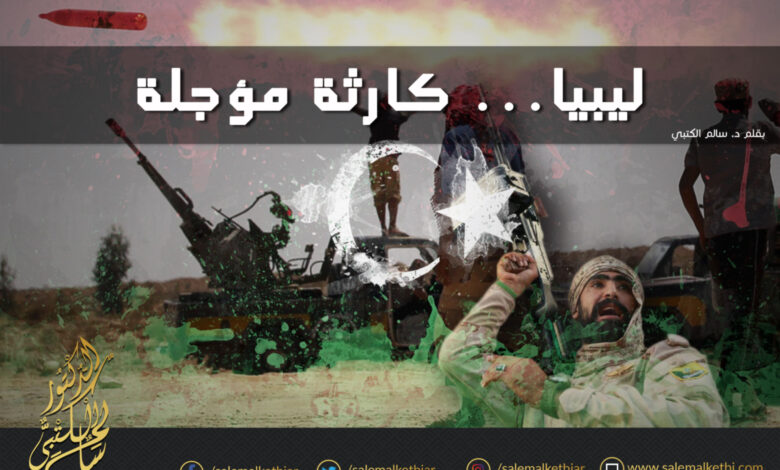
Libya’s crisis is a forgotten case on the agenda of the international collective action. Recently, media reports are talking about a shocking video aired by the CNN filming young Africans sold at a slave auction in Libya. The video also reported the “prices” of selling these young Africans; prices ranging between three and four hundred dollars to work with no or very cheap salaries.
The African Union has called for prosecutions against those involved in this “despicable” trade that brings out outdated practices and seriously abuses humanity in the 21st century. The International Organization for Migration said in April that it has evidence of slavery in Libya, confirming the validity of the video. The IOM stated that such practices already existed in this ravaged country by terrorist organizations, stressing that these organizations get financial support and arms from specific countries in the Middle East.
The United Nations High Commissioner for Refugees (UNHCR) also stated in a report on patterns of illegal migration that Libya has become the preferred destination for refugees and illegal immigrants seeking to cross the Mediterranean.
According to the same report, the networks of crime and illegal immigrants smuggling are widely expanding in Libya. These networks have become more professional in dealing with problems related to illegal immigration and asylum to European countries, said the report. UNHCR said the numbers of migrants from Syria and East Africa were falling, while the number of migrants and refugees from West Africa was increasing.
The reports are not taken seriously by the international community. These are young people with low or no educational levels. They are hopeful about the future, which means they are ready gifts for terrorist organizations. They can be used as mercenaries in launching and carrying out terrorist attacks anywhere, not only in Libya.
The moral dimension of this crisis is related to Libya’s transformation from a country that possesses a large oil wealth into a human trafficking market. The international community must work seriously to reach practical steps that would address the plight of the African migrants in a country torn between governments, militias and a national army.
Europe must shoulder a great deal of responsibility. Libya plays an important role for European countries. The country is an oil exporter and represents the first frontline in countering terrorism and illegal immigration, said British Foreign Secretary Boris Johnson.
Reports are focusing on resolutions to Libya’s illegal immigration crisis without addressing the fundamental crisis of chaos, insecurity and the collapse of the State. Europe suggests electronic fences across the Libyan southern border. Centers for illegal immigrants are set in Libya in preparation for their repatriation. The United Nations has already described these centers as “inhuman”. Statements of the High Commissioner for human rights of the IOM labeled them as “modern slavery”. “There is a modern form of sexual violence and murder under the excuse of preventing people from reaching the European shores,” said the High Commissioner.
Reports are talking about twenty thousand illegal immigrants currently detained in these centers; an increase of about three thousand compared to last September. The European strategy had already succeeded in downsizing those willing migration across the Mediterranean from over a million people in 2015 to less than 130 000 in 2016. This was achieved both by the Turkey-EU Agreement on Syrian refugees and by reducing the number of illegal immigrants across the Mediterranean.
Estimates about illegal immigrants who managed to get to Italy this year are less than 4 thousand people, which is less than 20 percent of the number who arrived there last year.
Strengthening border controls in the countries of the southern Mediterranean and combating human trafficking gangs are seen as key solutions for controlling illegal immigration to Europe. It is also necessary for Europe to seek radical resolutions to achieve security and stability. Restoring the rule of the Libyan State and the eradication of terrorist organizations is also a must. This is the best political investment in the long term in Libya.
Freeing Libya from terrorist organizations is inevitable to end all the crises resulting from the security vacuum and the absence of the State. Reportedly, Libya can be a destination for Daesh’s fleeing elements aiming to establish an alternative caliphate in this country.