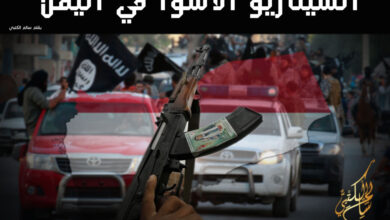
After being defeated and pushed away from its former capital of Raqqa, Daesh remains a question mark for experts and observers. Where elements of this terrorist organization are going to go next and does the defeat mean the end of terrorism?
Recovering Raqqa is certainly a decisive step in the fight against terrorism. It was certainly devastating to the terrorist organization, but it does not necessarily mean the end of terrorism. The battle was won but the war continues as long as radicalization is unchallenged by cultural, educational, and religious awareness.
The State of al-Baghdadi collapsed, but extremism and terrorism can rise again here or there. Terrorist entities are agile and flexible. Unlike sovereign States, they have no international law to govern them and often work in secret, making it easier for their members to hide and escape. In asymmetrical wars or fourth- and fifth-generation warfare, regular armies face organizations that move, think and plan quickly.
What is dangerous about Daesh in the foreseeable future is that its leader, Abu Bakr al-Baghdadi, is still free, and some warlords fled to newly-controlled cities and territories. They could regroup and work together again.
The terrorist organizations are probably not thinking of establishing States for now after al-Baghdadi’s project fell apart, but this idea is still a point of debate between the ideologues of Al Qaeda and Daesh. The al-Qaeda side believes that the priority is to fight regimes loyal to the enemies of Islam, and there are discussions within the organization about the priority of the “close enemy” and the “distant enemy”, whereas Daesh went straight to State-building.
Is Daesh going to embrace Al Qaeda’s ideology once again after its defeat or remain underground and continue to use lone wolf attacks in its conflict with the world?
Daesh seems closer to disintegration after being defeated. It may break down to smaller groups each with its own leaders, especially as sources of funding and supply are short now.
The future of terrorism is still unclear. Daesh might disintegrate or merge with other organizations or even hide for a while to gain strength or move its operations to other territories. It might as well change tactics especially since it still has presence in some Arab and Muslim regions.
It is likely that continuing pressure to stop the financing of terrorism will contribute well to counteract the threat of Daesh and other terrorist organizations. We should wait for quite some time before we can see the end of terrorist organizations. But to get there, political, cultural, media, and religious institutions should work in parallel paths. The focus should be on de-radicalizing and stopping the financing of and recruiting for terrorism.