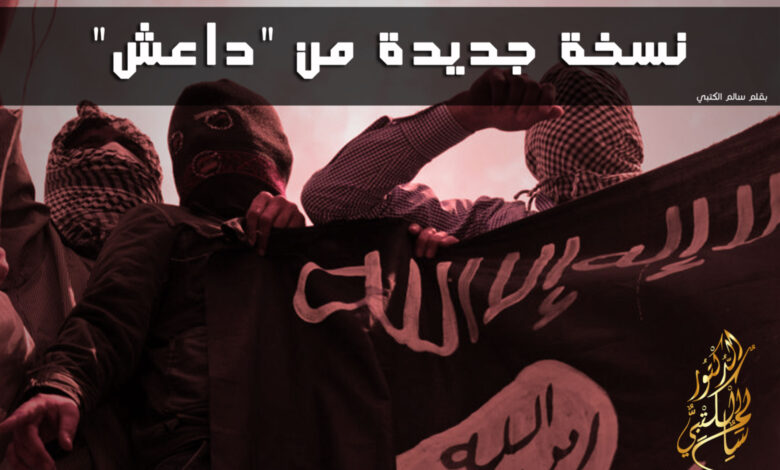
As the war against Daesh in Iraq and Syria continues, field military commanders in the fierce battles waged by the International Coalition against Terrorism made interesting statements. A senior American officer warned that Daesh may come back in a brand new version. The officer said that many of the organization’s fighters were still in Iraq despite the decisive victory in Mosul.
The warning came on the backdrop of a call to the Iraqi government to establish a dialogue with the Iraqi Sunnis to guarantee they will not host new terrorist organizations.
The US officer called on Baghdad to communicate and reconcile with the Iraqi Sunnis and ensure that the Iraqi government represents them. There is need for intensive national action of the Iraqi movements that reject the sectarian interferences of Iran and seek reconciliation between Shiites and Sunnis. One of the problems facing these efforts is that the Iraqi government itself, led by Haider al-Abadi, is a sectarian and follows Iran. It considers General Qasem Soleimani, the commander of the IRG’s Quds Brigades, as a military adviser. This was said by al-Jaafari, the Iraqi Foreign Minister, during June 2016.
The significance of the warning of the emergence of a new version of Daesh is that terrorism has been defeated on the ground but the terrorist ideology is still surviving. Daesh’s surviving ideology can produce one or many new organizations if there are suitable conditions and this depends on the nature of the situation in Iraq in the near and medium term.
The second statement was also made by some of the leaders of the international coalition forces in the war against terrorism in Iraq. They considered that the fighting in the city of Mosul was the greatest since the World War II. This was clear given the duration of military operations, which lasted about nine months and caused major destruction in Mosul. The UN estimates the number of buildings destroyed by about 5000 buildings, in addition to 490 buildings destroyed in the Old City.
The ability of a terrorist organization to wage a fierce fight like the battles of the World War II, according to the description of the American military commanders, must be carefully considered for several reasons.
First, this reflects the presence of great military expertise among the elements of the organization. Fleeing elements of Daesh are a source of threat and will not stop looking for an opportunity for a new fight. They can represent a threat on two levels; either in the case of returning to their countries of origin with their acquired combats experience, or their participation in the construction of new terrorist organizations in other geographical areas inside Iraq, Syria or outside.
The danger of returnees from Iraq and Syria is prompting concerns in security circles in several countries. If these returnees have this level of combat experience, we must deal more carefully and accurately with the return of the remnants of terrorism from Iraq and Syria.
The second consideration is the evolution of the combat capabilities of terrorist organizations generation after generation. Al Qaeda’s expertise, which was confined to gang wars and the hit-and-run strategy in the caves of Tora Bora, has evolved into combat tactics capable of confronting large armies possessing the latest terrestrial weapons systems. The air force is the decisive factor in many combat confrontations with terrorist elements, reflecting the growing threat of terrorism and the danger of possible future versions of these organizations. The works to eliminate these future versions or prevent their emergence is less expensive than allowing them to appear and expand and then fight them afterward.