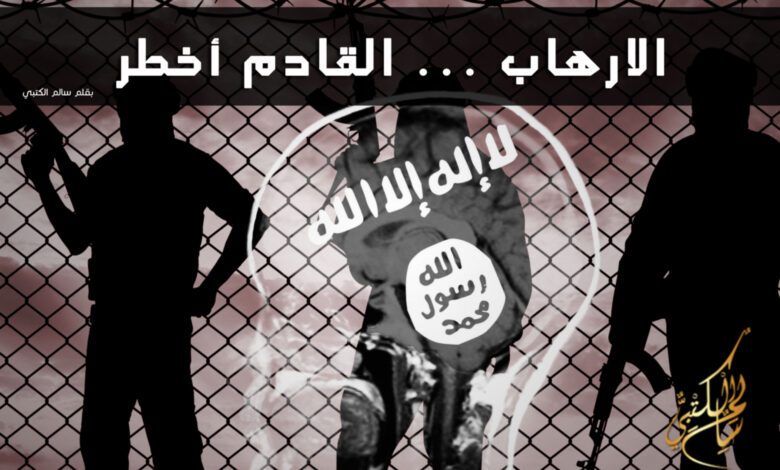
Despite signs that reflect the near defeat of Daesh in Syria and Iraq, the organization still commits crimes at an accelerated pace in several countries. The recent crime that targeted two churches in Egypt is contrary to all religions and human values. This confirms that there is an unprecedented increase in the terrorist threat.
Defeating Daesh would be a huge achievement for the war on terrorism, but a geographically defeat does not necessarily mean victory over the ideology of this organization which trains members to face blows, defeats and hit-and-run operations while preparing them psychologically to accept losses—as a form of readiness to accept hardships (balāʾ) for religion’s sake—before trying to reduce any negative consequences.
To think the military defeat of Daesh in Iraq and Syria would be the end of the organization is a serious strategic mistake. Historically, the period after defeating a terrorist organization is usually more severe and violent than the stages before. The world should expect a stage of random strikes to which it is difficult to find a rational explanation, such as the recent vehicle-ramming attack in Sweden, as well as the geographical spread of terrorist attacks in many countries.
In a few days, the world witnessed many terrorist crimes as terrorist organizations split and spread everywhere. This is the most dangerous stage in the aftermath of the expected defeat and the fall of Daesh in Syria and Iraq. The world must expect and prepare for a more dangerous stage, with different means and mechanisms.
What happened to the two Egyptian churches yesterday confirms the need to deal with the threat of terrorism with the utmost vigilance and security alert, and to close all possible loopholes and not to tolerate security breaches under any circumstances.
As the present religious and media discourses are still not of great usefulness, security measures alone are not sufficient to counter the terrorist threat, and we need for huge efforts at the intellectual, religious, political and social levels, as the ones made so far are not enough. There are only individual efforts made by some states and institutions, and which do not take the form of a collective action that reflects the solidarity and seriousness of the Islamic world in the fight against terrorists and their sympathizers.
Many experts and specialists do not understand well that terrorists act smart. Considering terrorists as a group of “idiots” is not good for the war against this serious phenomenon. The Daesh propaganda has made serious progress. Their obscurantist ideas are one thing and the information technology and weapons they develop is something else.
We must also recognize that we deal with ideas, not only with individuals. It may be easy to deal with individuals by defeating or killing them, while ideas have complex social origins. Terrorism in its early stages, that is the sympathizing and the recruitment stages, is difficult to detect, and so is the course of radicalisation which could span over days, or years. Therefore we need more studies and scientific research about the personality of the extremist so as to build an early monitoring mechanism to predict radicalisation and take preventive measures accordingly.