Speaking of trends foreign policy when he will officially assume office on the twentieth of January, the new US president Donald Trump recently called in an interview with British newspaper The Times to establish safe zones in Syria, saying that this solution would be “a lot less expensive than the trauma that Germany’s going through”, because of the numbers of immigrants due to the Syrian conflict, calling the decision of the German chancellor to accept more than one million immigrants as very catastrophic mistakes.
Trump criticizes the decision of the German chancellor only because it conflicts with his personal position on foreigners, especially as he described Merkel as the most important leader of the European Union and the EU itself was described as “a vehicle for Germany”, which makes it difficult for a political leader of this caliber to make a decision without a thorough study to the extent that Trump described it as a “catastrophic decision”.
Apart from the new US administration’s position on Germany’s policy on refugees, Trump called for the establishment of safe zones inside Syria and that GCC assume the cost of establishing these areas, describing the Gulf States as possessing money no one has.
This strange logic in dealing with major issues foretells the short-sighted strategy of the new US administration in dealing with the GCC. Since the primaries, Trump considered the GCC as mere “funds”, as if the funds had no owners and no managers so that he decides how to spend them.
A while ago, Trump said that the Gulf countries have to bear the cost of establishing safe areas blaming these countries of being responsible for terrorism in Syria. Trump wanted to raise the concern of these countries so that they comply with what he wants or be accused of sponsoring terrorism in Syria. Trump and other US officials know the source of terrorism in Syria, and are well aware of who controls the conflict there and who has strategic interests there. The question for them is not to determine responsibilities for the displacement of millions of Syrian people and the destruction of their homes, but boils down to how to address the mistakes of others using money from the Gulf states as well as introducing Western and Eastern companies to share the cake of setting up safe zones.
Trump’s various remarks reflect a strong fondness for the logic of transactions in politics, especially financial transactions. He wants to build a separation barrier with Mexico under the condition that Mexico bears the construction costs later. He also wants to build safe zones in Syria and Gulf Arab states to bear the expenses. He wants the US strategic partnership to continue but the GCC countries to pay the price of defending it, although this partnership does not only mean defending the security of the GCC countries but also protecting American strategic interests in the Gulf.
Trump reduces international security and stability. He criticized NATO, saying that it is suffering serious problems and that the alliance has become “obsolete” since years, because its state members do not pay their dues of the budget. He reduces the importance of NATO for US strategic interests in who pays more money to the budget.
Trump’s administration should realize that even though they have savings, the GCC countries are not problem-free. The precautionary measures taken by the GCC countries in the last two years can absorb the negative effects of decreasing oil prices as many experts note.
It is not economically and politically mature for the head of the world’s most powerful country to push other countries to hold unbearable financial responsibilities beyond international obligations.
The countries which Trump wants to finance the safe zones are implicitly accused by the US of sponsoring terrorism in Syria. Also, if any Gulf state assumes this charge, it explicitly means the country is involved in Syria according to the Trumpian perception, which has international legal consequences.
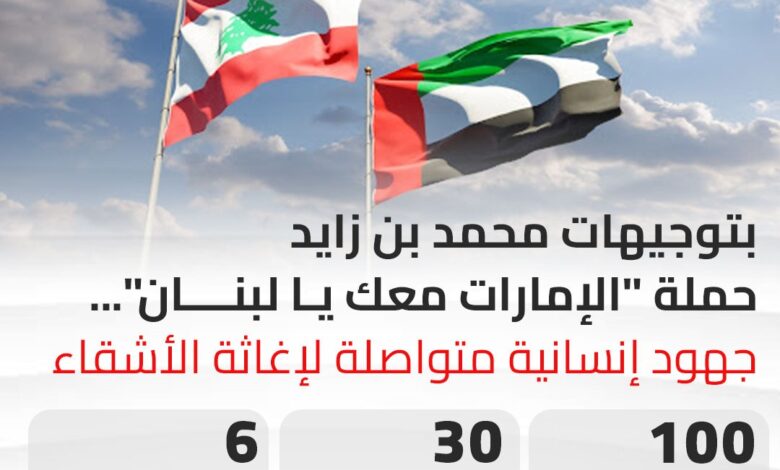
Many issues are still to discuss between the GCC and the Trump administration which seems to consider GCC countries as mere financial reserves, not as countries that succeeded in development amid regional turmoil or countries that provided humanitarian aid to countries in crises and conflicts. The Emirates have set this example through its commitment to humanitarian responsibilities and its eagerness to provide support and ensure security and stability in various regions of the world.