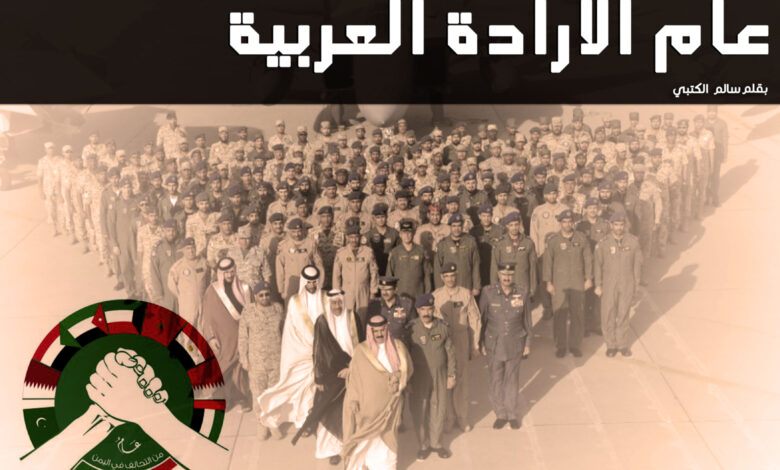
In the anniversary of the historic decision of the leadership of Saudi Arabia to launch the Decisive Storm Operation on March 26, 2015, we can draw the lessons from this milestone in the regional order, after the operation was quite different than before, both in terms of the GCC approach to regional issues and strategy variables, and in terms of the positions of the parties and other regional powers, which had reached a point that cannot be overlooked in any discussion or analysis of the regional scene in the past few years.
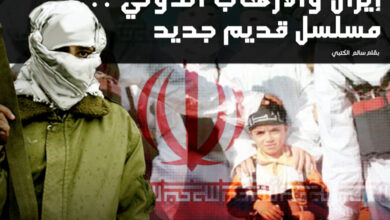
Every Arab or Gulf citizen needs to remember that Ali Reza Zakani, representative of the city of Tehran in the Iranian Shura Council, a figure close to Supreme Leader Ali Khamenei, has raised his voice in front of the whole world in September 2014, boasting that the capital Sanaa, has become the fourth Arab capital ‘occupied’ by Iran after Beirut, Damascus and Baghdad, stressing that what he called the ‘Houthis revolution’ was only an extension of the Khomeini revolution, and that Sanaa is on its way to join the Iranian revolution .
Zakani did not make his statement in a private meeting or a casual conversation, but he declared it under the dome of the Iranian Shura Council and his statement was recorded in the minutes of the meetings of the Council. He declared publicly that Quds Force of Iran’s Revolutionary Guard Corps are intervening in Iraq, saying ‘if Gen. Qassem Soleimani did not interfere in the last hours in Iraq, Baghdad would have fallen in the hands of Daesh, and this intervention was also done in Syria, ‘ noting that ‘if we haven’t made critical decisions about the Syrian crisis, and not intervene militarily, the Syrian regime would have fallen from the beginning of the Revolution.’ Zakani said that the Syrian president, Bashar al – Assad, said to the official delegations that congratulated him for winning in the presidential elections, that the Iranian supreme leader Ali Khamenei is the one to congratulate and not him, because he owes his success in this election to Khamenei.
Refusing the intervention of the Qods Force in Baghdad does not mean agreeing with the terrorist group Daesh. The makers and supporters of this despicable organization have been utilizing it in achieving regional expansionist objectives. Daesh pretends to fight for the Sunnis but, as a matter of fact, it was ‘cooked’ by the Revolutionary Guard to provide a cover for the implementation of the plots and plans of division and expansion.
These facts should be appreciated by critics of the Arab Alliance for constitutional legitimacy in Yemen, led by Saudi Arabia, before they try to analyze and discuss the findings and strategic implications of the Decisive Storm and Restore Hope operations. Iran did not give any chance to political action, and the situation was unbearable. Many believe that the Decisive Storm came late, but better late than never.
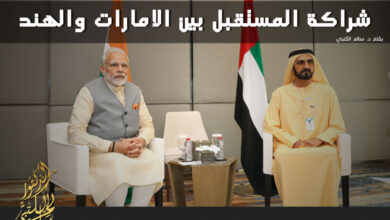
One year passed since Decisive Storm, and indeed, it was a year of decisiveness and will by the Arab and Gulf countries to confront the forces of oppression, injustice and aggression. It came to prove the brotherhood and affinity between the people in the GCC countries and Yemen. the people of the UAE answered the call of duty, which was confirmed by Sheikh Mohammed bin Zayed Al Nahyan during a meeting with leaders of the Yemeni Resistance last December, when they came to thank the UAE for its effort in assisting and supporting the Yemeni people and he said ‘don’t thank us for our duty’.
Saving the people of Yemen is like a battle of Arab dignity and pride. Our wise leadership, led by Sheikh Khalifa bin Zayed Al Nahyan, made a nationalistic stance of history. The sacrifices of the heroes of our armed forces and our martyrs will continue to be a landmark in the history of our brotherly Yemen. Their sacrifices helped change the course of history in this region. The role of the Arab coalition for constitutional legitimacy in Yemen was not confined to dealing with crimes of Houthi group and militia of the ousted Ali Abdullah Saleh, but also to respond to those behind these sectarian militias, who are sponsors, allies and funders who boasted publicly that Sanaa was subjected to the Iranian revolution. So it was not surprising that the sons of the late Sheikh Zayed bin Sultan Al Nahyan went to defend the land which the grandfather loved. Sheikh Mohammed bin Zayed Al Nahyan did not hesitate to send his son, Sheikh Diab, fight alongside his brothers of the people of the UAE, said his father when he addressed a group of wounded Emiratis, kissing their heads and saying ‘Diab is no better than you all,’ confirming the presence of his son in the midst of battles to restore legitimacy and defend the proud Yemenis.
It has been a year since the Arab strategic awakening, competently led by the Saudi King Salman bin Abdulaziz, who etched his name in records of Arab honor and nationalism. His decision constituted an unforgettable milestone in Arab history. the test of Yemen will remain a turning point in the history of the region, as Sheikh Mohammed bin Zayed Al Nahyan said ‘the test the Saudi–UAE relations faced in Yemen, within the Arab coalition, was passed with confidence, joint work and sacrifices, and we consider cooperation an inspiration to guide us all to the best interest of the Arab world.’
A year ago, Iran’s sectarian project in the region was confronted, but we can all see where the Iranian project is now. Did it continue its expansion as Iranian strategic planners hoped or it remained frozen defending its strongholds in Iraq, Syria and Lebanon?
The case is clear. The Arab coalition has succeeded in transmitting the message to Iran and the entire world, ‘the GCC and Arab countries will not stand idly in the face of Iranian influence from now on. ‘The message was made clear to major regional and international capitals. The operation is yielding positive strategic results. The GCC no longer watches what is going around, it is a strategic actor to be taken into account. Our peoples realized that the interests of our nations and our security are not linked to geographical boundaries, but to complex calculations and variables posed by globalization and the new generations of conflicts in the wars of the 21st century.