This week, opinion articles and analyzes presented a tremendous amount of visions and perceptions expressed by Arab elite writers from different political and ideological affiliations, to mark the fifth anniversary of the outbreak of the turmoil waves, which some would like to call the Arab Spring. In these analyzes, my attention has been drawn to two important things, first the accusation by some to the Gulf Cooperation Council, to be behind the “Failure of the Arab revolutions”. The second thing regards extreme prejudice towards some Arab armies and the ignoring of the role of the terrorist organizations that marred the whole regional scene, not only security and the political situation in some Arab countries.
Regarding the first matter, I think that the vision of some observers, based on the accusation of some GCC states of causing the spoiling of what they call the Arab revolutionary tide, is a politically inadequate and naive vision, for the simple reason that this view ignores the basic influence of internal factors and jumps on the will of the people, which is the foundation of any changes, in the sense that it is difficult to say , for example, that this or that country has been successful at making a difference at the political scene of a large country of the size and strategic weight of our sister Egypt, unless there is a broad public alignment to bring about change.
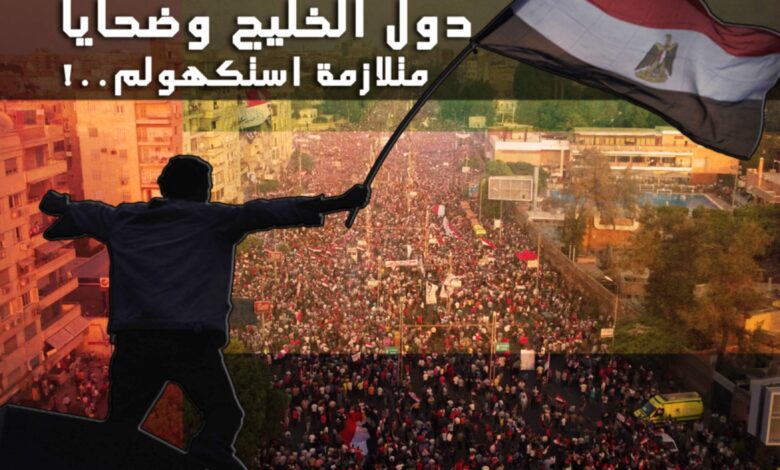
This popular line-up is what was embodied in the revolution of the thirtieth of June of 2013 against the rule of the terrorist group, the Muslim Brotherhood, a revolution that translated the will of the Egyptians to change the rule of the Guidance Office and the gang of the Guide, which means that talking about the presence of external pressure in this change, is actually an affront to the will of this great people, which still holds a deep hatred towards this group, ostracizes it and prevents its appearance on the Egyptian political scene again.
The second thing is that those who keep on accusing some Arab armies of causing the spoiling of what they call the “democratic wedding”, express a strong unmatched demagogy. These people and others cannot deny, for example, also, the role of the Egyptian army in toppling the Mubarak regime, and its support to the will of the Egyptian people. Without the army’s support to the popular will at the time, the protesting crowds could not have won nor could they have achieved the objectives demanded by millions of people!!
After the 2011 events, the Egyptian army went on taking care of security and stability, and preventing the disintegration of the national contract in many crucial hours in which the Arab world from the Atlantic Ocean to the Gulf was retaining its breath out of fear and apprehension that big sister Egypt slides into chaos and civil strife. But the army remained like a safety valve, and it stayed intact despite the rabid campaigns of elements that have been trained abroad, and of extremist organizations that have tried more than once to lure the Egyptian army into streets battles to drain its abilities, as a prelude to adding Egypt to the list of Arab countries where chaos and violence and security turmoil spread.
Those who forgot or pretend to forget what happened during the period from 2011 until 2013, have to remember the conspiracies and the luring attempts suffered by the Egyptian army, which reached its own home and the gates of the General Staff through the group “Hazimoun” at times, and through elements of movements trained and funded from abroad at other times, not to mention what it suffered by the terrorist group, the Muslim Brotherhood, when it sought to break through its ranks, terrorize its leaders and subject it to its authority. We must not forget the calls from the group militias, supporters and sympathizers, for the formation of a parallel army to the Egyptian army!
Yes, some of the GCC States sided with the will of the Egyptian people to change the rule of the terrorist group, the Muslim Brotherhood. And though this position is flawed from the point of view of some analysts and observers, we do not see it as such, It is something cherished by the peoples of these countries, who see sister Egypt as a key pillar in Arab national security, and see its people and its army as a basic block wall against the ambitions of the greedy and the grudges of the spiteful, regionally and internationally.
Yes, the United Arab Emirates stood and will continue standing with the will of our brothers in Egypt, and will remain so always, God willing. But this fraternal stance was only a support to the will of the people expressed in the thirtieth of June revolution of 2013, which restored the correct path, and contributed to the reestablishment of internal security and stability.
In the interpretation of the positions of these prejudiced ones, I realize that some people ignore the conditions of sisterly Egypt in the past few years, and claim that the army had climbed to power. Let me just remind you of some scenes that ousted the hearts of many in grief and pain on Egypt: was the Egyptian army the one that besieged the headquarters of the Constitutional Supreme Court and prevented judges from entering? Was the Egyptian army the one that stormed the headquarters of the State Security and threw its secret papers in the streets, disseminated them via the social media, and everyone raced to snap up official reports and papers, which must be preserved, whether they contained what may hurt some, or were they prepared illegally, as those are documents belonging to State Security services and must be kept confidential.
Were not those that call themselves revolutionaries of the youth movements, demolition shovels sought to dismantle the Egyptian army, tarnish its image and defame it in front of all the international media? Was not the Egyptian army soldiers and officers exposed to the worst insults and unethical behavior on the part of funded segments that have been meticulously trained on how to provoke the soldiers and lure them into offensive positions and then disseminate these positions through the foreign means of communication and media?
The truth is that when I motivate my memory to restore the footage of the past scenes, I get more certain that the memory of some of our intellectuals is like that of a fish, which scholars have differed in appreciating, but they did not talk about a few months at best estimates. Those intellectuals have forgotten or have pretended to forget all the bickering suffered by the Egyptian army, and ignored the rumbling public pressure in order to nominate the defense minister at the time (the current President Abdel Fattah al-Sisi) for office, and to the same extent ignored all the misfortunes and disasters caused by the Muslim Brotherhood in Egyptian policy management, both internally and externally, and the strife and divisions they caused, which are hard to heal in few years!! I did not find an explanation for the positions of some who now attempt to ignore or blur the crimes of the terrorist group, the Muslim Brotherhood, except the inclination of some to sympathize with the offender for the only reason that the crime has become relatively obsolete and its effect has reduced, which reflects a psychological weakness among those who feel this. Scientifically speaking, these are the victims of what is being described as the ” Stockholm syndrome”, which explains the sympathy of the victim with the offender, or a feeling of compassion towards those who caused serious abuse, and the attempt to prevent their being charged for the offenses they caused, and their receiving the legal punishment necessary to deter others from repeating the same crime! Have some of those living among us become really victims of the Stockholm syndrome?