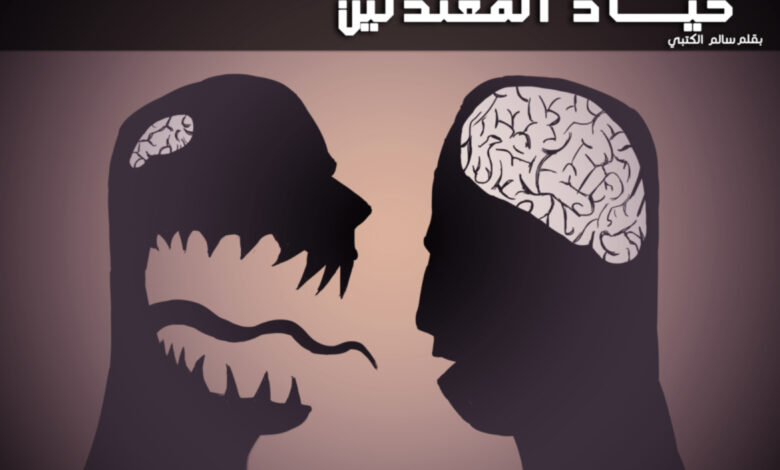
Sometime ago, I criticized the weakness of the moderation current position in the Arab and Islamic worlds, and the fact that moderates left the arena for all types of extremism and militancy organizations and groups.
More recently, Queen Rania Al Abdullah, wife of Jordan’s King Abdullah II, criticized the moderates, believing that they are «not doing enough to win the ideological battle» against «Daesh», and called for betting on the youth to avoid that the region falls in the hands of extremists, but at the same time, she mentioned some of the indicators that paint a bleak picture for the near future in the region unless the situation is remedied. Among these indicators, which are well known, is the high unemployment rate among young people in most Arab countries, which amounts to about 25% or more in countries experiencing chaos and excruciating military conflicts. Moreover, there is a need for a hundred million jobs until 2020, otherwise the unemployment market will be more crowded with unemployed people, and these will be like a huge human store of easy strategic reserves for extremism and terrorism organizations to get all the bombers and fighters they want.
Personally, I do not think that the position of the moderates is the only factor in the expansion of the extremism current. There are factors fueling this reality, but moderation itself has fallen into a fishy trap of silence and did not give its model in the face of the extremism model, moderates are even often opting for silence!! Here, a legitimate question arises: Do moderates realize the effects of their position? Are they confident that failure is not an option in the struggle with extremism and terrorism?!
In the last century, Martin Luther King said his famous quote “The hottest place in Hell is reserved for those who remain neutral in times of great moral conflict.” Of course, I do not accuse those sitting on the fence out of this quote of any ill, but I wanted to point to the big danger of embracing their position, and I am confident that the majority of moderates do not act positively because of their dependence on that others undertake their role and address the extremist ideology, which makes the voice of moderation slide automatically and gradually to negative neutrality.
There is another problem related to moderation. The concept needs more terminological and conceptual precision. Do we mean religious moderation or political moderation or moral and ethical moderation, each has its standards and references. Are moderates institutions or individuals? What is the institutional framework through which these moderates can act: media, educational institutions, community interactions, religious pulpits or all of those? Who determines the frameworks of this action and its targets so as not to become erratic and then lose its effectiveness?
One of the most prominent attributes of militancy, extremism and terrorism, is that these currents move within regulatory frameworks. There are a well-known terrorist groups and others unknown, but they all express their convictions and ideology and declare their crimes through certain media outlets. And there are the leaders of these groups and organizations, who speak on their behalf and express their thoughts and goals and objectives, and this governing frame to extremism ideology explains the extreme effectiveness of this thought and its ability to achieve its goals.
One may say that the phenomenon of extremism is not as organized as you said, and that there are extremists in countries and many places who are not subject to specific groups, but their voices seem to be the highest in their communities. This is true to a large extent. This segment of extremists that are not classified organizationally represent an imminent threat to security and stability in the world. They represent a phenomenon known as «individual wolves», and they haunt security authorities in the countries of the world.
The problem is that individual extremist acts are serious and have devastating effects on security and stability, though their impact at the intellectual and propaganda levels seem insignificant compared to collective and organizational acts of extremist currents and groups, while moderation needs organized and institutional actions with clear plans and strategies to be able to gain a level of spread and effectiveness.
So the neutrality of the moderates is not an option in the fight against extremism, terrorism and militancy. It is not an exaggeration if I say that this attitude exacerbates the effects of extremism and terrorism, and provides an inaccurate picture of the trend of moderation. What is required from moderates is to make their voices heard and to show up, in order for the moderate current to acquire the credibility it deserves, and to not leave an empty arena for extremists and terrorists.