Iranian military leaders and officials recently went back to using an ‘obsolete’ expression that disappeared for years from the Iranian political discourse — exporting the revolution.
Recent developments in the Iranian political scene suggest that the use of the slogan reflects internal crises in Iran. The country has an ideologically distinct, theocratic and revolutionary regime, scholars agree. A striking feature of this type of systems is that they provoke foreign crises to divert attention from any internal crises.
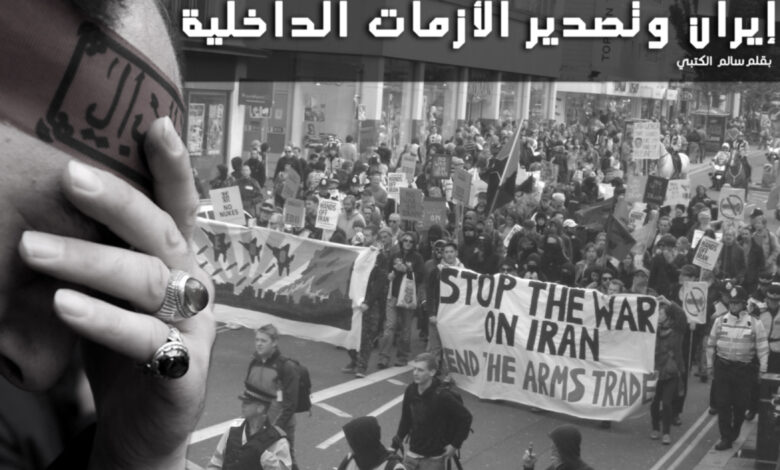
This is happening in Iran as it suffers from disappointments at the level of regional strategy, whether in Yemen or Syria. The mullahs’ regime is also facing internal upheaval in several regions of Iran. The country is witnessing oppressed yet growing protests of minorities, such is the case in Ahwaz (Arabistan) in the south, and the provinces of Kurdistan and Baluchistan, and recently Mahabad, which has a Kurdish majority, in West Azerbaijan province.
The mullahs’ are aware that their regime is threatened. The branches of the regime in Lebanon, Syria and Yemen are facing defeats in their strongholds, which means the loss of billions of dollars invested by the mullahs which they took away from the Iranian people and used for spreading unrest and instability in the region. When danger moves home, it plays with the nerves of the Iranian mullahs. It feels like the earth is quaking under their feet when Ahwaz Arabs scream independence, when the Kurdish call for secession, and some northern neighbors await the moment to take revenge from Tehran.
Using Iranian and pro-Iranian media in several Arab countries, the regime is trying to cover up the strategical defeats it faces whenever it takes on an issue; they brag controlling four Arab capitals, and purport that the Persian Empire will return to its historic glories.
Iran is now trying to export internal crises to its regional environment, in order to distract the Iranian people from what is happening home and mobilize the Iranian nationalist sentiment for fake wars waged by the regime abroad. The most prominent example of military conflict provocation by Iran is the humanitarian aid ship over which Tehran wanted to spark a war with Saudi Arabia.
What relates Iran to Yemen cannot justify military confrontation with powerful neighbors such as Saudi Arabia over a small delivery of aid to the Yemenis. The GCC States take into consideration the humanitarian situation in Yemen, and intensify their efforts to deliver humanitarian and relief assistance to the Yemenis. The people of this country have blood ties and kinship links with their brothers in the GCC countries, unlike the Iranians. However, Iran has insisted through the arm of Houthi rebels to turn the situation in Yemen to a worsening humanitarian crisis in order to embarrass the Saudi Arabia and Arab allies on regional and international levels. Tehran is aware of the sensitivity of the humanitarian crises for the Kingdom and its allies, so it is moving in this direction in order to put pressure on Riyadh to halt its military operations.
All of that indicates that Iran is experiencing a true dilemma internally and externally and confusion on the level of policy. The situation is alarming and policy planners in the GCC should pay attention to that. Given the present circumstances, the Iranian regime may commit strategic sins that are unpredictable for now.