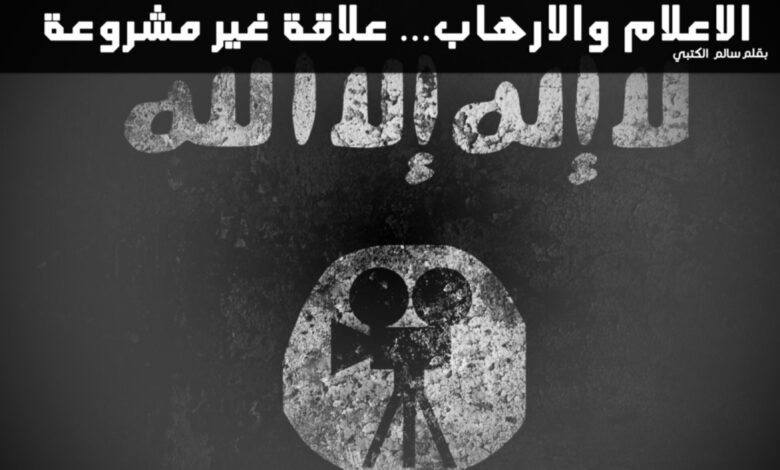
The role of satellite channels in promoting the ideology of terrorism and in defending extremist organizations, and the relationship of this with the freedom of opinion and expression has been a controversial issue for years. France’s recent decision to stop broadcasting the “Rabaa” channel that voices the opinions of the Muslim Brotherhood terrorist group, was not the first attempt in this context. France has previously stopped the broadcast of the TV channel “Al-Manar” of Hezbollah by a court order issued by the French Council of State, because of the “anti-Semitic content of the programs”, and this decision had been preceded by the inclusion of Al-Manar on the US list of terrorist organizations in 2004.
At that time, when controversy over the role of satellite channels in fueling terrorism raised, it was it linked to the interests of the major powers that have adopted this trend, as the United States considered that the channel “Al-Manar” ignites Shiite sectarianism against American soldiers in Iraq. From then, the conviction of the role of certain satellite channels in promoting terrorism has been linked to the interests and objectives of the major powers, hence the importance of France’s recent decision to stop broadcasting the “Rabaa” channel, the mouthpiece of the Muslim Brotherhood in Egypt, a decision that expresses the understanding by the French of the Egyptian official position, which considers the group and all its tools including the media as terrorist.
The issue is not about a specific satellite channel, but is about the fight against terrorism with all its organizations and groups and their sectarianism and political references and affiliations. Tackling terrorism requires expanding confrontation and treatment strategies, and necessitates comprehensive solutions and alternatives. It is not allowed to say that there is a serious will of eradicating terrorist and extremist thought while several satellite channels publish this thought under the pretext of freedom of opinion and expression!!
I personally believe that the growing role of the media and the Internet in the last two decades, requires a serious institutional discussion of the role of the media in the fight against terrorism, through international organizations and institutions, primarily the United Nations, as it is assumed that this organization issues a binding international classification that determines the satellite channels that practice incitement and publish extremist ideology, regardless of religion, sect and creed, race and so on.
It is true that the UN has failed to make a legal framework or a formal and unified definition of terrorism, but realistically, it produced this conceptual framework, which can be a springboard to combat what can be described as media terrorism. This can be achieved through legislation and international laws prohibiting the practice of media activities linked to groups or organizations or countries classified by the United Nations as terrorist. And these international laws and legislations must target service providers and broadcasters, and various relevant parties of the industry, so as to trap media activities that promote violence, terrorism and radical thought.
The goal of the foregoing is to expand the scope of confrontation, and to oblige all UN member states not to provide sponsoring, finance and hosting to any satellite channels that belong to banned or terrorist entities.
For example, there are satellite channels belonging to the Muslim Brotherhood in Turkey and other countries. And here, there are satellite channels that host the leaders of the terrorist group in several other countries. It is difficult under the ideological and intellectual links of political leaders in these countries with terrorist organizations, to persuade such countries to abandon their hostile role towards other peoples seeking security and stability.
On the other hand, the issue is not related to the Muslim Brotherhood only. In fact, there are Shiite satellite channels that promote violence and pour their poisonous ideas in the ears of millions of recipients. This kind of channels host what they call experts and specialists who promote wars and sectarian conflicts, and discord and hatred between Sunnis and Shiites in several countries in the Arab Gulf region, and do not desist from insulting the wives of the Messenger of Allah (peace be upon him) and his companions, and even consider their religious approach as “takfirist”. In contrast, and for the sake of honesty, there are Salafi extremist takfirist channels, which are almost exclusively interested in incitement to launch wars against those whom these channels describe as “rejectionists” (Rafida). These channels portray themselves as representing the Sunnah (the way of the prophet). Both teams rely on history’s worst scenes and memories and seek to clone the same conflicts and bloodshed.
Any understanding or study of phenomena that are growing in many Arab and Islamic societies, such as atheism and other community devastating trends, cannot be separated from this miserable media heresy, which alienates everyone of Islam and Muslims, and only serves radicalization be it Sunni or Shiite. Therefore, silence is a tacit acknowledgment and a declaration of surrender to this repulsive media practices, which require concerted Arab and international efforts at the level of institutions and countries to limit terrorism intellectually, and not only organizationally.