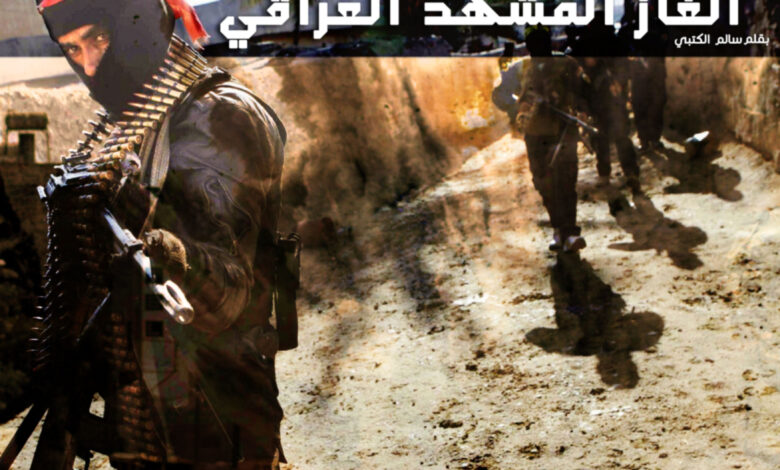
Even if Iran-backed militias succeed in stopping the progress of Daesh in Anbar, the population in Sunni areas will look at them as a Shiite army of occupation.
The strategy of US President Barack Obama to deal with crises in the Middle East is based on relying on the armies of others, urging countries to fight in conflicts and handle their own challenges, or the Leading from Behind strategy. This strategy involves many risks. First, there is the inability to influence the results of the military operations in such a way as to protect or enhance the US vital interests. Also, this strategy seems devastating for the security and stability in many parts of the Middle East, specifically Iraq and Syria, where Daesh is extending over Iraqi territories.
There is a large consensus among US experts that President Obama’s strategy in Iraq failed after the victories of Daesh in Ramadi, the largest city in the Anbar province. In return, the US administration insists that the strategy is effective and successful despite the absence of any evidence. The White House says that long-term conflicts, like the one happening in Iraq, are subject to constant change.
The problem is that this debate is going on while there is a growing risk of Daesh extending to other Iraqi cities and provinces. Now, Daesh can reach the borders of Saudi Arabia and Jordan, and that constitutes a threat to the GCC; especially that these threats are in favor of Iran because another threat is coming from the Yemen’s Houthi group, backed and strategically utilized by Iran to confuse the regional situation and the situation in the country. Daesh claims fighting the Shiites, while the results of their extended military operations are in the interest of Iran, which exploits these conditions to achieve its interests in the partitioning Iraq and ensuring that the Shiites get the greatest share from this catastrophic scenario.
The solutions available to the US, according to research centers, are the presence of additional US ground forces to provide intelligence information and carry out reconnaissance and train Iraqi forces, or intensifying air strikes by the US-led international coalition, but the problem with this alternative is that there is not enough information about the important targets in Daesh.
Some believe that the recent experiences have demonstrated that air power alone cannot defeat these organizations, and that the solution lies in the presence of highly trained and well-armed ground forces to assume this task, but this alternative is unrealistic and not considered for the time being.
The problem facing strategy planners in the Middle East is that changes should be made to put down the fire raging in Yemen, Iraq, Syria and Libya. However, the White House refuses calls to re-evaluate the military situation and strategy to deal with Daesh, including calls by the Speaker of the House of Representatives John Boehner and Democratic Representative for California Adam Schiff. Rather, the White House keeps talking about the recent success of the US Special forces as Abu Sayyaf a.k.a Fathi ben Awn Murad al-Tunisi, one of the leaders of Daesh and a responsible of hostage and ransom operations, has been killed in Syria.
The problem is also that the Sunni areas in Iraq are between the rock and a hard place with Daesh and the Shiite militia. The United States has no clear strategy to protect them from the expansion of Daesh.
The collapse of the Iraqi army in Ramadi, the capital of Anbar province, is similar to the catastrophe of Mosul in June 2014, when the army retreated in the face of relatively few Daesh groups. some said that was because they lacked the proper training and the morale, while others were skeptical that this decline was on purpose as part of a plan to partition Iraq into three states: Kurdish, Shiite and Sunni; Daesh would be allowed to expand in Sunni areas, then the Shiites would force them out and add these areas into the territories under their control—the perfect recipe for a decade-long civil war in Iraq.
Ruling out any conspiracy theories about what is happening in Iraq, there are other problems. The major issue in Iraq remains sectarianism based on which the Iraqi army is formed. The sectarian quota provides an important and convincing explanation for the strange decline in the army in the battlefields.
This is because most of the army is composed of Shiite elements not ready to sacrifice themselves for the sake of defending Sunni areas. The origin of the problem in Iraq is the abhorrent sectarianism that is eating away the State since 2003, and the defeat of the Iraqi army in Mosul and Anbar is just one of its manifestations.
Even if the Iran-backed Shiite militias, or as the Americans call them, the Popular Mobilization Forces, succeed in stopping the progress of Daesh in Anbar, the population in Sunni areas will look at them as a Shiite army of occupation, possibly leading to decades of sectarian violence.
It is puzzling that there was an earlier agreement to form a group of Sunni tribes to collaborate with the Iraqi army to sweep Daesh from the recovered parts, but has not been implemented yet and the agreement was not passed by the Iraqi parliament. Additionally, the Iraqi government is still not sending weapons to the Sunni tribal fighters.
The situation in Iraq and the regional scene poses many questions and mysteries, revealing many US-Iranian ententes about the limits of influence and the division of wealth in Iraq and other countries in the region.