The crisis in Ukraine has had a profound global impact in various fields and sectors. One of them, of course, is the energy sector. Experts attribute high energy prices as a result of Russia’s military operation in Ukraine to the growing global trend of injecting new investment into this vital sector.
New equations about the future of energy and the place of fossil fuels on any alternative energy map are taking shape, with new variables.
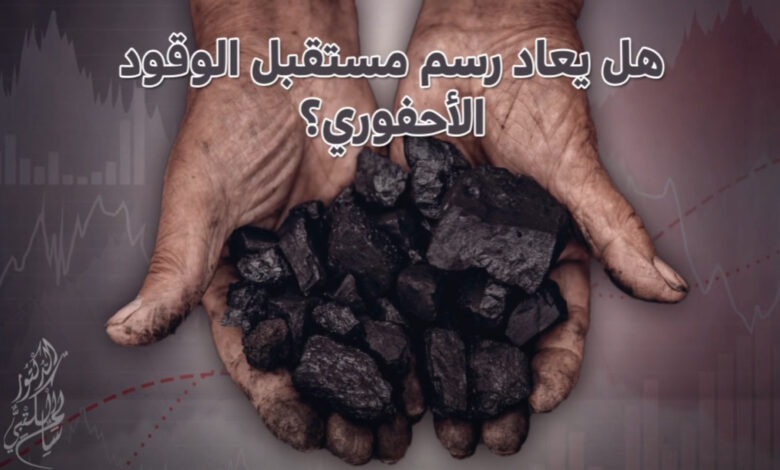
Does the trend of declining reliability of these fuels continue in favor of new and renewable energy sources that are friendly to the environment, or does the lack of availability of alternatives at sufficient rates and levels of global demand give traditional energy (oil and gas) new hope for life, survival and continuity amid global competition for energy resources for years and perhaps decades to come?
In a report by international climate change researchers, I read urgent warnings about the risk of slowing the pace of global commitments to reduce pollution. UN Secretary-General António Guterres called “madness” what he described as countries’ rush to once again rely on fossil fuels as an alternative energy source because of the war in Ukraine, putting global climate goals at risk.
He noted that short-term measures taken by some countries to replace Russian energy sources could imperil the Paris climate goals. The problem that Guterres and others see is that halving carbon dioxide emissions by the end of this decade could turn into a 14 percent increase in emissions.
That’s why the UN Secretary-General recently told the Economic Sustainability Summit that the problem is getting worse; the war in Ukraine has deepened the climate crisis and made it a growing problem. Certainly, the future vision of the overall global climate situation should not be based on short-term actions by some countries, especially Europe, to reduce dependence on Russian oil and gas.
First, these actions are essentially short-term temporary solutions to ensure that life goes on as usual in these countries. Second, the result is the substitution of fossil fuels by other suppliers. So it may not have the imagined effect on the overall map of conventional energy consumption.
Third, the situation will undoubtedly accelerate countries’ plans to become more dependent on alternative energy sources, rather than the other way around. However, it takes time to prepare plans, adopt the necessary budgets, or squeeze time schedules to implement existing plans and prepare new ones.
I disagree with the view that dependence on fossil fuels represents mutual destruction for all parties. This “dependence” is neither new nor transitory. It is not the result of the Ukrainian crisis, which has caused much confusion and turmoil in world energy markets.
But it certainly has not led to the usual level of reliability of traditional energy. The current situation is not related to the global rate of consumption. But it is mainly related to changes in the market map and market relations, with different exporters with relative stability of consumption quotas, at least in the current period.
The fact that European countries are concretely aware of the geopolitical risks of relying on a single energy source will undoubtedly push them in the medium and long term to seek new alternatives to fossil fuels. This does not necessarily mean ignoring policies and plans to reduce emissions and address the climate change crisis in real time.
In other words, recent conditions are likely to have a limited impact on the climate. However, the main problem remains the varying level of commitment to long-term emission reduction policies. In addition, many countries have refused to follow the UN 2030 plans.
Indeed, there is a trend in a number of Western countries to build new LNG plants. The EU has reportedly allocated about 12 billion euros for the construction of gas pipelines and LNG import facilities as part of the REPowerEU plan. However, these plans remain imperative short-term alternatives until alternative renewable energy sources are introduced.
The war in Ukraine certainly proved that there is still room for traditional energy sources; a full transition to renewable energy requires more time and effort.
The world still needs a balance between realizing the goals of the environmental agenda and maintaining energy prices on the one hand, and pouring investment into traditional energy and ensuring the interests of both producers and consumers on the other.
Higher energy prices caused by wars or other factors lead to slower implementation of the environmental agenda, given the close correlation between energy prices and the popularity of politicians in opinion polls and ballot boxes. This can be observed specifically in the US. President Biden has put aside the environmental priorities of his campaign agenda and opened the door to oil exploration.
He is thinking hard before implementing any steps related to the environmental agenda, especially in the current international environment where the energy security of a number of industrialized nations is being severely tested. Global energy markets are undergoing significant structural changes, the main factor of which is the war in Ukraine, which has changed the rules of the market game.
It has created a geopolitical environment that will affect several sectors, primarily energy. However, all of these circumstances are not fixed, they are related to circumstances and may change, end, expand geographically or stretch over time, in whole or in part. In each of these scenarios, fossil fuels will play a major role, both guiding the compass of events and paying their strategic cost.