The Iranian regime’s mullahs are sadly mistaken when they think that the anger of the Iraqi people can be tamed.
People want to get rid of corruption. They want to put the Iraqi state back in its place in terms of the economy and development, in a way that is appropriate to its natural and human resources, history and capabilities that the mullah regime wants to manage and exploit in its interest.
The mullahs also make mistakes when they misinterpret the crystal-clear message of Iraqi anger.
Those demonstrators who tried to storm the Iranian consulate in Karbala and the slogans against the Iranian regime in Baghdad and various provinces of Iraq in recent months confirm this: Iraqis, Sunnis and Shia, refuse to let the mullahs hold decision-making power in their country.
Everyone came down.
The young people were not afraid of the bullets and bombs that chased them everywhere until a regrettable number of deaths added up to the toll of sacrifices made by Iraqis for their homeland over the past few years.
How many deaths and injuries do the mullahs need to see in order to get the Iraqi popular message?
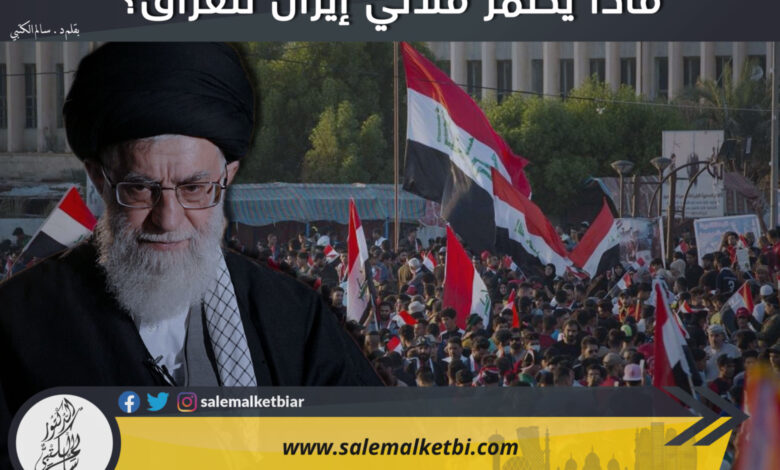
Iran’s supreme leader, Ali Khamenei, described Iraqi anger as “riot and chaos,” although he considered the demonstrations that took place in several Arab countries in 2011 as an extension of the Iranian revolution that “inspires,” despite more than 25 years of history, demonstrations in Arab countries.
It is unclear why this inspiration does not apply everywhere, nor why the mullahs have not seen the anger of Iraqis and Lebanese against sectarianism and corruption of power as a second wave of this so-called inspiration?
In reality, the Iranian regime is afraid of drinking from the very glass that it helped serve to several Arab regimes by backing up extremist organizations and helping them seize power. But now, the flames may spread to Tehran and other Iranian cities.
Yesterday, the media reported that the main political forces in Iraq agreed to keep the current authority even if it takes “the use of force” to stop the demonstrations.
At the meeting in Baghdad, they also stated that the majority of the leaders of the major blocs support Adel Abdul-Mahdi and his government in return for anti-corruption reforms and constitutional amendments.
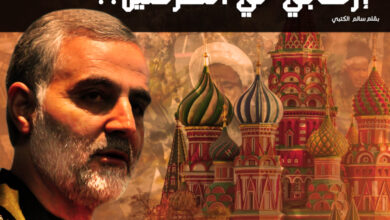
This news may seem like a normal Iraqi domestic matter. But according to media reports, the agreement was reached after a meeting between Major General Qasim Soleimani and Muqtada al-Sadr and Mohammed Reza al-Sistani (son of Ali al-Sistani), which resulted in Abdul-Mahdi being kept in office.
The legitimate question that many Iraqis or Arabs might ask themselves here: why General Qasim Soleimani, leader of the Force of Quds in the Guards of the Iranian Revolution, is taking part in an “unprecedented” meeting between all the leaders of Iraqi political parties and blocs including Mr Mohammed Reza al-Sistani, Ammar al-Hakim, Hadi al-Amiri, and Mr. Ali al-Sistani, the highest Shia religious authority in Iraq, whose aim is “to unify the Shia community? ”
Why is this “consensus” at the level of government support and does it not extend to taking serious measures to improve the living conditions of the Iraqi people and remove the causes of anger and protests?
Why have Iraqi politicians engaged in the same sectarian logic that Iraqi Shiites have openly rejected since the demonstrations began a year ago, the same logic that is one of the main triggers of mobilizations and popular anger in the first place?
With an iron fist, the protests could end. But the seeds of anger will remain there. The situation will be volatile at all times, testifying that Iranians are afraid that the flame of protest will spread to Iranian cities, but also that the Iranian regime has a strong influence on the Iraqi politicians currently in power.
Some analysts think that the use of force to stop Iraqi demonstrations may be repeated in Lebanon. This can happen because the positions of the elites are similar. Hezbollah leader Hassan Nasrallah, after the Hariri government resigned, has already accused what he called external forces of pushing for chaos and internal struggle.
Whether or not force leads to stifled protests, sentiments of popular anger against Iranian influence in some Arab countries are no longer in check.
What is happening now has clearly revealed the Iranian regime’s bad intentions and malice and its continued desire to dominate decision-making in the capitals that this regime had boasted to occupy.