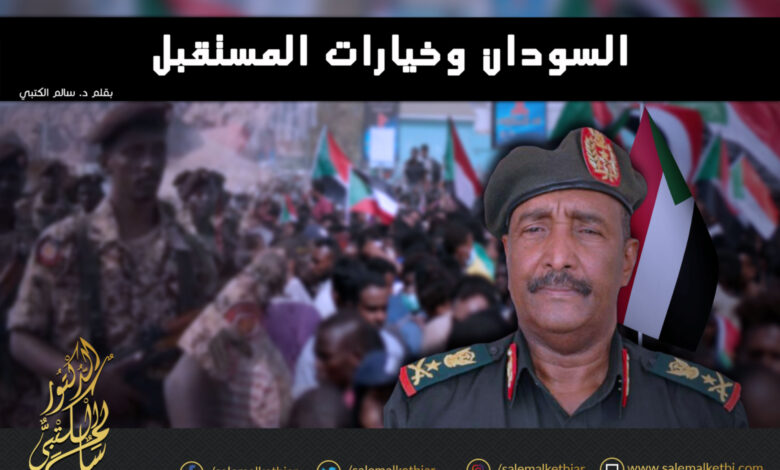
The Qatari media have been constantly portraying the United Arab Emirates, Saudi Arabia and Egypt in a misleading way.
Any serious study of the post-2011 Arab turmoil makes one thing clear: if Saudi Arabia’s and the UAE have not levelled off with their support for the people of Egypt, the major Arab country would not have been stabilized. Then, if not for the support of the three countries for their friends in other countries, things would have gone bad.
But since the Qatari regime does not want Arab societies to be stable, for its support to terror organizations, it keeps trying to make any stabilization measures by the three countries look bad.
Saudi Arabia and the UAE have not addressed the events in Algeria or Sudan since the start, as they were popular movements and to avoid any accusations of interference by the hostile media at a time of national sensitivities.
Both countries consider the events as an domestic affairs. Arab countries have institutions and leaders capable of managing their countries’ affairs during such transitional periods.
The UAE made no official statement on what was happening in Sudan since former President Omar al-Bashir stepped down from power and his first deputy minister, Minister of Defence Ahmed Awad ibn Auf, took office for just one day. Ibn Auf then withdrew, leaving Abdel-Fattah Haroun as President of the Interim Governing Council, who endorsed the demands of the protesters from the Sudanese people.
But when signs of stability and consensus became clear, the UAE welcomed the arrival of Abdel Fattah al-Burhan, President of the Transitional Military Council.
The UAE voiced confidence in the ability of the Sudanese people and their national army to meet the challenges. HHS Khalifa bin Zayed Al Nahyan, President of the UAE, invited the Transitional Military Council to look into areas of assistance to the Sudanese people.
The decision is in line with the fraternal and historical ties between the UAE and Sudan.
Everything that is happening all around us in the Arab region, of course, deserves the attention of the UAE. What is happening is pushing the Emirates to work for stability in countries undergoing strategic change, including Sudan.
Managing transitional periods is always complex and challenging. Leadership is not so much about slogans as it is about serious national efforts.
In the transition to power, the national armies are the only guarantor of security and stability against the scenario of unrest and chaos. The Arab people can feel this quite vividly. The UAE is well aware that development is the key to stability and security.
People who have protested for decent jobs, good education and eraicating corruption should not fall prey to further development failures.
People do not deserve to drift into waves of chaos and unrest, nor should they leave room for those with wicked ideological agendas to steal the dreams and aspirations of millions of people.
When the UAE and Saudi Arabia endorsed the Transitional Council in Sudan, it was not to impose agendas or projects as do some countries like Iran and Turkey.
However, the Qatari and Brotherhood media continue to distort the efforts by the UAE, Egypt or Saudi Arabia to protect any progress and achievements made by Arab countries. Their accusations, lies and rumours are prepared in advance, but the leaders of these countries are well aware that the merchants of subversive agendas in the Middle East exploit any signs of hesitation and silence.
Supporting Sudan to fulfill the aspirations of its people and ensure their security in these difficult circumstances is a duty, hence the announcement of the UAE’s desire to communicate with the Military Council of the Republic of Sudan. The aim was to meet all the necessary requirements to overcome this difficult stage.
The Sudanese people know better than to have conditions or diktats imposed on them. It is a kind of political intimidation to accuse Arab countries of influencing the choices of the Sudanese people.
The people are well aware of their path and their political, military and security leaders know how to get the country out of the current bottleneck. Millions of Sudanese deserve the decent life and the secure future that they took the streets to demand.