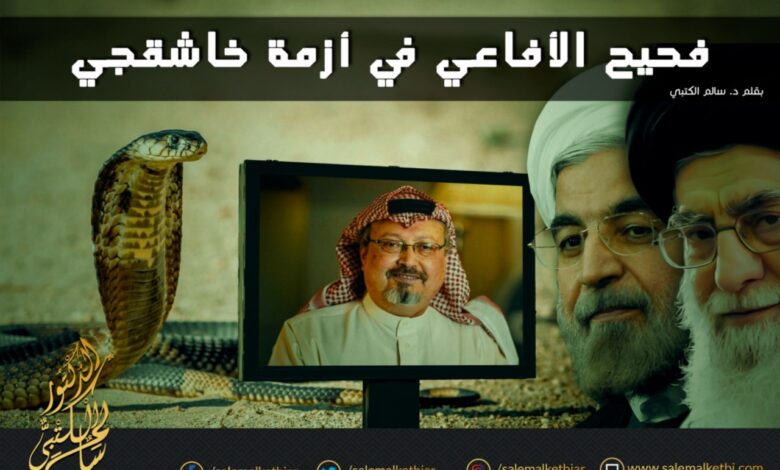
The Iranian mullahs’ regime has remained silent for nearly three weeks and has not officially commented on the killing of Saudi journalist Jamal Khashoggi. The regime did not comment on the Saudi statement that Khashoggi was killed at the Saudi consulate in a brawl with a number of people who were trying to persuade him to return home.
Some people were surprised by the official Iranian silence, but there was no doubt that the mullahs’ regime was waiting for the right moment to horn in. The Iranians know that silence is enough now that the kingdom is under Western pressure and US sanctions banning the sale of Iranian oil will be in force in few days.
Since the crisis started, the mullahs were waiting for a rift with the USA before they broke the silence. Iran’s Hassan Rohani said Khashoggi’s death was “an organized crime that would not have been possible without the support of the United States to Riyadh,” and that “the ideology that led to the killing of Khashoggi is the same one that created Daesh.”
The Iranian president made his remarks one day after President Erdogan gave a speech that had many experts think Turkey does not want to sacrifice relations with or risk directly confronting Saudi Arabia. It was also clear that the United States would not break the strategic alliance with Saudi Arabia as President Trump underlined the difference between the current crisis and ties with the kingdom.
The regime of the mullahs was expecting the worst for the Saudis but ended up disappointed. Then, President Rouhani came out to spit venom. “A sort of tribe rules a State in Saudi Arabia enjoys security support and commits such crimes under the protection of a major power.” “The crime is a test for the human rights defenders in Europe and America,” Rouhani pointed out, downplaying the human rights record of his criminal regime. Iran has one of the world’s worst human rights records according to international human rights organizations including Human Rights Watch. The HRW 2017 report considered the human rights situation in Iran as tragic.
The regime of the mullahs considered that the repercussions of the Khashoggi crisis may affect the effectiveness of US efforts to contain the Iranian project in the Middle East and that the dispute with Saudi Arabia could hinder cooperation efforts to increase the flow of Saudi oil to world markets in order to maintain price stability. Nonetheless, Saudi Arabia is a responsible country that acts in accordance with its obligations and the respect of global economic stability, and therefore it is highly unlikely that it will abandon these commitments.
Saudi-US efforts to deal with Iran’s expansionist threat may have been slowed down temporarily but this crisis is neither unprecedented nor major as far as bilateral relations go.
The mullahs’ system stakes on everyone’s preoccupation with Khashoggi’s death crisis and the disintegration of the alliance against Iranian expansionism but this is likely to disappoint, and Iran will return to be the real concern.