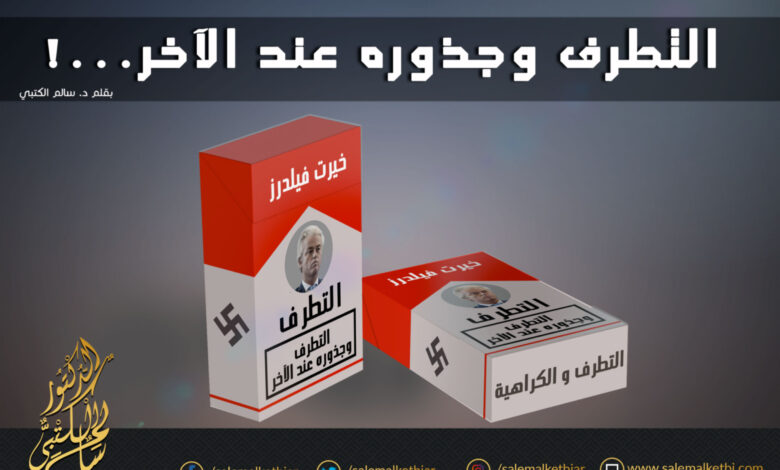
In recent months, the debate over the defamation of religions in Europe was reignited after extreme-right Party for Freedom leader Geert Wilders announced his party’s plans to organize a cartoon contest to depict Prophet Muhammad. The contest was reportedly officially approved before being canceled after nearly 200 cartoonists applied to compete for the $10,000 reward.
There seems to be something wrong with how extremism is perceived in the West, where manifestations of extremism that are not related to Islam, although equally dangerous, are not taken seriously. Hatred of the other is what all these manifestations have in common. While some terror organizations claim to defend Islam and speak in its name, others promote hate speech against Islam in the Western Wing.
Extremism, hate speech, narrow mindedness, intolerance and non-acceptance of the other are the root causes of extremism, radicalization and terrorism and the food for religious conflict and civilizations clash.
Western constitutions and laws and the international covenants on civil and political freedoms stipulate that religions must be respected, and defamation of religion is punishable. And yet some use freedom of speech as an excuse to defy these principles out of intolerance and pure hatred.
There’s a fine line between freedoms and respect of religion. The absurd cartoon competition would hurt the feelings of more than 1.5 billion Muslims around the world. Politicians who understand the value of security and stability in the world should know better.
Organizing competitions aimed at religious symbols is very dangerous, since they can become pretexts for terrorist organizations to disseminate their radical ideas. However, the Dutch politician, who is known for his anti-Muslim attitudes and statements, tweeted that freedom of expression is more important than anything. But I think he should have added “as long as it does not hurt others.” The purpose of freedom is to promote peaceful and safe societies, which would be very hard to do if intolerance is normalized.
In Europe, intolerance means less security and less integration of Muslim citizens into the social fabric, especially the younger generations, who are more prone to radicalization.
Sheikh Al-Azhar Ahmed al-Tayeb recently met with the Dutch ambassador to Egypt. He told the ambassador that free speech and expression should not legitimize defamation of religions and beliefs of people.
The official position of the Netherlands is different from that of some hardline politicians. But terrorists don’t care about the difference and would attribute hateful rhetoric to entire countries.
Intolerance fuels and legitimizes terrorist ideology; therefore, it must be addressed both in the Muslim world and in Western societies.