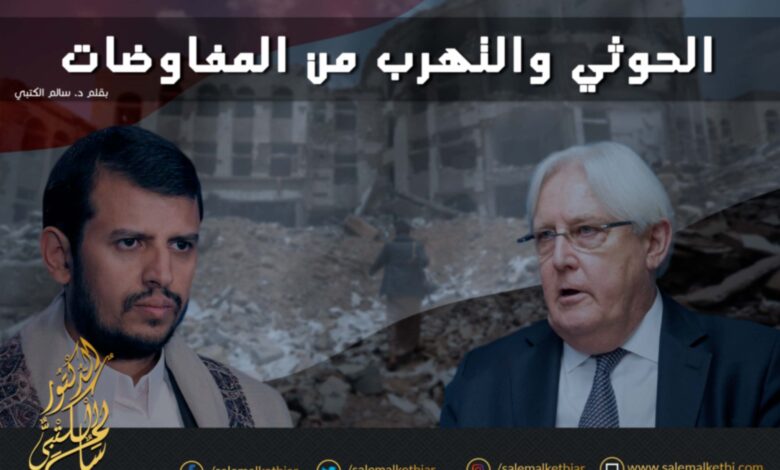
The failure of the Geneva negotiations before they even start is not surprising to any expert in groups like Yemen’s Houthis. The actual surprise would be seeing them on the negotiating table to solve the Yemeni crisis.
How al-Houthi reacted to UN envoy Martin Griffith’s efforts can only be seen as an embodiment of the absurdity of his sectarian group. The UN envoy has continued his efforts over the past months in which he has made several speed visits to -what he might have thought were- responsible members of the group. Perhaps when the delegation of Houthi failed to participate in the Geneva negotiations as agreed, the international envoy realized that he is dealing with proxies of foreign parties with no power to make even such easy decisions as to participate or not.
It is shameful that the fate of millions of Yemenis and their future depends on such absurd politics. It is shameful that such proxies are the ones who control the future for this strategically important country.
The most optimistic people would not think the solution in Yemen is that the Houthi delegation is going to discuss rational solutions and alternatives to salvage what is left in Yemen, for the simple and direct reason that there is a sectarian project that Ansar Allah is working on and that they are acting as an executing contractor for Iran and its other proxies. Negotiations would have put the Houthis in an awkward position because the negotiating table would see alternatives and proposals to get out of the crisis, something the group is not ready to do. The group doesn’t want to return to its normal size within the demographic and political fabric in Yemen. Instead, their plan is about political control and financial gains.
The problem will persist and the crisis in Yemen will continue, but it is shameful for the international community to remain silent about the kidnapping of a member State of the United Nations by a sectarian group working for another country.
Al-Houthi avoided the Geneva negotiations due to Iran’s destructive influence. Every objective observer can see that Houthi is carrying out instructions from Tehran, which does not want any positive progress in any crisis but rather pressure cards against the United States and the West to get Iran out of isolation.
How long will Yemen pay the cost of the Iranian isolation? The international community and the parties concerned should pressure al-Houthi to negotiate a settlement of the crisis and take this pressure card away from the Iranian hands, a pressure card they are equally using in the Syrian crisis.