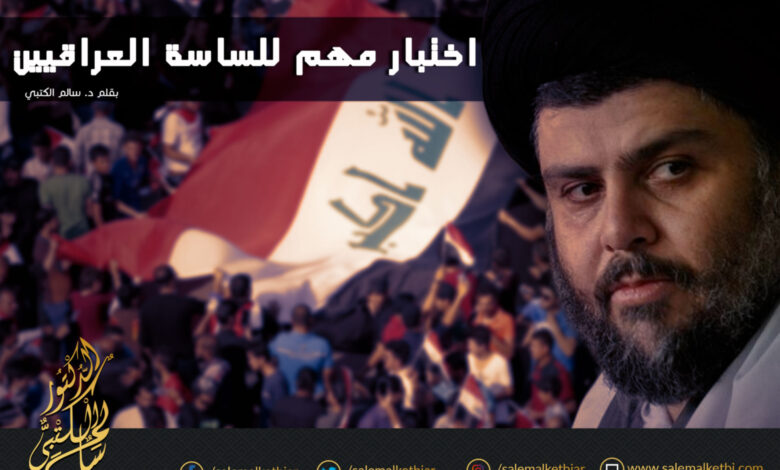
The recent parliamentary elections in Iraq have provided a valuable opportunity to redraw the present and future of the country. The Iraqis have strongly supported the movement of Moqtada al-Sadr. The Sadrist movement has been an influencing player in the Iraqi political arena and played a historic role, regionally and internationally.
Iraq has been living a state of major unrest and insecurity. Following his victory, al-Sadr laid the foundations for building a new Iraq that would meet the expectations of the people and achieve security in the country.
Al-Sadr wrote in a tweet on Twitter that “after the people have built their vote in the legislative power and through the brilliant electoral saga, the next executive branch must build the foundations of justice, welfare and safety”. He pointed out that the next government must not set barriers. Al-Sadr said no to corruption and factionalism. He assumed that war must stop.
These words reflect the dream of every Iraqi who loves his country. The Sairoon coalition won the most seats in the recent legislative elections, promising to make Iraq a better country. Avoiding sectarian barriers and adopting Iraq’s Arab identity is the sole way to save its present and future. Iraq will not be reformed by quotas but with true citizenship. The interests of this country and its people must be taken away from regional influence. Iran has long worked to weaken Iraq’s capabilities. Baghdad has been prey to Tehran’s clerical influence.
Al-Sadr met the leaders of the winning political blocs in the elections, including Haider al-Abadi, the outgoing PM. There is a consensus on the need to have all components of the Iraqi political spectrum participate in any new government line-up. Al-Sadr’s meeting with Abadi was a message that the new government will be inclusive and not excluding any political bloc. Al-Sadr echoed positive messages. He stressed at a press conference that his “door is open to anyone- as long as they want to build the nation”.
Iraqi Decision
A national decision is the key to a better Iraq. The country does not need any regional interference to regain its prestige and decision. Baghdad needs to take its national decision and free it from the Iranian influence, both inside and outside Iraq. The mullahs’ regime still holds a desire to keep its control over Baghdad.
Iraqi must stop Iran from taking control over Baghdad. Tehran and the RGCC’s leaders have long boasted about their occupation of the Iraqi capital. Iraq is not an arena for implementing Iran’s expansionist plans nor is it a corridor to the Mediterranean. Tehran has used the Iraqi situation to recruit and send militias to implement its agendas in Syria and Lebanon.
Moqtada al-Sadr’s task is not easy. He has to form a national government that includes everyone and regain the independence of the Iraqi decision. Some analysts claim that he is not an enemy of anyone but is an Iraqi citizen with strong patriotism. He is one of the Iraqi leaders able to control their political compass. His position and objectives seem to be an important test of the Iraqi political arena. Iraqi political leaders feel the need to build a new Iraq that would meet the interests of the people away from Iran’s agendas. Achieving this goal is an important challenge facing the next Iraqi government.