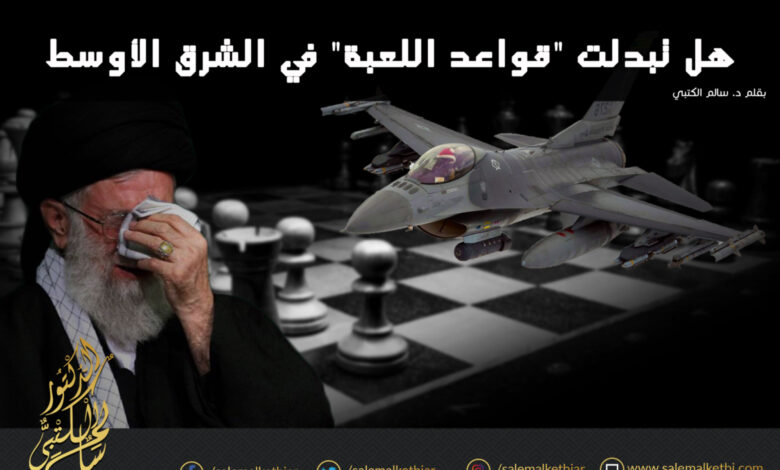
Media debates in the Middle East have recently focused on the strategic effects of the downing of the Israeli F-16 jet. Certainly, there was an Iranian logistical support to the Syrian air defenses to deal with the Israeli air attack.
In recent years, Israel used to violate the Syrian airspace. Israeli jets were met with the Syrian right to respond at the right time and place. The crash of the Israeli jet surprised the Israeli leaders and society. Israelis’ unity depends on the absolute confidence in the IDF and its ability to deter attacks. The IDF possesses a long arm capable of violently striking Israel’s strategic enemies.
Iran has officially denied its relationship to the crash of the Israeli jet. But its celebration of the operation unveiled its role. The Syrian regime considered the operation to be an achievement covering all the disasters it has committed against its people. Tehran thinks that the regional security and strategy have changed and that the downing of the Israeli jet was a turning point in the regional balance of power.
Iran believes that it has won the game of tug-and-pull and succeeded to show its strategic powers. Tehran stresses that Israel’s prestige and deterrence theory has collapsed. The Iranian mindset sees that the balance of power has changed by the downing of the Israeli jet, a jet that represents the high-quality of the military capabilities of the Israeli Air Force.
The analysis of the regional scene suggests that many things have changed. But to say that the balance of power has totally changed and that Iran has a regional impact through its militia presence in Syria and Lebanon is a kind of underestimation. The Israeli weapons capabilities are much powerful than Iran, its proxies and the Syrian regime. It is difficult to say that the Israeli armament has faded away just because of the crash of an Israeli jet.
This is a psychological war and has nothing to do with the balance of power. Backed by Russia, Iran continues its propaganda. Russia is the main player on the ground and will not allow any military confrontations to devastate its achievements in Syria. Tehran uses the Russian position to promote allegations of Israel’s inability to kick Iran out of Syria.
The Syrian-Israeli military confrontation is unclear. Many planes of major powers crashed in circumstances that have not been officially revealed yet. An international struggle for influence and control is taking place in Syria. The Syrian file is critical and complex.
Saying that the IDF long arm has collapsed is strategically false. Based on past experiences, Israeli jets flew at low altitudes thinking that the Syrian ground defenses could not catch them. The Israeli air forces used to hover over the Syrian airspace without the slightest danger.
After the crash of the Israeli F-16, there have been doubts about the performance of Israel’s military air forces. Israel bets on its army to remain in the Middle East. The downing of the Israeli jet has damaged Israeli air force’s reputation especially that it was caused by old air defense systems.
Israel is directly confronting Iran. For the first time, the Israeli forces have targeted Iranian military bases in Syria, an operation that will be frequently taking place in the future. The Israeli leaders now can extract a green light from the US to launch a military strike against Tehran, under the pretext of threatening Israel’s security.
Iran is living the euphoria of a fake victory by participating in the downing of an Israeli jet. Tehran has plunged itself into a very difficult situation. The Russian role in curbing Israel will not last if Moscow decides to lift its protective cover of the mullahs’ ambitions.