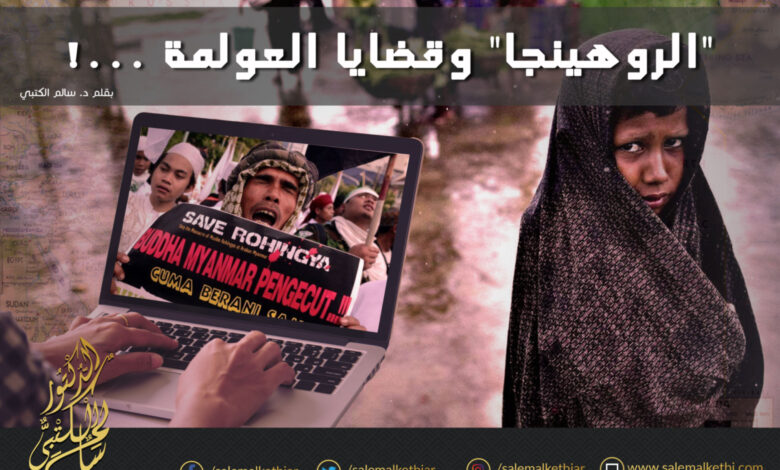
Although it has been in a downward spiral since the 1940s, the situation of the Rohingya minority in Myanmar resurfaced recently as a source of global concern from humanitarian and human rights angles.
The crisis took a very serious turn with respect to regional and global security. Terrorism was the term used recently by State Counselor Aung San Suu Kyi, the de facto leader of Myanmar, to describe what the government is fighting in the Rakhine state. News agencies started talking about the Rakhine-based Arakan Rohingya Salvation Army (ARSA) active on the border with Bangladesh and declared a terrorist group by the Burmese authorities. The leader of the group, Ata Ullah abu Ammar Jununi, born in Kashmir, Pakistan, to a Rohingya immigrant, said his movement would continue fighting even if a million people died unless Suu Kyi took measures to protect the Rohingya.
The persecution of the Rohingya minority by the Myanmar authorities deserves international attention and must be included on the agenda of the United Nations before extremist and terrorist organizations open another front of jihadist mercenarism.
The conflict can potentially fuel tensions between Muslims, Buddhists and other groups in an ethnically diverse region of East Asia. The situation is already too fragile there for any further religious and ethnic conflicts to arise.
South Asian countries have a history of political and military conflicts, so the issue of the Rohingya minority should be addressed by international/regional actors today before history repeats itself.
The Rohingya are not the only group involved in communal conflicts in Myanmar; the authorities have been engaged in armed conflicts with several ethnic groups for decades. The Rohingya are the ones who suffered the most, however. They have been stripped of citizenship, land ownership, voting and movement rights. For decades, several forms of persecution forced tens of thousands of them to flee to Bangladesh but, in most cases, were bound to return. The Karen ethnic group was also forcibly displaced from their home region rich in natural resources. Before they concluded a cease-fire agreement with Myanmar government authorities, members of the Kachin Christian minority formed an armed group called Kachin Independence Army. The Chins, a mostly Christian minority of 2 million people bordering India are also persecuted by the authorities and suffer from food shortages. In other states, animist and Christian minorities formed about 30,000 armed militias.
The world has to put an end to ethnocide and religious persecution through strict respect to the principles of citizenship, nondiscrimination, and the rule of law that guarantee acceptance of others and co-existence and prohibits sectarian, religion and ethnic segregation.
We cannot fight violence, extremism and terrorism if oppression, violence, and occupation continue. Such factors, among others, fuel generational ethnic and religious hatred. We must draw lessons from the past and present experiences in the fight against terrorism and be aware that the thousands of terrorists who have spread in several countries in recent years have come from countries and regions where they have been motivated by groups claiming to defend religions.
The world is not a small village purely in terms of communication. Terrorism can be globalized and security too. It would be even harder to remain silent over the persecution of a minority if we know that the consequences will impact global security.