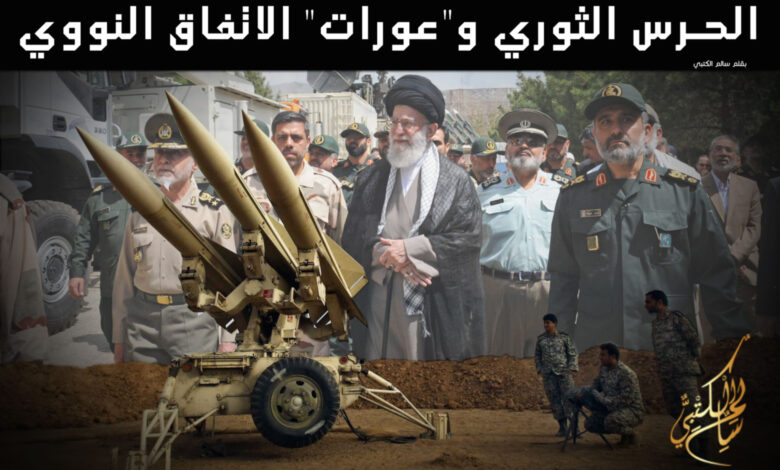
Iranian Revolutionary Guards generals keep on playing with fire while others, both in the Gulf Cooperation Council and the West, are running out of patience. A few days after uncovering a spying cell in Bahrain, financed and trained by the Revolutionary Guards, Iranian boats approached an American ship in the Strait of Hormuz and forced it to change its course.
Attempts by the Iranian Revolutionary Guard navy to approach American navy ships are not rare. Last year, US military ships launched warning shots to force Iranian naval vessels to keep their distance. The recurrence of such incident does not necessarily mean that this should pass unnoticed each time.
Brinkmanship is a very serious strategic issue. It involves a high possibility of the outbreak of military crises due to misunderstanding between field commanders, who may not be able to estimate the consequences of their actions in certain moments and situations.
The Iranian brinkmanship strategy is directly derived from the policy of North Korean regime; they are trying to manage relations with the West in the same way. Medium and long term missile tests to provoke the West are a similarity between the two regimes. North Korea is always launching rockets to raise concerns and fears of neighboring countries allied to the United States, notably Japan, where this has happened recently. The mullahs are doing the same. Iran had tested a medium-range ballistic missile in February. Tehran actually lacks an understanding of the data and conditions of the conflict that the North Korean regime is engaging in. Unlike the Iranian regime, N. Korea is managing its relationship with the West according to high strategic precision and in light of a military and political balance.
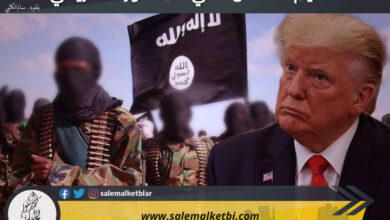
Speaking of Iran’s latest missile test, US President Donald Trump said that playing with fire is not something new about Iran. The Revolutionary Guards want to spread chaos and turmoil in the region, because this would be their favorite climate. It is during chaos that the empire of the Guards expands and increases their wealth through violence, killing, and sectarian strife.
Those who want to deal with Iran realistically should speak to the true decision makers: the Supreme Leader, who holds the national authority, then the leaders of the Revolutionary Guards who, according to international estimates, control about a third of Iran’s economy and dominate military power. The role of Major General Mohammad Ali Jafari and Gen. Qassem Soleimani is the implementation of the leader’s foreign policies. Iranian Foreign Affairs Minister Mohammad Jawad Zarif recently said that he does not have full authority regarding the Syrian file, and that his ministry is subject to decisions by the Iranian Supreme National Security Council that coordinates between Iranian parties concerned by the Syrian file.
Ali Shamkhani, former commander of the Revolutionary Guards, serves as the Secretary-General of Iran’s National Security Council. This latter was formed according to the Article 176 of the Iranian constitution, and is headed by the President of the Republic. The mission of the Council is securing national interests and guarding the revolution, the country’s territorial integrity and national sovereignty. It consists of the heads of the three powers, the chief of armed forces, the planning and budget official, two commissioners appointed by the leader, the Ministers of Foreign and Interior Affairs and Security, the relevant Minister according to the subject matter, and top officials in the army and the Revolutionary Guards.
The Revolutionary Guards are testing the West, as they are trying to benefit from the lifting of international sanctions on Iran, seeking to seize the opportunity of post-sanctions trade contracts and huge investments. Last month, The Times published an article in which it said that the West has become a prisoner of the nuclear treaty and not of the Iranian regime. Western countries will not reveal the secrets of an agreement they formulated and signed. Iran is using loopholes in the agreements to conduct missile tests and claims they are not subject to the terms of the Lausanne agreement signed in 2015.
During the coming period, Iran will probably play between the positions of the majority of signatories of the nuclear agreement on the one hand, and the position of the US administration on the other. The UK, a NATO member and US ally who became a strategic partner of the GCC since the Manama summit, strongly rejects the standpoint of the US administration regarding the nuclear agreement. International coordination regarding Iran’s strategic threat is vital regardless of the terms, reality and feasibility of the agreement. The Iran case is a threat to both regional and international levels. Dealing with it requires a strategic vision beyond the Lausanne agreement.