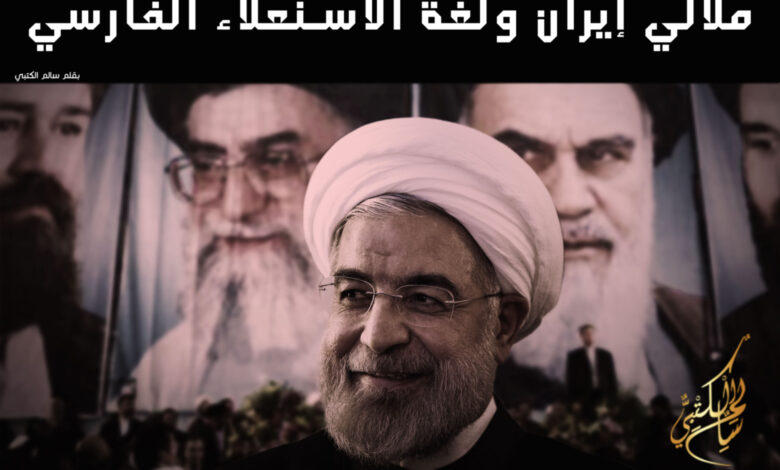
Hamed Abu-Talebi director of the Office of Iranian President Hassan Rouhani, tweeted commenting on Rouhani’s tour that the regional initiative by Rouhani to accept the invitation of the leaders of Oman and Kuwait is an indicator of the need to establish Islamic friendships and restore regional relations, and that this regional initiative is an opportunity “our” friends in the region should exploit because it will not be repeated, so they should take advantage of this good opportunity.
I felt pity for him for several reasons. The “young” mullahs do not differ from the “old” mullahs in their confessional arrogance and sense of superiority. Like their elder masters, they do not understand diplomatic and political language; all they know is the language of sectarian polarization. Also, the tweet by Abu-Talebi reminded me of the “aggressive seller” who tries to sell merchandise no one wants to buy in such a stagnant souk, claiming that he will not come back to the market again and that his product is the last piece he is selling at an attractive price.
The diplomat is aware of the extremely accelerating and complex strategic variables, yet he claims offering dialogue is a unique opportunity others should seize. This is merchandising language, not dialogue language. Diplomacy opens doors and never speaks of closing them. This is only done by those who try to sell overpriced, damaged or bad-quality merchandise.
The merchandising language often controls Iranian foreign policy. The Iranian negotiator is such a patient manipulator, by virtue of his long-time experience in carpet weaving that engraved patience in the collective consciousness of the Iranian people. The miserable marketing of this initiative does not leave it much chance to succeed, because the “delivery boys” were offensive and such a disgrace.
President Rouhani speaking of dialogue cannot clear out the misunderstandings in the Gulf-Iranian relations as he calls them. There is nothing unique about that. Deception, intriguing, claiming innocence and denying of such blatant acts and practices of the Iranian regime, cannot pave the way for dialogue.
The true opportunity is for the mullahs to get themselves together, understand the regional and international strategic scene, then act wisely to spare the region and the Iranian people more crises.
The opportunity will come when the mullahs will give up sponsoring terrorist militias and proxies in the region, make efforts to get out of the list of terrorism-sponsoring States and show serious intention for good unconditional neighborhood in order to come up with solutions for regional controversial issues.
When the mullahs will recognize the sovereignty of Iraq, Syria and Yemen, cease to intervene in the Kingdom of Bahrain and to occupy the three UAE islands, change their regional policy into one of co-existence – that will be the real opportunity. Otherwise, no one will be sad when their initiative fails.
Yesterday, Turkey officially accused Iran of sending refugees to conflict zones in Syria and Iraq and of working to destabilize the region. We must not turn a blind eye on such accusations. Turkish Foreign Minister said Iran wants to “shi’itize” Syria and Iraq. A few days earlier President Erdogan spoke of a “Persian nationalism” danger. Do you think that the Turks made baseless charges against the mullahs who welcomed them not a long time ago, declared partnership and spoke about common interests, trade and goals?
As errors in Iranian territorial politics accumulate, the sectarian expansion policy becomes more devastating to Iran and its people. If they make no efforts towards peaceful coexistence and adherence to the principle of good neighborliness, the mullahs will find themselves in a downward spiral, like Saddam Hussein’s regime. History proves no regime was able to survive in a hostile environment. Regional and international geostrategic factors are hard to ignore. The arrogant and disgraceful language of Persian supremacy, articulating the narcissistic tendencies of young and old mullahs alike, is becoming more difficult to adopt.