As researchers, we hear about and discuss so much the renewal of religious discourse, a thorny file that has been thoroughly researched and debated without achieving anything new about it at the implementation level, after everyone rested on the idea of moving in place, making so much fuss about nothing, and the religious discourse did not move forward even for one iota.
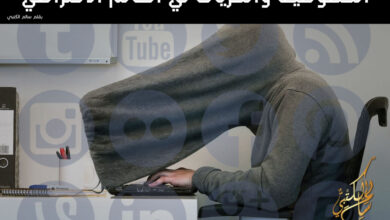
Against the background of the religious discourse crisis in the Arab and Muslim world, I noticed a parallel crisis that no one seems to be interested in despite its seriousness and its relation to an extremely important file, which is that of media discourse, which now represents one of the tributaries of the regional chaos and turmoil in the Arab region after it had been a product of this mess and chaos.
No one denies that the chaos in many Arab countries is reflected in the media space, where there is chaos on two levels. The first one is related to satellite broadcasting, as many inciting sectarian and religious channels have spread and proliferated very dangerously on satellites related to Arab countries and other non-Arab ones, and all these channels are funded and directed towards achieving the goals of particular groups, organizations, currents and states that cannot escape the eyes of observers.
The second level relates to media content of private satellite channels and newspapers in many parts of the Arab world, as a lot of media turned at this level into squares and outlets to deepen discord and chaos and unrest in these countries and regions, especially in countries such as Libya, Iraq, Yemen and elsewhere.
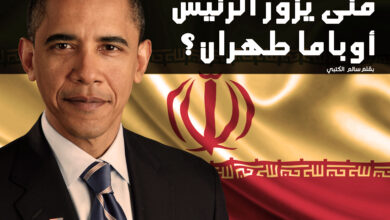
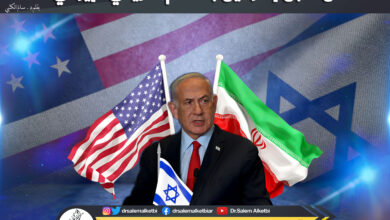
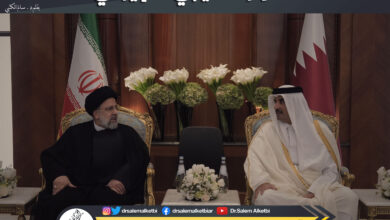
If we talk more openly, we will find that one of the tools of the Iranian tampering and manipulation in the Arab region is the media’s, whether the ones directly subordinated to Iran, or the ones receiving Iranian money and support, and that stem from Arab capitals well-known to all.
In light of the strong correlation between awareness and education rates prevailing in communities and between the media impact and the ability of the means of communication to establish trends and change prevailing convictions, it becomes obvious that the media is one of the most dangerous tools of the conflict and strategic competition over interests and influence in the Arab region, and that the media market becomes in vogue remarkably.
One of the manifestations of the media crisis in our region is that there is a conceptual confusion. Many commit grave mistakes, some of them even work to undermine security and stability in countries and communities and destroy values and spread chaos and even work for the benefit of hostile states and sectarian organizations, and promote a provocative media discourse that causes trouble under the name of media freedom, the right to information and other slogans and titles that have neither truth nor objectivity.
Amid the chaos, and the manifestations of the absence of the state, the collapse of its sovereignty and its erosion in some Arab countries, talking about the professional and legal standards and rules in the media or another sphere, becomes a sort of tampering and debate without avail.
Some believe that what is happening is a response to years and decades of repression and restriction of freedoms, and that the track will correct itself after a sort of “fulfillment” of the desire to compensate for these years, and this hypothesis or explanation did not prove true or accurate, since exaggeration is the stage motto, and there are no indicators related to the receding of the waves of chaos which expand and are virtually transformed into a kind of contagious epidemic that threatens the security and stability of other communities, particularly in the light of the employment of many of these “mouthpieces” to attack this or that country.
The question that arises is: are there solutions and exits to this impasse? In the search for solutions and for causes and roots, we find that there is difficulty in controlling satellite broadcasting unless it is done in coordination at the international level in accordance with covenants and agreements under the auspices of the international specialized organizations of the United Nations, which is a far-fetched goal at the moment. Even if there are regulations on broadcasting via satellite, there is the Internet. We also cannot expect that some countries like Iran would stop their sectarian media wars in light of its adherence to the export of crisis and its engaging in proxy wars and sedition and unrest in several Arab countries. Iran’s plans at this level are clear and are part of Iran’s regional strategies, and the media are in the heart of all that, and Tehran cannot stop generous spending on sectarian inciting channels unless it has given up entirely its Persian expansionist ambitions, and this is a difficult matter to achieve in the current circumstances.
On the other hand, when I’m talking about the Arab media discourse, I certainly do not mean that there should be a uniform Arab media discourse or even a convergent discourse with a ceiling of higher Arab common interests in these complex circumstances. Agreement on common issues in some Arab countries has become a far-fetched dream. And I certainly do not mean the need to control this vast amount of TV and paper and electronic newspapers, which have turned into mouthpieces of currents, groups and organizations and countries, and it is absurd to talk about controlling them in light of the continuity of factors and the environment that support and fund them, in the sense that the current chaos in the media is a “symptom” and not the primary disease, which means the need to address the causes, which will lead to ending the “symptoms”.